

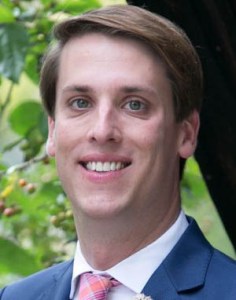
Graff said he didn’t want questions about his Vermont residency to dog his candidacy.
“It’s become clear that the ambiguity around this question of residency would color every aspect of a potential campaign, and, simply put, that’s not the conversation I wanted to spend this year having with Vermonters,” Graff wrote on Facebook. “Thus, I am not going to run for elected office this year.”
The Vermont Constitution requires candidates for the No. 2 post in state government to live in the state for four years before running.
Graff’s eligibility as a candidate came into question shortly after he declared his interest in running as a Democrat for lieutenant governor.
Graff distributed a commentary last week defending his belief that he qualified for candidacy even though he had lived in Washington, D.C., for a decade before moving back to his native state in November. Throughout that time, Graff held a Vermont driver’s license and car registration and was registered to vote in the Green Mountain State, he wrote.
While he lived in the nation’s capital, Vermont was his “mental home,” he told lawmakers last week.
Graff urged lawmakers to use a nuanced definition of residency to include those whose “mental home” is Vermont. He argued the state has always used a mix of “physical presence” and “intent to return” as the way to measure residency.
He said the strict four-year residency requirement precludes people who leave the state temporarily for academic or professional enrichment, giving the example of someone who spends a year working at the White House before returning to run for statewide office.
“In many ways, defining residency as solely by physical presence is going to discourage precisely the types of people that we would want to be involved in state government,” Graff said.
Secretary of State Jim Condos told VTDigger in November that Graff would not qualify as a candidate, based on an opinion from the Vermont attorney general’s office.
Graff said in the Facebook post that he was motivated to run for office because of Vermont’s “real and present” challenges. The state, he said, needs to “rethink government and build a new model for a sustainable, efficient democracy.”
He ticked off a list of “urgent” issues, including the aging of the state’s population.
“Over the next 30 years, the Green Mountain State will be transformed by three massive forces — the technological revolution upending every aspect of the world economy, the shifts of climate change that we’re feeling increasingly every day, and troubling demographic changes that include seeing the state’s working population shrinking and its young people leaving,” Graff wrote. “The state will change more in the next 30 years than it did in its first 200 years. In many ways, Vermont today is more vibrant than it ever has been, but preserving the state’s unique character in the face of such change and challenges will not be easy.”
