

The budget adjustment bill — annual legislation in which lawmakers tweak the budget partway through the fiscal year — increases the total state budget, including federal and other special funds, to $5.6 billion. That represents a 2.5 percent increase over the fiscal year 2015 total budget.
The bill increases the general fund portion of the budget by $12.3 million to a total of just over $1.48 billion — a 5 percent increase in spending over the previous fiscal year.
Though the bill passed out of the Appropriations Committee with unanimous and bipartisan support, it ran into more opposition on the House floor.
Rep. Tom Burditt, R-West Rutland, bemoaned “out of control” budget adjustment spending. In the six years he’s been a member of the House, he said, he’s seen the budget adjustment proposals expand.
“I believe we are now officially running a deficit in Vermont,” Burditt said.
The House approved the bill on a vote of 90 to 54.
Health care costs were the prime driver in pushing state spending over the initial budget passed last spring. The lion’s share of the budget adjustment is Medicaid-related — a total of $70 million in federal and state money.
House Republicans voiced frustrations over state spending, particularly in the area of health care. Members of the party proposed two amendments to the bill, both related to Vermont Health Connect, the health insurance exchange.
Republicans floated an amendment that would have shut down Vermont Health Connect and shifted the state to the federal exchange in 2018. Proposed by Rep. Doug Gage, R-Rutland, the amendment won support from three of the members of the Appropriations Committee, including Vice Chairman Peter Fagan, R-Rutland.
Fagan said he does not normally support changing state policy in the midyear budget bill, but that he made an exception for Vermont Health Connect.
“I’m very interested in shutting it down and moving over to something else,” Fagan said.
House Speaker Shap Smith, D-Morrisville, ruled the amendment was not germane to the bill.
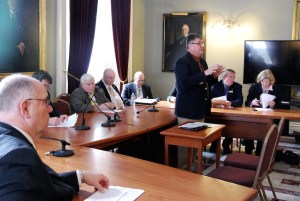
“I just can’t understand that, because there’s money in the budget adjustment that is directed to Vermont Health Connect,” Turner said.
Rep. Chris Pearson, P-Burlington, said the House Health Care Committee will soon begin getting regular updates on Vermont Health Connect. Customers continue to express frustration with the exchange’s technical problems.
Later in the day Smith told the Vermont Press Bureau that the committee will begin to take testimony on alternatives to the Vermont exchange. Smith was not available for comment Tuesday.
Lawmakers also voted down a second amendment, proposed by Rep. Bob Bancroft, R-Westford, which would have put aside $100,000 out of the Vermont Health Connect operating budget to fund a study assessing the long-term viability of the system.
After the vote, Turner called the budget adjustment proposal “more of the same.” He raised concerns over increasing spending beyond the state’s annual revenue and criticized the Democratic leadership’s approach.
“It just is unbelievable that they don’t want to fix this structurally,” said Turner, who voted against the bill.
He said he is hoping the budgeting process will change under the next governor.
Members of Turner’s party will come forward with more amendments to the budget adjustment proposal before the third and final House vote on the bill Wednesday, he said.
One amendment that is to be introduced Wednesday would implement a hiring freeze in state government, Turner said. It would require that departments fill personnel needs by reshuffling vacant positions, rather than creating new ones.
Although the budget adjustment does not explicitly create new positions, it does give the Department for Children and Families $190,000 and authority to use that money as the department sees fit — which could include hiring more social workers.
The administration’s initial budget adjustment proposal would have set aside money to hire 28 social workers in DCF beginning in the spring. But the proposal was scaled back in light of a $4.7 million reduction in revenue projections earlier this month.
Republicans also voiced concerns on the floor that the budget adjustment does not go far enough to fund the Medicaid 53rd week. The budget puts just $225,000 toward the total $10.3 million cost of the week.
Rep. Cynthia Browning, D-Arlington, spoke on the floor to explain her vote against the bill. The budget adjustment bill, she said, shows that the budget is not truly balanced.
“We consistently promise more in benefits and programs than we can fund,” Browning said.
But others praised the work of the House Appropriations Committee and defended the bill. Rep. Ann Manwaring, D-Wilmington, spoke on the floor in defense of her vote for the bill.
“I am continually troubled by the mantra that spending is the problem,” Manwaring said.

