

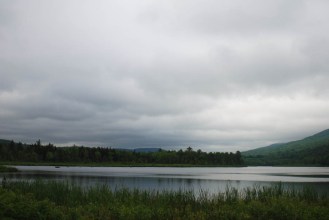
[P]roposed legislation would allow Montpelier to prohibit recreation on Berlin Pond, but opponents, including the Shumlin administration, say existing laws are enough to protect state drinking water supplies.
Montpelier has for years attempted to limit access to the 260-acre pond that supplies more than 14,000 daily consumers in the state capital, Berlin town and the Central Vermont Medical Center. The dispute pits Montpelier residents who want inexpensive, clean drinking water against the hunting and fishing community, backed by the Shumlin administration.
In the latest attempt to restrict the pond’s use, Rep. Warren Kitzmiller, D-Montpelier, introduced H.33, a two-page bill allowing municipalities to issue restrictions above those set by the state on their drinking water supplies, even if they fall outside town boundaries.
“We have about 812 lakes and ponds within the borders of Vermont. We’re talking about potentially having about a dozen of them closed to protect the water supplies of various municipalities,” Kitzmiller said. “That would leave 800 open for fishing, swimming and hunting and boating.”
But sportsmen say the state has long protected the public use of Vermont’s waterways, and fear a patchwork of new local regulations.
“There is not a single body of water in the state that is closed to fishing. We should not be starting now to fragment our resources,” said Rick Sanborn, owner of R&L Archery in Barre, who protested the city’s restrictions by kayaking on the closed pond in 2009.
The legislation comes just months after the Department of Environmental Conservation denied a petition by Citizens to Protect Berlin Pond, a group requesting a ban on all recreational uses of the pond. The petition had Montpelier’s backing.
The department instead upheld a compromise petition to prohibit the use of internal combustion engines on the pond, including all motorized boats and all gas-powered ice augers or power tools, and vehicles such as snowmobiles, ATVs and trucks. The city’s water treatment system can filter some petroleum-based contaminants with its carbon-activated powder treatment system, but the system isn’t designed to do so, officials say.

Kitzmiller’s bill would allow the city to prohibit fishing, swimming and paddle boating on the pond. Kitzmiller said this would prevent more costly treatment associated with the spread of invasive species and contaminants.
“Vermont has a history of dealing with a pound of cure rather than an ounce of prevention,” he said.
David Mears, commissioner of the Department of Environmental Conservation, said the bill would interfere with other state laws promoting responsible public access to waterways. He said the hunting and fishing community is among the strongest advocates for clean water.
“We’re opposed,” Mears said of the bill. “We think that the law is perfectly fine as it currently stands. We have an important role to play in terms of protecting access to state resources and state waters. We have done that in a way that also protects drinking water supplies.”
Mears, a resident of Montpelier, said the state’s current water quality regulations implemented under the federal Safe Drinking Water Act are enough to ensure safe, clean drinking water.
He said the property around the pond is not entirely owned by Montpelier, creating its own existing source of pollution: a dirt road surrounds the pond, homes within the watershed have septic tanks, residents often walk dogs around the pond, and ducks, beavers and muskrats all use the pond.
“There’s a number of sources of potential contamination into the pond already,” Mears said, “and the system that Montpelier has is sufficient to remove that and any additional microbial contamination that might be associated with human activity.”
The plant may be able to treat the water for additional human-caused contaminants, but it’s likely to cost more, according to Kurt Motyka, an engineer for the city.
He said boats coming from other water bodies could spread invasive species like zebra mussels, which could clog the intake pipe feeding the treatment plant. He also said the plant operators have seen an increase in turbidity levels, requiring the filters to be cleaned more often.
Since the Supreme Court in 2012 ruled that only the state can regulate the use of the pond — hence opening it up to greater public access — the city has seen the amount of sediment in the water double, city officials said.
The average turbidity level in the pond in August 2012 was 0.56 Nephelometric Turbidity Units, or NTU, compared to 1.2 NTU for the same month in 2014, according to the daily operational log at the city’s water treatment facility.
The bill does not mention hunting, fishing, trapping or boating, but sportsmen say the bill would block these activities, which they say is legal under current state law.
“This proposed bill is an attempt to stop hunting, fishing, trapping, non-motorized canoeing, kayaks and wildlife viewing which state law preempts that attempt,” said Clint Gray, northern vice president of the Vermont Federation of Sportsmen’s Clubs, a group representing more than 8,000 members.
Mears said recreational users of the waterways are needed to keep the state’s waterways clean, in part because they are the chief supporters of clean water.
“The way that we maintain support for these programs — the way that we encourage people to have a sense of why it’s important to protect clean water — is to make sure that our kids and our communities have the opportunity to boat, recreate, hunt, fish, watch birds and do all the amazing things we do in Vermont.”

