The $1 trillion spending plan signed into law by President Barack Obama last week includes more money for Lake Champlain.
About $4.4 million will support Lake Champlain’s water quality restoration and monitoring effort. The Lake Champlain Basin Program, which administers the funds, received $1.4 million last year.
Bill Howland, director of the Lake Champlain Basin Program, said the money could support about 100 projects around the lake.
For example, he said the money could be used to hire agronomic technicians to provide farmers with engineering plans to prevent manure runoff on their farms. The farmers can then go to the U.S. Department of Agriculture for money to implement the plan. (The USDA this summer awarded the state $45 million to improve agricultural practices.)
“It’s kind of a behind-the-scenes support program that really makes our dollars leverage a lot of other federal dollars,” Howland said.
The money will help the organization continue its water quality and biological monitoring program, which is the single largest expense totaling about $500,000 annually, he said. The remaining funds will be used to prevent the spread of invasive water chestnuts, inspecting boat bottoms for non-native species, planting winter rye to hold town topsoil after the harvesting season, and other water quality improvement efforts, he said.
Sen. Patrick Leahy, D-Vt., supported expanding the Environmental Protection Agency’s budget to administer the national water quality program. As the senior member on the Senate Appropriations Committee, his office says he played a key role in negotiating the federal budget.
“We have invested far too much and for far too long in the restoration and preservation of Lake Champlain to walk back on that commitment,” Leahy said in a statement. “With new federal requirements forcing Vermont, New York and all of our Lake partners to make difficult decisions about how to maintain our ‘Great Lake,’ this federal support will go a long way toward preserving one of Vermont’s greatest natural resources for generations to come.”
The EPA is requiring the state to reduce the amount of phosphorus loading into Lake Champlain, a plan known as the Total Maximum Daily Load, or TMDL. The state proposed a plan in May, and is now seeking federal, state and private money to back it up.
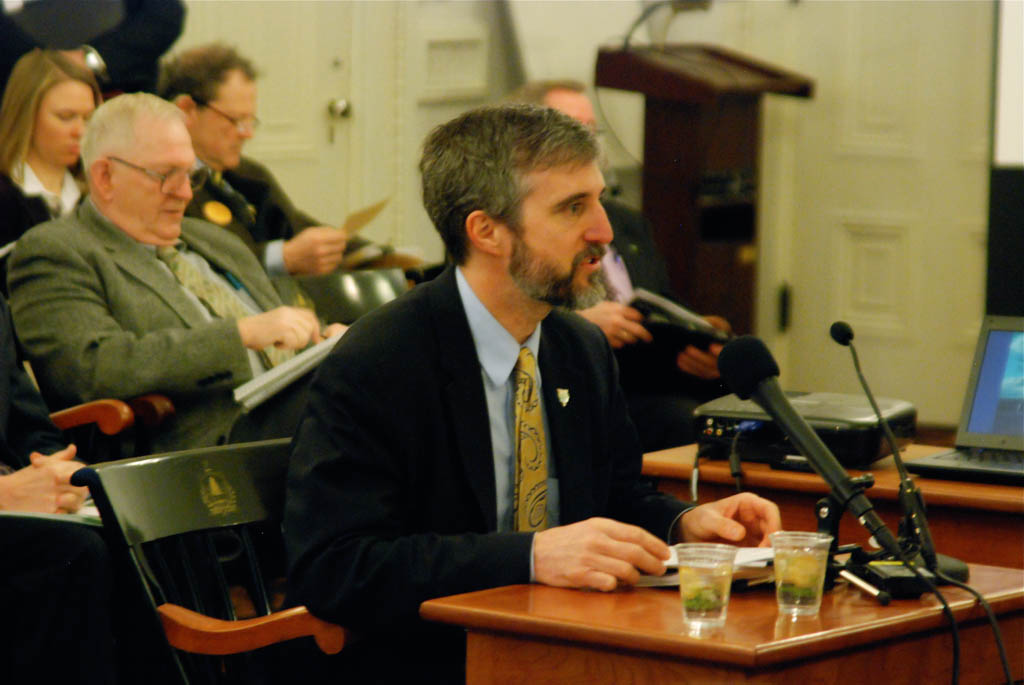
In April, David Mears, commissioner for the Department of Environmental Conservation, traveled to Washington, D.C., to seek federal funds for Lake Champlain. After the trip, he described his effort to find federal money as sobering. Now, he said it looks like it has been a good year.
“I think it’s unique and I hope it’s something that we can sustain,” Mears said. “We’re off to an awfully good start.”
He supports the congressional delegation’s ability to secure money through legislation, but he said Congress is unlikely to approve funding for new programs. As a result, the state is building relationships with federal agencies and seeking a share of their discretionary spending.
Mears said the state is applying for a $20 million grant authorized by the 2014 Farm Bill, known as the Regional Conservation Partnership Program. The state also applied for an AmeriCorps program to pay recent college graduates to work on water quality issues in Vermont communities, which he said would build the state’s capacity to administer the TMDL.
“I don’t think we have fully seen all the results of the various grant applications we have put forward,” he said.
According to Leahy’s office, the state also received $3,500,000 from the Great Lakes Fishery Commission to protect aquatic wildlife in Lake Champlain, among other purposes; about $450,000 from the State Department to monitor flooding along the lake; $300,000 from the National Park Service for small grants; and $4 million for the U.S. Army Corps of Engineers Aquatic Plant Control Program that will support an effort to stop the spread of invasive water chestnuts in southern sections of the lake.
The state’s Department of Environmental Conservation estimates the state received nearly $8 million in additional funds from the EPA, which will be used, in part, for wastewater treatment plants.