

Editor’s note: In This State is a syndicated weekly column about Vermont’s innovators, people, ideas and places.
[L]eigh Seddon, you could say, made hay while the sun shone.

For 35 years he has been a solar enthusiast, visionary, entrepreneur and consultant – in short, one of Vermont’s chief proponents of harnessing sunshine to create electricity. He has seen solar grow in Vermont from the simple photovoltaic systems installed by off-grid back-to-the-land types of yore to the now, seemingly ubiquitous rooftop displays and those solar “orchards” with thousands of panels.
“Solar ‘orchards’ are everywhere. It’s just exploding,” he says, sitting in the kitchen of his home in Montpelier, a house powered by solar. His roof – its actual weathering surface – consists of glass modules producing more than 100 percent of what he and his wife need, the surplus continually feeding Green Mountain Power Corp., but available as a credit if needed.
“So I joke that I need an electric vehicle,” says Seddon, 63, who grew up in the Boston area and was part of the “drop-out” generation who came to Vermont in the late ‘60s and early ‘70s.
As surely as a Vermont pond reflects sunlight on a bright July day, Seddon’s interest reflects a remarkable trend.
“Four years ago, we were at 4 megawatts of solar in this state; now we are at 87, and in two years we will likely be at 150 megawatts,” he says. That amount would be nearly a fourth of the 620 megawatts that the Vermont Yankee nuclear plant would produce at peak.
“Who would believe this in cloudy old Vermont!” he says.
Not surprisingly, solar advocacy groups rate Vermont among the top dozen best states in terms of solar policies and per-capita solar production. Last year, one group, the Solar Foundation, a national research organization, declared Vermont tops in terms of solar jobs per capita.
Seddon is the principal of L.W. Seddon, a renewable-energy consultancy that advises utilities, lenders and developers on the efficacy of proposed solar sites and installations. His connection to the solar power business goes way back to 1980 when he co-founded Solar Works, a partnership that grew to become one of the larger solar corporations in the Northeast. (Three years ago Solar Works was sold to Real Good Solar, a Colorado-based company.)
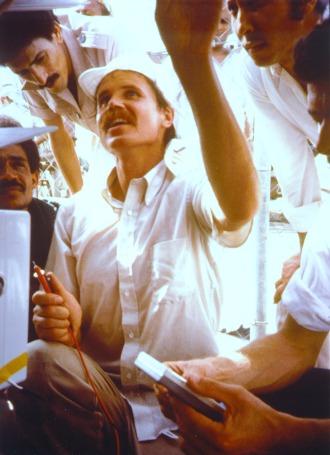
Before any of this, in the mid-1970s, Seddon, fresh from school (resource economics, University of Vermont) was the environmental director for the Vermont Public Interest Research Group. Among his assignments for VPIRG was lobbying in the Legislature to strengthen the bottle bill and to pass a ban on phosphate detergents, a source of water pollution.
“It took two years to pass the phosphate bill (1977); it was stressful, and I figured there had to be another way to promote environmental change,” he says. He had one of those light-bulb moments a year or so later after helping a friend install a couple of rudimentary solar panels, with battery, to light a cabin in Colorado: Why not make a living of this?
Seddon began doing passive solar building design and renovation and installing solar water heaters. He established Solar Works as a small business selling solar hot-water systems and photovoltaics.
In a folksy down-home style, Solar Works on weekends offered do-it-yourself workshops, complete with Friday night spaghetti dinners and instructive slideshows. On Saturdays, on sawhorses in the company’s Montpelier parking lot, clients learned to assemble their own hot-water systems.
The company grew to 16 employees by 1984 and eventually some 250 by 2010 as Solar Works worked on projects in Vermont, out of state, and in South Africa, Yemen and India.
By 2005, the company was installing big commercial systems for companies from National Life of Vermont to Whole Foods in California.
U.S. interest has largely flowed and ebbed with government policies, says Seddon. After the 1970s energy crisis, for example, Congress enacted a 40 percent tax credit and Vermont a 25 percent credit on solar products and installations, providing a huge boost.
Later, during the Reagan administration, the tax credits were scaled back dramatically, which put a brake for a while on Seddon’s growing domestic business, and spurred his work abroad.
In Vermont, new measures have been instituted to promote solar and other sources of alternative energy, among the most noteworthy being the advent 15 years ago of net metering – which permits owners of small installations to produce renewable power and put any surplus on the grid to obtain credits. Net metering in Vermont and elsewhere allowed Solar Works to take off.
Other inducements have included state grants and a sales tax exemption on renewable-energy equipment. And, starting next year, residential solar installations won’t be considered in the appraised value of residences.
Seddon points out that a major federal incentive – the 30 percent tax credit on all installations – is scheduled to drop to10 percent in 2017, which may take some glow off solar. “There will be a bump, a drop,” he says.

Despite Vermont’s celebrated support for the environment and renewable energy, solar orchards or “farms” can be controversial. A solar orchard is not exactly a sunny field with trees producing big red Macs and Macouns. One person’s handsome stretch of technology, with futuristic promise, is another’s eyesore.
Residents of several towns, among them Charlotte, Rutland and New Haven, have balked in recent months at proposed sites and some residents were even surprised to learn that solar developments are not governed by local zoning laws or even Act 250, the state’s development-control law.
Instead, large-scale solar development falls under Section 248, the statute dealing with gas and power investments and facilities. It’s the state Public Service Board that decides whether a proposal is appropriate to a site and beneficial to the state as a whole.
In New Haven, officials adjusted the town plan to limit solar projects to under 300 kilowatts, evidence that towns “want more control over solar,” says Seddon. They are unhappy that their wishes “can be overridden by the PSB.”
Still, Seddon, the advocate, wonders whether time will solve some of the concerns as it did back in the 1960s when people voiced concern about the huge blue harvester silos then cropping up in barnyards, putting a crimp in the pastoral farm scenery.
Eventually, the silos were accepted as a critical part of farming. “I would like to think of solar as part of the new working landscape because it can support farms and jobs and business and still be compatible with our rural heritage,” he says.
Still, Seddon says, solar installers are feeling the pressure and looking for less in-your-face sites, farther from homes or scenic roadways.
How long will the solar boom last? A long time, guesses Seddon, along with worries about climate change.
He predicts growth of renewable wind power energy (125 megawatts capacity now in Vermont) will be constrained. The opposition to building wind towers on ridgelines, where they are most effective, has become too strong.
And that might mean solar could stay hot despite the expected reduction in federal tax credits.
The price certainly is right.
“The panel price (about half of installation cost) has dropped from $4 per watt 10 years ago to 75 cents per watt today, and that’s about as low as it will be with current technology,” says Seddon.
So, yes, start imagining electric cars. Certainly, hang on to your electric toothbrush.

