


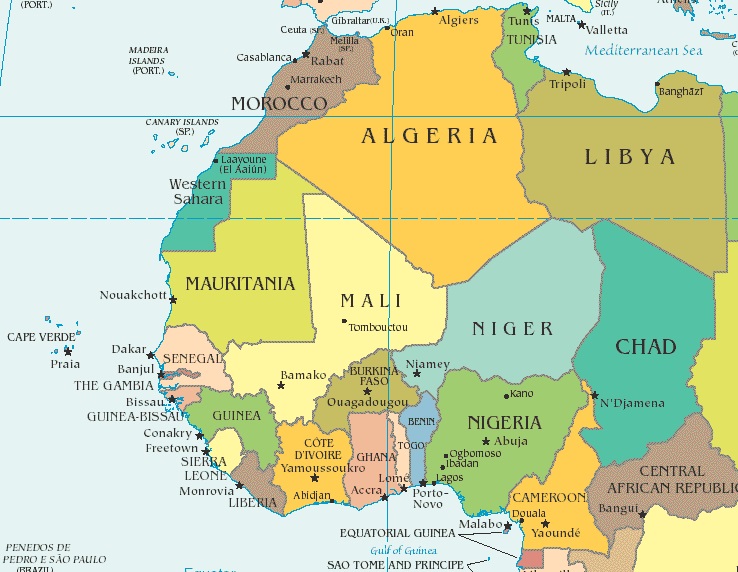
[P]eter Italia knew something was wrong when he stepped off the airplane in New York City and found two uniformed security guards waiting for him on the jetway.
The guards flanked him — one in front, one behind — and led Italia to a medical office inside JFK airport. A doctor invited him into the examination room. Another doctor walked in, dressed in protective gear.
The doctors took his temperature, questioned him about his trip to West Africa to observe the Ebola outbreak that has killed more than 5,000 people, then set him free.

But the 61-year-old Rutland man wasn’t really free. When he walked out of the screening area, two other people waited for him with a car parked outside. They slipped him out through a security door, into the car and drove him away.
The story of Italia’s journey to Africa and back to Vermont raises questions about whether state officials violated Italia’s civil rights in their attempt to protect public health.
Italia says his rights were violated. A mental health law expert said that is possible. Officials say they acted in the public’s best interest.
The two people who whisked Italia away were a state health department nurse and the Rutland County Sheriff. They never told Italia their plans for him until they arrived in Rutland.
They simply asked Italia if he wanted a lift.
Italia, who is homeless, had planned to take Amtrak, he said. He chose to accept the ride, but was suspicious.
What Italia did not know was that for almost as long as he had been in Africa, government officials in Rutland, Montpelier and Washington, D.C., had been tracking him.
He also did not know he would be asked to remain isolated for the next three weeks.
Italia realized the plan only when the three arrived at the Rodeway Inn on Main Street in Rutland, and he was taken to a room with a yellow sign on the door that read “quarantine.”
More than 100 pages of emails obtained by VTDigger through a public records request to the Rutland City Mayor’s Office provide a glimpse into the flurry of activity that took place from Oct. 15, when local officials by coincidence learned Italia was in West Africa, until Oct. 27, when he was placed into a 21-day quarantine at an undisclosed location.
That quarantine expires Monday.
‘Off the Ebola map!’
The around-the-clock emails, which involved everyone from the Rutland sheriff to the governor’s chief of staff to U.S. Rep. Peter Welch’s office to the White House, show officials weighing the risk Italia might pose to the public against a lack of direct evidence that he had any exposure to the Ebola virus.

Emails, which have Italia’s name redacted, show how Rutland Mayor Chris Louras worked with Welch’s office to convince everyone from homeland security officials to the Ebola Czar himself to look twice at Italia, in light of his Facebook posts about his trip and other writings that describe his use of time travel to treat patients.
As the situation unfolded, officials had to act quickly, even as federal guidelines for dealing with the outbreak shifted daily.
The emails show Vermont officials on the edge of their seats for four days as they received mixed messages from Italia and federal agencies about whether he would be allowed back into the U.S.
Bob Rogan, Welch’s chief of staff, interceded to alert federal officials, who in turn flagged Italia on international security lists.
The emails sent local and state officials on a roller coaster ride as they were first told Italia would not be allowed to board his plane out of Conakry, Guinea, then said he could.
On Oct. 23, Italia was barred from boarding his original flight home on Royal Air Maroc for reasons he said he still does not understand.
He was placed on a no-fly list, but after an intercession from an employee of the U.S. embassy, he returned to the airport Oct. 27 and ultimately boarded a Brussels Airlines flight, bought with the last of his savings.
At one point officials in Vermont thought Italia would be quarantined in Morocco. Later, unsure how he might enter the United States, they alerted officials in Montreal.
At one point Gov. Peter Shumlin’s chief of staff, Liz Miller, coordinated with New York City and state officials who told her they were “taking this matter very seriously,” although they ultimately did not assist.
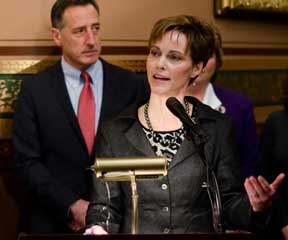
“It was an extraordinary, coordinated effort of local, state and federal officials with the goal of protecting Vermonters and protecting this individual,” Rogan said in a phone interview Thursday.
The facts of the case on the one hand are clear. Italia, although he had no official business in West Africa, traveled there with just a backpack to observe the situation. He made several trips including one to the border with Sierra Leone, where he observed children playing and adults selling goods to passersby.
He made friends and explored villages but did not come in contact with people who were ill with the disease, he said.
“I tell the people I speak with that I am an American doctor. I ask about the Ebola virus and if there are any sick people in town,” Italia wrote on his Facebook page.
‘Strange but lucid’
After a heads-up from officials in the United States, workers from the Centers for Disease Control and Prevention screened him in Guinea and New York. The CDC found Italia to have “no known exposure” to Ebola and elected not to restrict his movements.
The CDC called Italia “strange but lucid.” He was “rational, forthcoming” and “appeared to answer all their questions completely” during the screening process, according to emails.
The CDC screening process, while effective in most circumstances, was not fully prepared for a case like Italia’s, Rogan said.
“I think, and the congressman thinks, that the CDC protocols were well thought out, but they didn’t contemplate the idea of someone that is mentally unstable,” Rogan said.
Louras wanted Italia kept in quarantine outside Vermont. His circumstances are different because Italia is not a health care worker or journalist but an untrustworthy tourist, Louras said.
“Our concern in Rutland is that given the silos within and across state and federal governments, that this guy will slip through the cracks and end up in Rutland,” Louras wrote in an email to Rogan, Welch’s chief of staff.
Rogan responded later that day: “We will do all we can to keep Rutland — and Vermont — off the Ebola map!”
While Italia was in West Africa, Louras asked psychiatrists from Rutland Regional Medical Center to examine Italia’s writings. Drs. Gordon Frankle and Jeff McKee concluded that it is “highly likely that [Italia] is mentally ill” and that he cannot be trusted to report his own actions.
CDC policy requires visitors from West Africa to self-monitor for symptoms, and officials weren’t sure Italia would do so.
Three days before Italia returned, on Oct. 24, Rogan forwarded the doctors’ opinions to federal officials along with Italia’s writings.
“The answers he gave the CDC screener in Guinea yesterday, and the answers he will give when screened at JFK upon his arrival … must be considered by the CDC in that context,” he wrote.
‘You have been exposed’
Vermont health officials do not have a specific policy on monitoring or quarantine but said they take the CDC guidance under advisement. They will respond to any case on its merits, said Tracy Dolan, interim health commissioner.
Dolan has the authority to quarantine a person diagnosed with, or suspected to have, a communicable disease.
The CDC guidance for monitoring and restricting the movement of people returning from West Africa is tailored to health care workers, and in cases like Italia’s the center recommends monitoring but not quarantine.

Several states have implemented more stringent monitoring and quarantine policies than CDC recommends. Eleven states have monitoring and quarantine protocols that exceed CDC guidance, according to a report compiled by researchers at Arizona State University’s law school.
Initially, New York and New Jersey announced mandatory quarantines for all health care workers returning from treating Ebola in West Africa. The day before Italia landed, New York Gov. Andrew Cuomo eased that policy.
During first week of Italia’s quarantine, a Maine judge in the case of a health care worker returning from West Africa who challenged her state-imposed quarantine, ruled that she should be required to submit to daily monitoring but could not be forced into isolated quarantine because she did not show symptoms.
The CDC guidelines changed even as Italia attempted to return to the U.S. The CDC issued its first set of rules while he was still in Africa and revised them the day he returned.
Dolan, the interim health commissioner, said she is proud of how officials handled the situation and believes it was appropriate to go beyond CDC protocol because of Italia’s unique situation.
‘It was never voluntary’
Italia blames local officials for not being forthcoming about their intentions. When they arrived at the Rodeway Inn, state public health nurse Joanne Calvi presented Italia with a document and asked him to sign it.
Calvi declined to comment on whether that should have been discussed from the onset.
“It just wasn’t necessary at the time,” she said.
A few days before Italia returned, Dolan, in an email to Vermont officials, wrote that if a traveler refused voluntary quarantine, an “emergency order” would be enforced.
Once in Rutland, Italia was asked to go into voluntary quarantine, Dolan said. She said she did not know what he was told at the scene.
According to a template provided to VTDigger, the consent form for voluntary quarantine begins: “You have been exposed to Ebola virus disease as a result of [how person was exposed].” Italia denies that he was exposed and CDC accepted his statement.
The form says at the bottom that if the person does not comply, he or she can be ordered into quarantine. Failure to comply with that order could be a civil or criminal offense, the form says.
“It was never voluntary. There was no choice, unless I wanted to go to jail.”
“It was never voluntary. There was no choice, unless I wanted to go to jail,” Italia said.
Italia maintains that being required to sign a “voluntary” agreement violates his rights. He was not given the chance to speak with a lawyer. No state officials have contacted him since that day, he said.
“It was all very hush-hush, the whole thing,” Italia said.
Legal rights
One expert said Italia could have filed a writ of habeas corpus challenging the quarantine and demanding his release.
Attorney Jack McCullough, director of Legal Aid’s Mental Health Law Project, said had Italia done so, it is unclear whether Vermont could have kept him in quarantine.
Once his detention is over, however, McCullough said he is not sure Italia will have a legal case against the state.
Italia said he has not decided whether to file a lawsuit.
Despite concerns about Italia’s mental health, there is no evidence that Vermont officials questioned Italia’s ability to give an informed consent.
At no time did Italia display any symptoms of Ebola and his unreliability — based on the suspicion that he is mentally ill — is not enough, from a legal perspective, for him to be detained, according to McCullough.
“In a case like this where someone is saying this guy is mentally ill, and his mental illness is endangering the public health, that’s the kind of case where there should be the type of legal protections that apply to anyone in the mental health system,” McCullough said.
Italia says he is not mentally ill. He insists he is a physician even though he is not licensed in Vermont.
Italia in an interview described how he travels through time, an innate ability he said has possessed since birth. He likened it to picturing oneself at an earlier point in the day.
Through time travel, he says he warned the FBI twice before the 9/11 terrorist attacks in New York City.
“I use my abilities and I’m not afraid to say it,” he said. Italia has written two books, including one about his ability to cure patients on the verge of death using time travel, he said.
Dolan on Thursday said despite emails showing that officials doubted Italia’s sanity, his mental health status did not play a role in her request for a quarantine.
Health officials chose to exercise additional caution because they knew Italia was in Africa for an extended period, he was not wearing protective gear, he told people he was a medical doctor, and he was not working with an organization that could have given him information about the location of Ebola infected patients and how to avoid it, she said.
“There was no unique mental health diagnosis that had an impact on our decision,” Dolan said.
‘Done, finished. Goodbye!’
Nurses visit Italia twice a day in his quarantine location, which neither the state nor Italia has revealed. The Red Cross buys him food that the nurses deliver. The nurses have also brought him National Geographic magazines to read, he said.
Italia continues to post on Facebook. His posts reveal his struggle with the image the public has created of him.
“Apparently, nobody (not even my most ardent supporters) cares about the onslaught of negative publicity that I have been getting in the news and online, calling me a fake, a fraud, a lunatic,” he wrote. “So, I’m done, finished. Goodbye!”
When Italia leaves quarantine Monday, he will walk into an uncertain future. He said he has no money, no job and no place to live.


