

Editor’s note: This op-ed is by award-winning journalist Telly Halkias. It first appeared in the Portland Daily Sun.
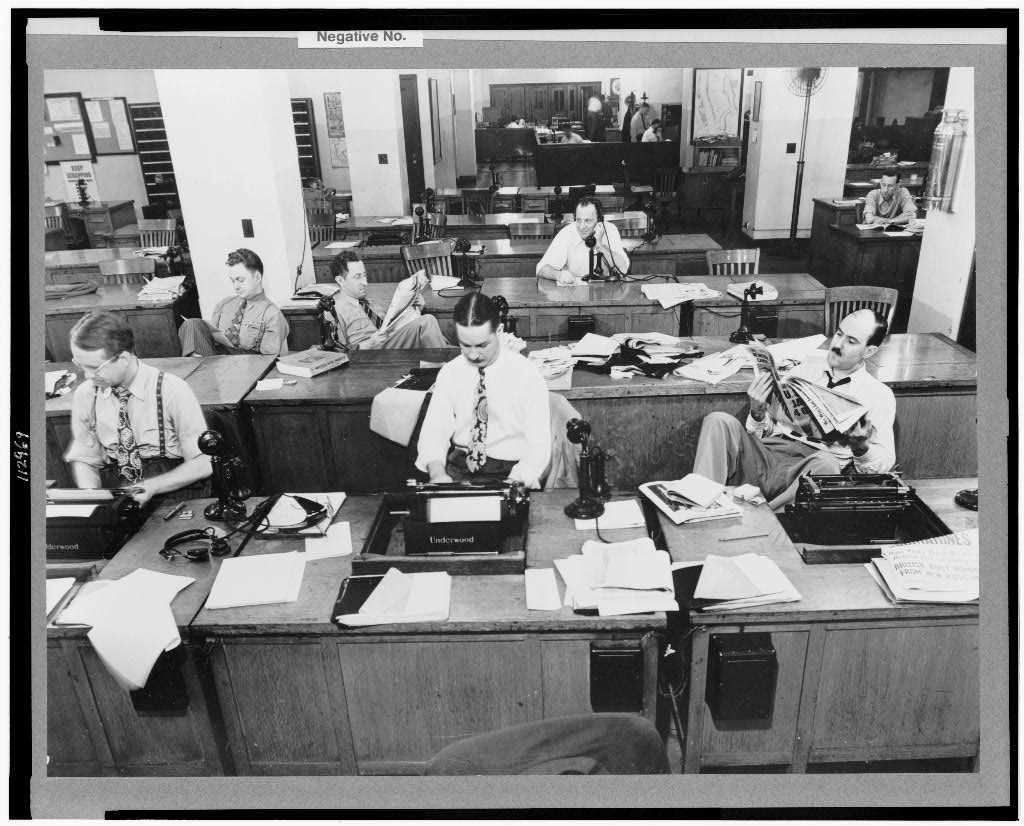
In the past decade, with the folding of such major regional newspapers as the Rocky Mountain News and the Seattle Post-Intelligencer, talk of the decline of print news media is at a fever pitch.
Just a few years ago, the New York Times borrowed $250 million at 14 percent interest from Mexican tycoon Carlos Slim to help it stay solvent.
In 2012, here in New England, the Portland Press-Herald survived its own cash and labor crisis under media executive Richard L. Connor. This was through a majority sale — originally structured as a working capital loan — to hedge fund mogul S. Donald Sussman.
Conventional wisdom suggests the direct correlation between advertising revenues and circulation, and industry experts have long speculated the causes of declining sales. At least for now, they seem unable to stem the tide.
The matter was brought into focus for me while moderating an Internet discussion forum on emerging news media. As a journalist, I felt I could offer meaningful contributions on the media’s direction in the new millennium.
We covered the basic tenets of the news reporting trade. Among the subjects discussed were truth, verification, independence, objectivity, entertainment, the watch dog function, gatekeeping, sources, and production. After all, an analysis of news media can’t occur without invoking journalistic practice.
The forum members ranged in age from 21 to 34, all fully fledged members of the Digital Age. Indeed, one was a sports blogger with dreams of one day expanding his online hobby into a full-time job.
The forum participants were also part of media advertising’s most coveted age demographic.
Interestingly, they all relied on print as an information supplement, not as their primary means of news consumption. Satellite radio and the Internet were the most common avenues by which they received news. This wasn’t only eye opening, but gave me an inside view of their world, and perhaps of journalism’s future.
So against this backdrop, I once posted the following for discussion:
“What is your opinion of a return to the pre-objectivity days of the American press? How might a media continuum of this kind work in the Digital Age, as it’s been well over a century since we’ve seen anything like it? What would be some pros and cons and their ramification on contemporary American society?”
Expecting lively debate, I wasn’t prepared for their unanimity.
Each one of them supported a return to the 19th century practice of media outlets – in those days only newspapers – becoming nothing more than political instruments or ideological stooges. Even today, this is common overseas; on European newsstands you can find every partisan flavor imaginable.
Furthermore, they insisted on something every media executive in America should consider: unlike their online brethren, newspapers and TV news operations are in decline because they continue to veil their bias in a purported cloak of objectivity.
This frustrates liberals and conservatives alike because they can see right through it and feel is if they are being taken for fools. So instead, consumers – particularly younger ones — turn to other outlets. Whatever else can be said about those emerging news venues, the group considered them more inherently honest than the mainstream media.
Such feedback couldn’t provide any kind of scientifically valid polling conclusion. The forum was small and not very diverse. But as food for thought, its ideas brought hunger to the table. What many of us call mainstream wasn’t so to this cohort; they went elsewhere for the news.
While I didn’t subscribe to all of their views, the group made excellent points. They are the future, and weren’t buying today’s bill of goods. Never mind small publications which historically run on a shoestring. Impending closedowns or reorganizations in major markets such should be a wake-up call for the industry, if it isn’t already too late.
The forum’s message, while limited in scope, was clear: for whatever reason, the lines between finances, ideology, and reporting have been blurred — to the detriment of the entire product.
The aforementioned Portland Press-Herald case study is instructive as a local, regional, and national paradigm. Under three ownerships in less than a decade, its editorial line, and arguably its news coverage, went from center-left to center-right, and now to left. All of these shifts aligned with the ideological views of the principal owner at the time.
The sooner media executives pay attention to this malady and seek remedies, the quicker they might find ways to address the decline now heaped on the shoulders of true journalists.
You may e-mail Telly Halkias at tchalkias@aol.com or follow on Twitter: @TellyHalkias
