


When Vermont teamed up with Texas in 1993 to dispose of low-level radioactive waste there, Vermont officials said they were looking for a resting place for the future dismantled body of the Vermont Yankee nuclear plant.
Now that Entergy Corp. has announced it will close Vermont Yankee in late 2014, Gov. Peter Shumlin says it is more important than ever that Texas preserve Vermont’s space at the facility. As the number of retired nuclear plants grows, the Texas Legislature has allowed for radioactive waste generators from states other than Texas and Vermont to store waste at the facility.
Shumlin told the eight members of the Texas Low-Level Radioactive Waste Compact Commission on Wednesday that as demand increases, Texas must keep the needs of Vermont in mind.
“As we have more and more of these aging plants decommissioned, you will find yourselves under tremendous pressure to take waste that frankly we haven’t planned well enough for as a nation, and therefore we will not have enough room,” Shumlin said. “My concern is that we remember that Vermont and Texas were there, that Vermont and Texas have access as states first because we did it right, and that we … protect the space that our two states are going to need as we go forward.”
Wednesday’s commission meeting at the Vermont Statehouse marked the first time Shumlin has met with the commission, and it was the first time the commission, with three members from Vermont, addressed the issue of Vermont Yankee’s future shutdown and dismantling.
“We’re fully cognizant that Vermont is our compact partner,” Bob Wilson, chair of the commission, told Shumlin. “We know what it says, and we intend to honor the compact.”
 Vermont is given a certain piece of the proverbial Texas pie for storing waste. If the pie grows, so does Vermont’s piece of it. Vermont low-level radioactive waste generators — such as Vermont Yankee and Fletcher Allen Health Care — were originally allowed to occupy up to 20 percent of the overall waste at the site.
Vermont Commissioner of Public Service Chris Recchia said that Vermont is now given a lesser share of the overall waste, but the radioactive refuse is constantly growing.
“During the last Texas legislative session, Texas passed a law that effectively gave Vermont 17 percent of the volume,” he said.
According to the facility’s license, it can hold a maximum of 2.3 million cubic feet of radioactive waste, and that waste cannot exceed 3.89 million curies — a measurement for radioactivity.
Rod Baltzer, president of Waste Control Specialists, said his company has applied for an amended permit to more than double the facility’s capacity. He said his facility would have no problem meeting the needs of Vermont and Entergy.
“We look forward to working with Entergy, the state of Vermont and the compact commission to safely and securely facilitate all the disposal needs associated with Vermont Yankee,” Baltzer said. “We take our responsibility very seriously. It goes to the very mission of this compact commission. I can assure you we have plenty of capacity for the decommissioning of this facility.”
But the exact amount of nuclear waste coming from Vermont Yankee is still unknown.
Mike Twomey is vice president of external affairs for Entergy. He said that many of the details the commission asked about are not available. It isn’t until two years after the plant shuts down that Entergy must complete a plan for the U.S. Nuclear Regulatory Commission (NRC) detailing how and when it will remove the plant’s infrastructure.
Wilson told Twomey that the sooner he had specifics about Vermont Yankee’s dismantling, the better.
“We have the Legislature in Texas deciding to dedicate a certain amount of the capacity of the site to non-compact generators … and with additional decommissioning activities we can imagine the capacity will be more in demand,” Wilson said. “We’re really anxious … we need to have the information as quickly as we can get it so we know what to do.”
Twomey told him that until the necessary studies are completed, he would not be able to provide much more detail.
“I want to emphasize that Entergy has not completed the studies that are not due for two years after we cease operations,” he said. “And we have made no decision regarding the duration of SAFSTOR.”
SAFSTOR is a prolonged method of taking down a shuttered nuclear plant. The NRC allows up to 60 years to disassemble a plant.
“SAFSTOR is not an all or nothing proposition,” Twomey said. “It is not 60 years or zero. It could be 10 years. It could be 15 years. It could be 20 years.”
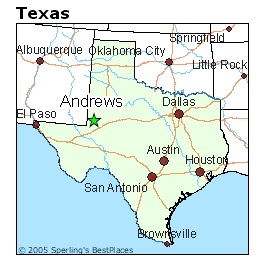
After the plant shuts down, low-level radioactive waste such as contaminated soil, plant filters, metal and concrete would be shipped to the site in Andrews, Texas. The estimated 3,900 fuel assemblies that will be put into dry casks will await a federal government solution for storing spent nuclear fuel. Right now, there is not one.

