

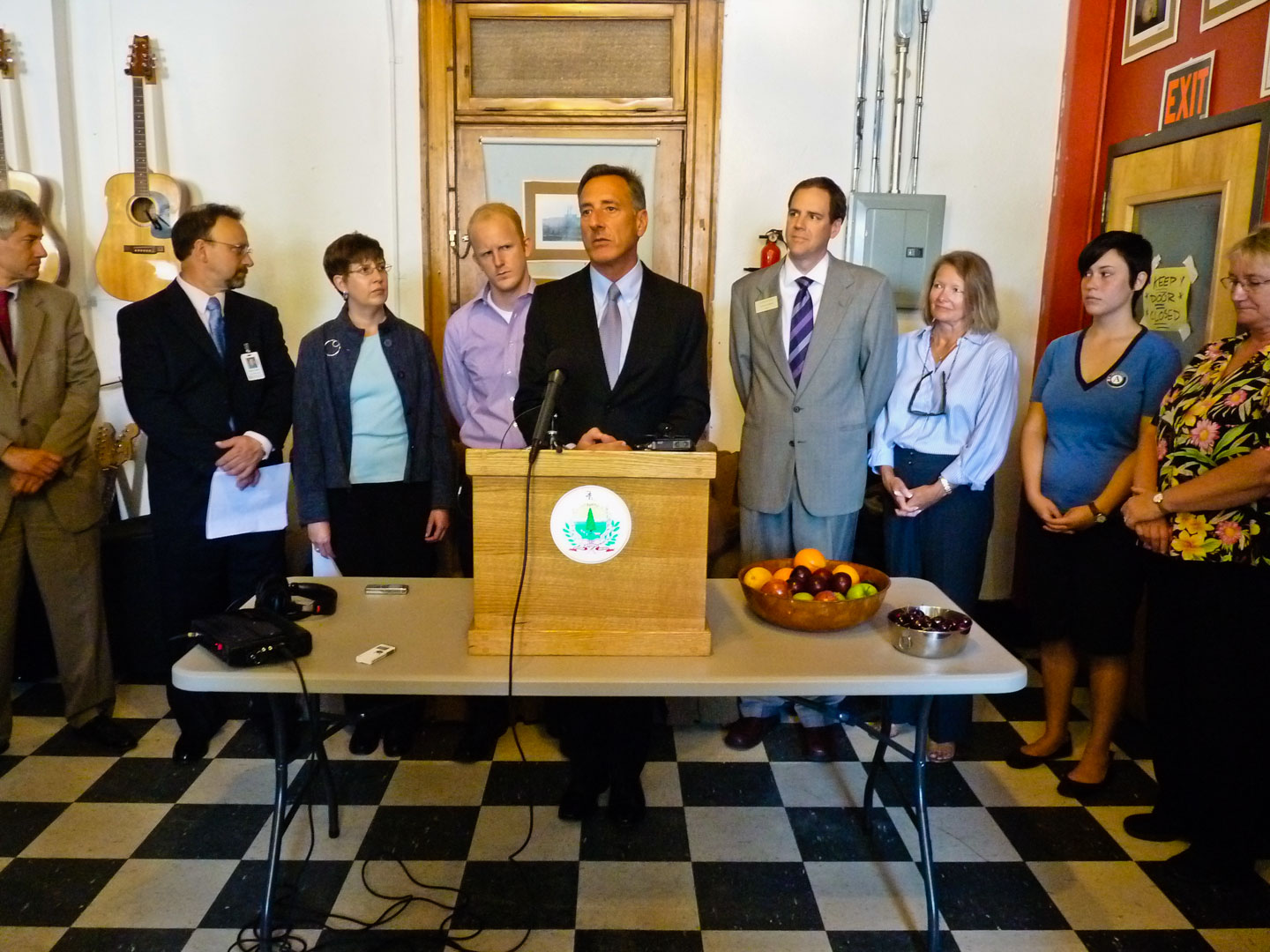
Gov. Peter Shumlin wants to shift the school food commodity paradigm. Shumlin announced on Thursday that he will ask the federal government to give schools “vouchers,” or direct funding, in exchange for stockpiled USDA commodity products.
Shumlin held a press conference yesterday in Montpelier to announce that he will ask the U.S. Department of Agriculture to give Vermont a waiver to bypass the school food commodity program and use the money that would otherwise be spent on frozen foodstuffs and other USDA stockpiled products on food purchases. The waiver, he said, “wouldn’t cost a dollar more” and would enable Vermont schools to buy food from local farmers. Shumlin said he had not yet spoken to USDA Secretary Tom Vilsack about the proposal.
About 20 percent of the food used by schools comes from USDA commodities. The food is valued at about $2 million.
One in five children in Vermont go hungry on a daily basis. Advocates say children who are “food insecure” rely on school breakfasts and lunches as a primary source of sustenance. The commodities program does not include fresh fruits and vegetables, which are fundamental to a nutritious diet.
“We are launching an effort to end childhood hunger in Vermont,” Shumlin said. “Twenty five thousand Vermont children don’t have enough to eat in the Green Mountain state, and no one is more committed than my team to ensure that every child has a meal.”
The governor billed the localvore initiative as a three-for. Shumlin said a voucher program would ensure that Vermont children have access to more nutritious fresh food; it would boost Vermont’s growing non-dairy farming sector; and it would reduce food transportation miles and consequently lower climate change impacts.
Shumlin is taking his localvore message to the National Governors Association meeting in Salt Lake City, Utah, this weekend where he hopes to persuade other governors to press the USDA for more flexibility in the school food commodity program.
Hunger advocates lauded the governor’s voucher initiative. John Sayles, executive director of the Vermont Food Bank, told reporters that too many children “have gone to bed hungry, woken up hungry, and gone to school hungry.”
“Hunger is increasing in Vermont and across the country there’s no reason for that, there’s plenty of food and plenty of money,” Sayles said. “The only thing we don’t have is the will to bring the pieces together and feed people.”
Sayles challenged Shumlin to tell governors across the country that hunger in America must be addressed. “I want to see ignoring hunger as politically dangerous,” Sayles said.
Anore Horton, a child nutrition advocacy manager for the nonprofit Hunger Free Vermont, told reporters that school food service programs are struggling financially “because federal meal reimbursements have not kept pace with the rising costs of food and fuel.”
“Providing the option of cash or vouchers will allow our schools greater flexibility in what they serve, how much to buy and when to buy it,” Horton said.
Most importantly, the proposal, she said, would improve the quality of food made available to Vermont children who depend on school meals.
