[N]ew numbers on fatal drug overdoses show some gains in the battle to curb opiate abuse in Vermont, but the data also point to a troubling increase in deaths related to heroin and fentanyl.
Statistics from the Vermont Department of Health show that deaths resulting from accidental opiate prescription drug overdoses have tended to decrease over the last five years. However, during the same period, accidental overdoses of heroin and fentanyl have increased dramatically.
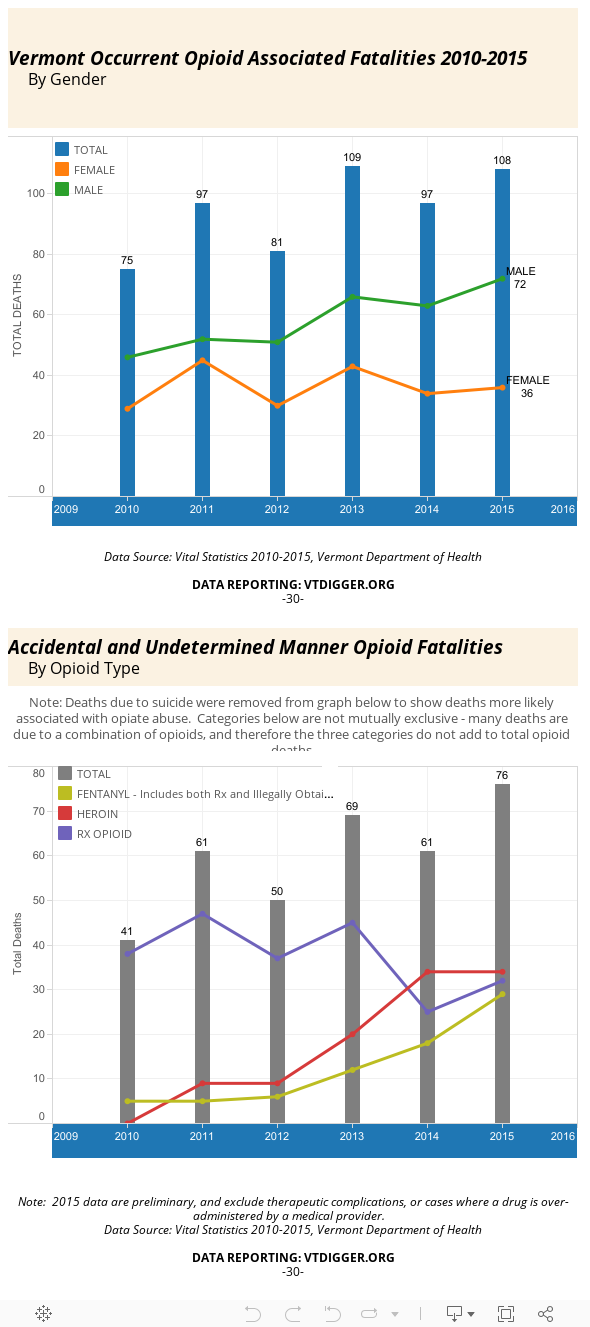
Opiate-related deaths hit a five-year high in 2015, with a total of 76 in Vermont that year. That’s nearly twice the number in 2010, when there were 41. Prescription opiates factored into 38 of those fatalities, according to the data.
Health Commissioner Harry Chen said the data show there have been some positive gains.
“We’re making progress on the prescription opioid side of things,” Chen said.
He said that trend may reflect efforts by the state to raise awareness about the dangers of leftover opiate painkillers that linger in medicine cabinets long after medical procedures. But the data also point to increasing use of illegal, intravenous substances.
“At the same time, we’re really challenged by the significant increase in fentanyl and heroin deaths,” Chen said.

The statistics show that fatalities related to heroin and fentanyl across the state have steadily increased since 2010. There were no heroin overdose deaths recorded that year, compared with 34 recorded in 2015.
Fentanyl, an opioid that is sometimes used medically as a prescription drug, is rising in prominence.
The potent synthetic opioid is also manufactured in clandestine laboratories and sometimes laced into heroin sold on the street, or sold as heroin without the knowledge of the buyer.
Deaths related to the substance in 2015 were nearly six times the total in 2010 — a rise from five deaths to 29.
Broken down by county, the data show that the increase in heroin- and fentanyl-related deaths generally holds true at local levels as well.
Chen cautioned that because the numbers at the county level are small, they are not very good indicators of trends. The statewide numbers are the best representation, he said.
The data set also notes that the county where a death is recorded is not necessarily where the incident occurred or where the person lived, because the person may have been transferred to a hospital during the overdose.
However, Chen said the countywide numbers are meant to be helpful for communities to recognize the prevalence of opiates on the ground.
“We know that communities, local communities are really working hard,” Chen said.

Chittenden County, Vermont’s most populous, recorded the highest number of opiate-related deaths. The number of deaths related to prescription opiates stayed fairly steady at about a dozen each year in the three years after 2010. But the number decreased to five in 2015.
Meanwhile, heroin and fentanyl overdose deaths increased from one in 2010 to a high of 17 in 2014. In 2015, there were 16 heroin- and fentanyl-related deaths.
Burlington Mayor Miro Weinberger said the state’s data on Chittenden County show a trend that city officials and the Police Department have been observing.
“I think this confirms that our focus really needs to be on the heroin and fentanyl,” Weinberger said Friday.
He noted that heroin has been a major concern of the Burlington Police Department under the leadership of Chief Brandon del Pozo. However, he said that despite the apparent decrease in deaths related to prescription opiates, he still sees a need to continue public education around the dangers of pills.
“This opiate challenge is a major public health issue that we have not turned it around yet,” Weinberger said.
Numbers from Rutland County, another populous area, show similar trends indicating the prevalence of heroin and fentanyl in the area. There were a total of 16 drug-related fatalities in Rutland County in 2015. Eleven involved fentanyl or heroin.
Rutland City Mayor Chris Louras said the county data are a good start, but he sees a need for more statistics.
“We need to gather as much data as we can in order to measure the extent of the epidemic,” Louras said.
He would also like to see data about the number of overdoses that occur that are not fatal. Those numbers could indicate the scope of the issue, he said.
“Without gauging the extent of the problem, we can’t build treatment capacity effectively,” Louras said.
Based on the trends in the data, Chen and the Health Department are looking at what steps the state can take to try to curb the use of heroin and fentanyl.
“It oftentimes comes back to the same things,” Chen said. One step, he said, is to ensure that naloxone, an opiate antidote used in cases of suspected overdose, is available through first responders and others.
“I think we have a pretty good awareness on the part of a lot of Vermonters that this is a problem,” Chen said.