

Lawmakers have just 10 weeks to resolve a widening budget gap that could run as high as $130 million, and no one knows at this point where the money will come from.
Five days after Gov. Peter Shumlin proposed a budget on Jan. 15 that addresses a $94 million potential deficit, state tax revenues were downgraded by $18.6 million. In the intervening weeks, the Shumlin administration has yet to present a proposal to fill the hole.
Budget gaps are nothing new. The state’s economy has not recovered from the Great Recession and state spending has outstripped tax receipts for a number of years. The hole has ranged in size from roughly $30 million to $70 million. This year is different. The Shumlin administration and the Vermont Legislature have recognized that the state has a structural problem. Tax revenues are increasing at a rate of 3 percent a year, while state spending is going up 5 percent or more annually.
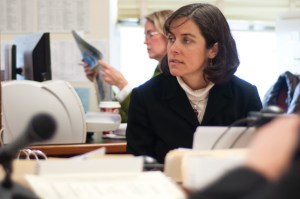
But it’s the first time in recent memory lawmakers have been faced with making additional cuts after a budget has been proposed, according to Rep. Mitzi Johnson, who is in her first term as chair of the House Appropriations Committee. Johnson and her counterpart in the state Senate, Jane Kitchel, sent a memo to the administration requesting a recommendation by Friday.
“We’re still trying to struggle to understand all of the implications to Vermonters of the $94 million in cuts and then to have the $18 million of General Fund downgrades on top of it is difficult,” Johnson said.
Without a plan from the Shumlin administration, lawmakers are taking it upon themselves to come up with ideas for resolving the mounting budget crisis.
The total official gap, with adjustments, is $110 million, but that number doesn’t include a number of ifs in the governor’s budget.
Lawmakers have no enthusiasm for the governor’s $90 million payroll tax to cover increased Medicaid reimbursement rates. Problem is, the tax papers over a $16 million hole in the Medicaid budget, and it doesn’t cover another $1 million for an all-payer waiver.
Another tax increase that would eliminate a deduction for state taxes paid the previous year, would bring in $1 million less than the $15.5 million expected. A $1.2 million fertilizer fee was just tossed by the House. The Joint Fiscal Office has also downgraded lottery revenues for the Education Fund that would be used to solve a budget hole in the General Fund for the Vermont Veterans Home.
With all of these factors in play, the gap go as high as $130 million, based on Joint Fiscal Office figures released on Wednesday.
The governor’s proposed state workforce reductions of $10.8 million are also an open question. The state employees union is balking at the Shumlin administration’s proposal to cut $5 million from pay increases to state workers. The Vermont State Employees Association is not obliged to reopen the contract to renegotiate a roughly 4 percent increase in salaries approved last year by the Legislature. If the union is unwilling to renegotiate, the Shumlin administration would have to impose a reduction in force of 100 to 205 positions to reach the target budget figure, according to Steve Klein, the director of the Joint Fiscal Office.
“You’d be cutting all raises, cutting everything that went through the Pay Act, and the problem with that the union contracts, they’re in law, you’ve given people the raises, and the union has no obligation to come back and renegotiate,” Klein told the House Appropriations Committee. “Unless unions came back and voluntarily renegotiate, you’re really talking about telling departments to take a $3.7 million value cut to people and the General Fund. There needs to be a lot more thinking on what this is, and how realistic it is.”
The $5 million is “above and beyond the other cuts that agencies are already hearing about,” Klein said. The governor also wants to reduce workforce spending across state government by $5.8 million.
In a rare joint hearing of House Appropriations and the House Ways and Means committee, Johnson laid out the options outlined in a spreadsheet from the Joint Fiscal Office. The options are not palatable, and lawmakers don’t have time to do the kind of wholesale examination of state government and restructuring that they believe is necessary to address ongoing budget gaps.
In the open discussion, lawmakers expressed frustration with their inability to address the key question, posed by Rep. George Till to the members of House Appropriations: “In the end, your committee decides how much we spend. How do we get to the answer? What is the right amount to spend and how do we get there?”
Rep. Carolyn Branagan boiled the situation down to one sentence. “We’ve been spending too much money and it’s been happening for years,” she said.
“It’s an assumption to say we’re spending too much,” Rep. Allison Clarkson countered. “Maybe we are spending what we need to be spending. To me, it’s a big question maybe we’re spending the right amount. Maybe this is what we should be doing.”
Some of the choices lawmakers are considering drastic measures, including: across the board cuts, the elimination of departments and/or programs, cutting programs that receive federal funding, raising revenues and eliminating some of the $1 billion in annual tax breaks the state allows (also known as tax expenditures), such as the sales tax exemption on clothing.
None of these ideas yet have the blessing of the Shumlin administration.
In a press conference last month, Shumlin said he will work with the Legislature to come up with a plan for filling the $18.6 million hole, but when asked if he would make a recommendation, he got testy.
Reporters asked about the size of this particular hole, which was compared with the $31 million gap he proposed rescissions for in July. In response, the governor said, “Well, bigger compared to what?”
“There’s been years when I’ve seen bigger downgrades some years, and I’ve seen bigger upgrades. That’s just the way you roll, you have to deal with the numbers you have,” Shumlin said. “In this case, which is true with every governor, you submit a plan based on what you’re already given and then when the numbers change you get together with the Legislature after you’ve submitted the budget to make it balance.”
House Speaker Shap Smith said in a recent interview that the ball is in the governor’s court. “It’s appropriate for them to put something on the table, or at least work with our people to figure out what would be acceptable.”
Smith said there is not “complete agreement” about how the governor proposed to solve the $94 million gap, and he wants his committees to take a “holistic approach.”
“I think that we need to spend time looking at the big picture first, then identify some areas of concern about what the governor proposed,” Smith said.
A big picture cut he identified in a report from Seven Days is the elimination of the Department of Information and Innovation, which has a budget of $22 million.
The House Appropriations and Ways and Means committees plan to hold future joint hearings on the budget and tax bills.
Editor’s note: Elizabeth Hewitt contributed to this report.
CORRECTION: The base DII budget will not increase to $36 million in fiscal year 2016 as originally reported. The department is now counting $10 million in spending on “demand services,” an expenditure that wasn’t included the base budget last year.
