

[B]URLINGTON — Rachael Miller walked along Burlington’s North Beach scouting for pieces of trash. With her hands chilled by the early winter cold, she picked up a thin sheet of plastic about a square inch in size before it shattered into pieces.
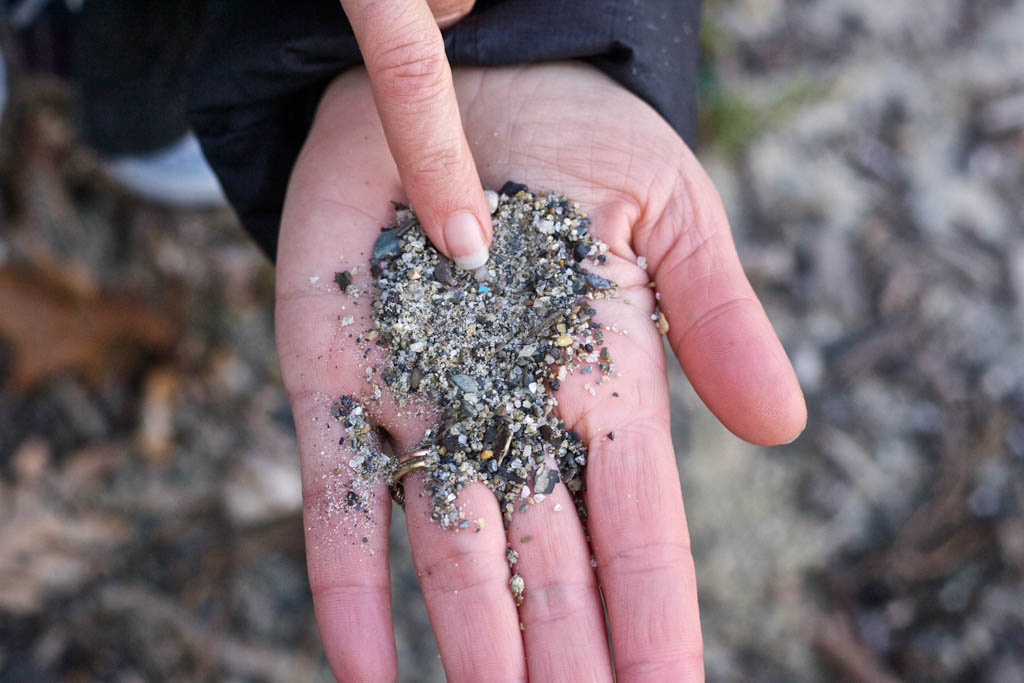
“That’s started to photodegrade already,” she said, and gathered the pieces she could and placed them into her shoulder bag. “The more you look, the more you find.”
Speckled along the shores of Lake Champlain are bits of trash either left behind or too small to easily spot: shotgun shells, food wrappers, a weather-eroded baseball cap with an exposed inner plastic brim and pieces of plastic, glass and paper not much larger than a speck of sand.
Miller, who co-founded the Granville-based nonprofit Rozalia Project in 2009, has been keeping tally of this shoreline trash. Her organization estimates there could be up to 7 billion pieces of marine debris weighing 51.5 tons in total along the lake’s shoreline, according to a report released this month.
The researchers, based on a 60-foot sailboat off the coast of Kittery, Maine, study marine trash across the nation. After Tropical Storm Irene, the group in 2012 collaborated with the Vermont Department of Labor to clean up trash. Miller said the workers collected 500,000 pieces of rubbish.
In June 2013, she and her team began collecting trash along Lake Champlain to study the concentration, distribution and type of marine debris. Among the most common type of trash was small bits of plastic nearly impossible to clean up.
“Plastic breaks up,” she said holding up the tatters of a baseball cap. “It doesn’t biodegrade and it doesn’t dissolve. It does what is called photodegrade. And then you get into the situation of microplastics.”
According to the study, microplastics are defined as smaller than 5 mm in size. By count, microplastics are among the most common litter on Lake Champlain’s shorelines, second to microfoam, which Miller believes comes from docks.
The organization collected 40 random sediment samples at nine publicly accessible sites around Lake Champlain. The team walked along the beach, tossed a one liter yogurt container in no particular location, and collected a sample where it landed.
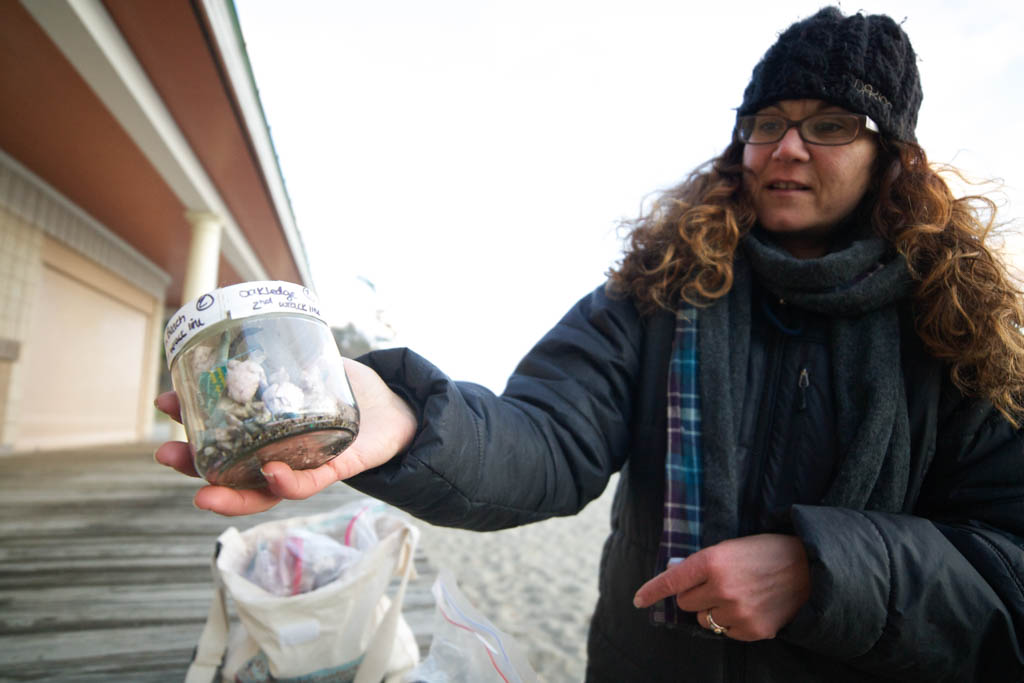
The team then sifted through the samples and pulled out bits of any manmade microdebris with tweezers to calculate trash densities in certain locations along the lake. The team found nearly 800 pieces of 20 different types of trash, such as foam, paint, paper receipts and resin pellets.
The concentrations were highest in urban areas, according to the study. In Burlington, the researchers estimated there are more than 50,000 pieces of trash on average in a given cubic meter.
Miller said the organization does not know exactly where the trash comes from. She said some trash, like empty shotgun shells and wrappers, is left behind on the beach. Other trash is found in the streets, crushed by automobiles and then carried with the rain through the cities’ stormwater filtration systems.
“The lake is downhill of everything. All of our storm drains of course are going straight to the lake. And that is what I suspect is one mechanism of getting microplastics into Lake Champlain,” Miller said.
The report did not discuss the environmental impacts of marine debris, but did open by stating it has the “potential to cause significant harm to a lake ecosystem, its creatures and the food web via entanglement, ingestion and the breakdown of organic compounds; as well as posing a threat to recreation, human safety and economic vitality.”
Miller said the best defense against the accumulation of marine debris is preventing it from entering the water in the first place (and collecting the trash before it breaks down). She said the group is launching a “clean ocean certified” program, hoping to make North Beach the first publicly accessible beach to be certified.
The certification may require replacing overflowing trash cans with solar-powered BigBelly waste and recycling bins, implementing education and awareness programs, and voluntary shoreline cleanups to remove trash from the beach, she said.
“It’s going to take people working together. And it’s going to take municipalities stepping up and making recycling more accessible and easier,” Miller said. “”We believe that we can get ahead of the problem of marine debris.”

