The new commissioner of the Public Service Department is concerned about systemic problems at Vermont Yankee, and he wants the Nuclear Regulatory Commission to provide more details about the federal agency’s 2012 decision to relicense the nuclear plant.
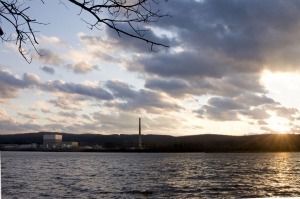
Commissioner Chris Recchia’s inquiry into how the NRC provided a new 20-year license for the plant came after two infrastructure incidents last week.
“I’m seeing system problems and equipment problems,” he said. “I’m concerned about how those systems were evaluated during licensing. They are all aging. Were they tested? Did they perform as they intended to? Does the NRC see issues that they didn’t consider properly or should have considered more in the relicensing process?”
The first incident at Vermont Yankee occurred last Monday, when plant workers were testing the ventilation system in a reactor building.
The plant is currently shut down for refueling and maintenance, and during these tests a 6-by-10 foot “blowout panel” blew out due to over pressurization.
”If the reactor building is threatened by tornado-force winds, the panels can blow out and provide near instantaneous pressure equalization in the building,” said NRC spokesman Neil Sheehan. “They are designed to open at specific differential pressures. Other structures, including turbine buildings, are also equipped with blowout panels.”
Entergy spokesman Jim Sinclair said that the panel has been replaced, and there is no problem.
“The panel did what it was designed to do, and there was no consequence from the situation,” he said.
But Recchia said that the incident is cause for concern.
In a March 21 letter to NRC Regional Administrator William Dean, Recchia pointed out that the panel blew out as a result of ventilation issues and that it should have been affixed to the reactor, rather than dropping onto the roof of the turbine building.
“The information provided to me is that due to incorrect ventilation line-up, pressure increased in the secondary containment until a blow-out panel released,” Recchia wrote. “The panel, when released, should have been secured to the structure by an attached wire rope to prevent it from falling from the building.”
Recchia’s letter also inquired into how the NRC has evaluated the plant’s mechanical components, its exhaust system, its procedures for detecting abnormal equipment and other infrastructure areas associated with the blowout panel.
A day after that incident, water flooded into an electrical switchgear room at the plant from dredging on the premises.
According to the NRC, a worker was installing a new transformer in the room, when the individual noticed water entering from a manhole.
“The level of water inside the switchgear room manhole was less than two feet at all times,” NRC’s Sheehan said.
Vermont Yankee personnel began inspecting outside manholes on Saturday, and they found a displaced mechanical seal on the outside manhole, which allowed the water to enter, according to the NRC.
Sheehan said that Vermont Yankee replaced the mechanical seal with a foam seal on Sunday.
“The bottom line is that the water in the switchgear room manhole was quickly identified and action taken to mitigate it,” Sheehan said. “There were no impacts on the electrical equipment. The replacement of the seals will prevent a recurrence of the problem.”
Vermont Yankee spokesman Rob Williams said the situation was resolved immediately.
“We have since replaced the seal plug and four others with a better design to preclude a similar situation in the future,” he said.
Recchia said he’s concerned about the incident because it’s reminiscent of a similar manhole problem the plant experienced a year prior.
“This is a very complicated plant. There are a lot of things that need to work and need to work well,” Recchia said. “I’ve been here two and a half months, and I’ve got two or three incidents that cause me concern. I want to understand how the NRC looked at these systems when it relicensed the plant.”
These incidents occurred the same week that the NRC began investigating Vermont Yankee’s finances. The NRC is concerned that the plant’s fair value plummeted to below a third of its carrying value in 2012.
Recchia said his department is also concerned about the aging plant’s finances.
“We’re concerned that VY is able to meet all of its obligations in terms of having the plant operate and meeting its commitments to its employees as well as the state,” he said.
He is worried about the plant’s financial capacity to properly manage its facilities and to decommission when the time comes.
Asked about systemic problems at the plant, Williams said: “For some perspective, the plant operated continuously for almost 500 days this last operating cycle, which is only possible when you maintain a plant to high standards and learn from industry operating experience and your own.”