

This story was updated at 9:45 p.m. on Dec. 12, 2012.
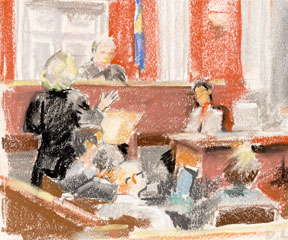
The Public Service Department asked the Vermont Supreme Court on Monday to deny the New England Coalition’s request to halt Vermont Yankee nuclear plant’s continued operation until the plant has a new or amended certificate of public good.
The department’s request comes on the same day that Vermont Yankee’s operator, Entergy, filed a motion against the state in federal district court. The motion calls for a mandated withdrawal of the coalition’s complaint.
What’s interesting about the motion is that it’s filed under the same docket number as the case that Gov. Peter Shumlin, Attorney General Bill Sorrell and the Public Service Board lost in federal court to Entergy earlier this year.
Although the coalition is not a party to the action, Entergy argues that the coalition is within the reach of the court because the organization is attempting to enforce state law. Entergy argues that the coalition cannot do this and calls on the federal court to mandate that the group withdrawal its complaint.
Geoff Commons, director of public advocacy for the department, said that the department does not want to get bogged down in four legal proceedings over what is essentially the same matter: Entergy’s continued operation.
He referenced proceedings in the Supreme Court, the federal district court, the second court of appeals, and the Public Service Board. The state is currently appealing a decision made by U.S. District Court Judge J. Gavarn Murtha that says the state does not have the authority to shut down the plant.
Commons argues that the state should focus on the litigation in front of the Public Service Board and that, ultimately, the decision to deny the plant’s future operation rests in the board’s hands. The quasi-judicial board determines whether the plant gets a certificate of public good to continue operating.
“We certainly appreciate the New England Coalition’s consistent and persistent advocacy on this issue, and we don’t disagree with their desired result,” he said. “But we are focusing on the Public Service Board part of the litigation, which is essentially the same issue of whether Vermont Yankee should be able to operate.”
But Jared Margolis, the coalition’s attorney, doesn’t think the department’s argument adds up.
“This doesn’t interfere with ongoing proceedings with the Public Service Board,” said Margolis. “No one’s asking the department to be involved if they don’t wish to be.”
The Brattleboro-based coalition filed a complaint with Vermont’s highest court last week. It made this request after the Public Service Board’s recent denial of Entergy’s motion to amend its sale order, dry fuel storage order and certificate of public good.
The dry fuel storage order banned the plant from storing spent fuel on the site generated after March 21, when the state’s permits for Vermont Yankee expired. The sales order prohibited the continued operation of the plant beyond that date without the board’s approval.
Since Entergy failed to follow these orders and the board won’t amend them, the coalition is requesting that the Supreme Court enforce the orders in accordance with Vermont statute — a legal method that hasn’t been used since the 1940s.
Commons, however, thinks that there is an issue with the coalition’s case.
“We think one problem is that the PSB has not ordered the relief the NEC is trying to get the court to enforce,” he said. “There are all kinds of hints and suggestions in the board’s relevant orders, but they have never ordered Yankee to shut down.”
Margolis countered this assertion.
“There’s a fundamental issue here that is incorrect in the department’s response,” he said. “The department argues that there’s no order for the court to enforce.”
But Margolis takes the stance that the original docket order, which is the basis for the coalition’s complaint, does order the plant to stop operating. That, he said, is why the coalition is appealing to the Supreme Court: to enforce the order.
Commons did acknowledge the parties’ different views and indicated that the coalition’s litigation tactic has spotlighted a legal gray area.
“The NEC is reading the board’s orders separately than we are,” he said. “It’s convoluted legal territory. It’s not totally clear what the Vermont Supreme Court will do with this.”

