

Vermont residents who are eligible for fuel assistance sent an unequivocal message to lawmakers on Tuesday: We’re cold, and less assistance coupled with higher fuel prices will force us to make tough decisions.
If Congress cuts the Low Income Heating Assistance Program, many Vermonters who rely on subsidized fuel oil will have to choose between buying groceries and heat for their homes.
Three committees in the House of Representatives — Human Services, Natural Resources and Energy, and Ways and Means — took testimony on the impacts of reduced federal funds on Vermonters.
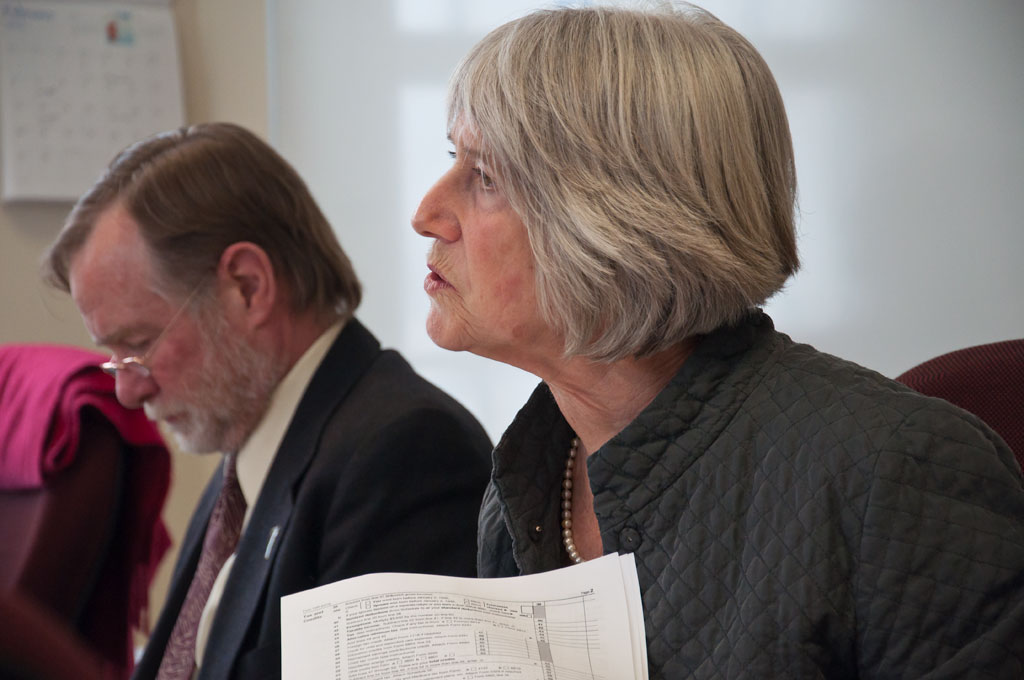
Carol Shephard, 60, said decreased assistance to heat her South Royalton home may force her to choose between food, prescriptions or heating this winter.
“I’m cold all the time,” Shephard said in testimony.
Shephard said the $319 she got this year for heating assistance was not enough.
“I don’t know what to do,” she said. “Why take money away from those who need it most.”
Jean Park, 81, said she received $220 for the winter season to heat her mobile home in Bennington. By the time Congress decides what to do about funding for low-income people, it might be too late because she said she might already be frozen. The assistance will not be enough to keep her warm.
“It’s a mean rotten selfish thing for the government to do to its own people,” Park said.
Last year Congress gave a total of $4.7 billion in Low Income Home Energy Assistance Program funding to low-income households. A proposal by the Obama administration to control spending would decrease that amount to $2.57 billion. Appropriations bills in the Senate and the House would provide $3.6 billion and $3.4 billion respectively.
For Vermont, the spending cuts could mean cutting funding the state receives from about $27.5 million in 2011 to around $11.6 million for 2012.
Vermonters who make 185 percent of the federal poverty level are available for heating assistance, according to numbers from the Department of Health and Human Services. On average, in 2011, those who received assistance got about $866 for the fuel season. Under the Obama proposal, the average benefit would be $373.

Rep. Peter Welch and Sen. Bernie Sanders have introduced legislation in both the House and the Senate to restore funding in 2012 to the $4.7 billion level nationally. Congress will make a decision about the funding In the coming weeks, but at the state level, people are already pitching ideas for how to deal with the shortfall.
One is a transfer loan of $2.5 million from the state’s Weatherization Trust Fund to make up for part of the shortfall in LIHEAP funding. This additional funding would bring the average benefit for those receiving assistance up from $373 for the fuel season to $474. Weatherization assistance is funded at the state level via a gross receipts tax on bulk fuels. Oil and propane distributors that receive more than $10,000 annually for the sale of bulk fuels pay one-half of 1 percent of the retail sale of fuel through the tax.
The problem with this proposal is that the Weatherization Trust Fund is already in trouble. One million dollars in funding from the Department of Energy is already threatened by budget cuts and American Recovery and Reinvestment Act funding sunsets.
Liz Schlegel, director of community outreach for Central Vermont Community Action Council, says borrowing from the Weatherization Trust Fund is a shortsighted idea.
“It’s not good economic policy to do a short-term fix at the expense of a long-term fix,” Schlegel said.
Schlegel says the short-term fix for heating assistance may be necessary, but weatherization is something that can reduce energy use for years to come rather than the band-aid approach of simply helping people out with fuel bills. Another piece of the puzzle, Schlegel said, is looking at better ways to take care of the state’s low-income people amid looming budget cuts at the federal level.
“We need to take care of people holistically,” she said. “They’re not in a vacuum.”
The potential decreases in LIHEAP funding are frightening for low-income Vermonters, but there are some creative ideas that could help make up for the shortfall.
James Reardon, commissioner of the state Department of Finance and Management, said $23 million in the Human Services caseload reserve account as well as funding from the state’s revenue shortfall account are available. He made clear, however, that he was not advocating using those funds.
Fuel dealers are also required to offer a discount to customers who receive fuel assistance. This year, it is 10 percent.
Matt Cota of the Vermont Fuel Dealers Association took a shot at Vermont’s natural gas utility — Vermont Gas Systems — which is not subject to the fuel discount.
Cota also floated the idea of a itemizing the gross receipts tax on customers’ fuel bills, much like the energy efficiency surcharge gets tacked onto electricity bills.
Michael Sirotkin, legislative advocate for the Community of Vermont Elders, offered a few ideas for funding the potential shortfall.
For one, the state could increase the gross receipts tax, dip into the state’s rainy day fund and caseload reserve, or access $10.8 million that has been set aside to deal with federal cutbacks.
Sirotkin also proposed having the state’s two largest utilities pay into the fund if the Vermont Public Service Board approves a merger between Green Mountain Power and Central Vermont Public Service — the state’s two largest utilities. In the 1990s, both utilities locked into a contract with Hydro-Quebec which ended up losing money. The Public Service Board approved a ratepayer bailout so the utilities would not go bankrupt with the caveat that in any future merger or acquisition above book value, the utilities would have to share the profits with ratepayers. The utilities contend, however, that the savings the merger will provide compensate for this.
While the joint committee meeting continued at the state house, Speaker of the House Shap Smith, Senate President Pro-Tempore John Campbell, Chair of the Senate Appropriations Committee Jane Kitchel and Chair of the House Appropriations Committee Martha Heath penned a letter to the Vermont Congressional Delegation supporting their work to retain LIHEAP funding.
Gov. Peter Shumlin held a telephone press conference on Tuesday with officials from Massachusetts and New Hampshire, urging members of Congress to full fund LIHEAP before the holiday break.
“We do not have the resources to make up all the funds to make sure (residents) don’t freeze in their homes,” Shumlin said.
For now, says Fuel Assistance Program Chief Richard Moffi, the state may hear at the end of the week what Congress plans to do with the program or not. He said the program was dealing with budget uncertainties until March last year.
Luckily for low-income Vermonters, it has been a mild November.
But on the stormy political front, Moffi said, “it’s been really frustrating this year.”

