LUDLOW — There are two things certain when it comes to health care policy: costs and controversy.
At least that was the theme at a forum on Act 48 Thursday in Ludlow. Six leading figures in health care policy traded tit for tat as they debated the merits and potential pitfalls of Vermont’s emerging new health care system.
All six panelists could agree that the rate of health insurance premiums is rising at an unsustainable rate — 9 percent annually for the average U.S. family covered through an employer according to a study by the Kaiser Family Foundation. And most agree that the state and the country need to do something about this issue.
After that, it got more nuanced.
In a relatively full auditorium, with a noticeably older crowd, panelists on all sides of the political spectrum traded blows on the issue.
The main target was Act 48, Vermont’s new law which aims to create Green Mountain Care — a publicly-financed health care system that will provide coverage for all Vermonters. The law charges an appointed five-member board with developing a benefits package, three-year budget, payment reform, and a general plan for the system. The system could go into effect in 2014 pursuant to an exchange requirement under the federal Patient Protection and Affordable Care Act, which requires that each state create a Health Benefits Exchange that offers residents of the state the means to compare information on different plans.
While proponents of a universal healthcare system are optimistic about its ability to cut administrative costs and provide a more streamlined system with coverage for all, opponents doubt that the state can make it work.
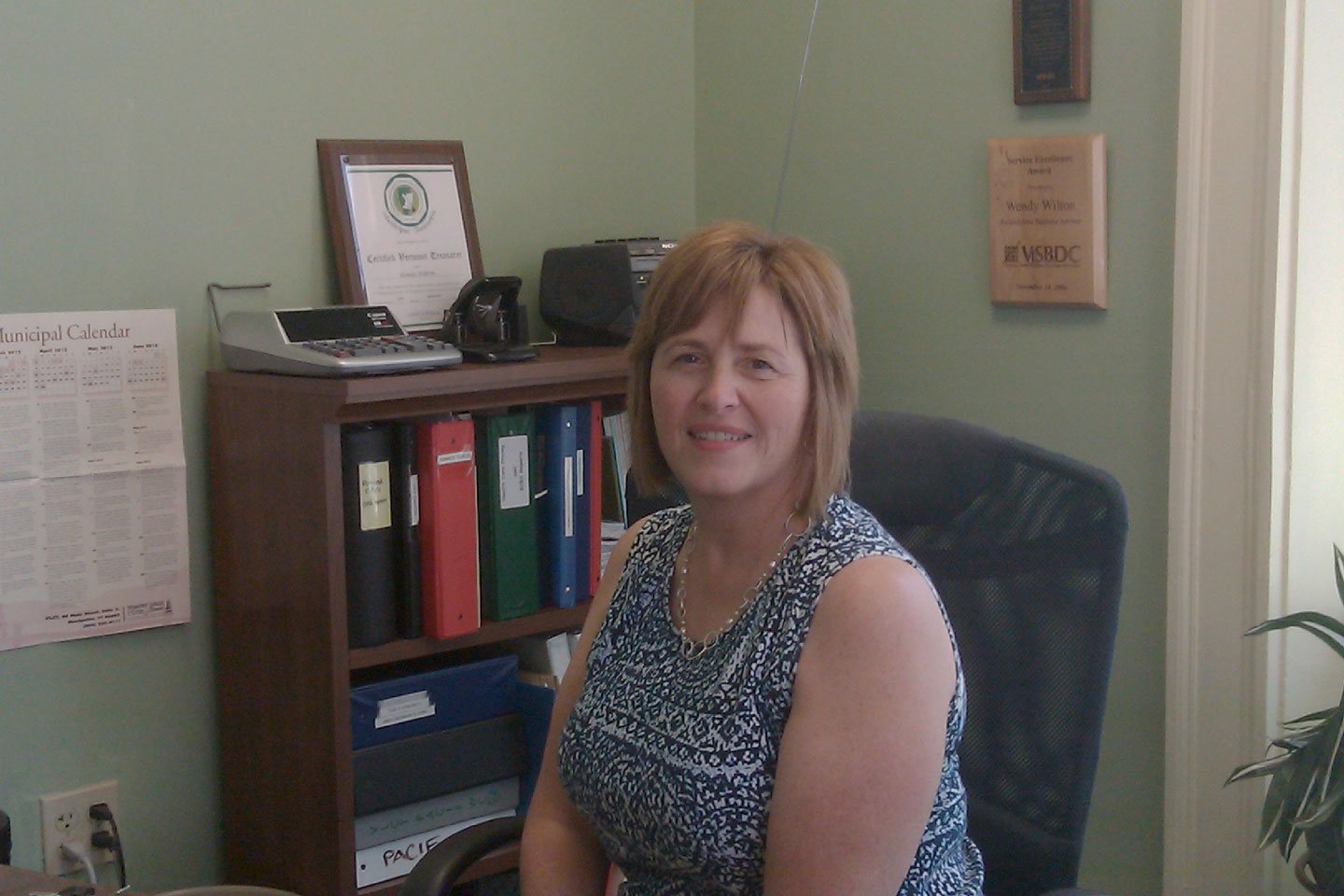
Wendy Wilton, treasurer for the City of Rutland, drew applause from the crowd when she said that people who have unhealthy habits have the potential to raise costs for everyone in a universal healthcare system. She argued that people who smoke or are overweight should have to pay more or get less health care rather than spreading the cost among all residents.
“People are willingly and knowingly causing health problems. Why do I have to pay for that?” Wilton asked rhetorically.
Wilton has been calculating potential financial outcomes of Green Mountain
Care, the universal health care system that Act 48 mandates, and she predicts it will cause the state a $2 billion budget deficit within five years. Wilton claimed no one has challenged her calculations, although they differ sharply with forecasts by Dr. William Hsiao, the Legislature’s consultant and chief architect of the state’s version of universal coverage. Hsiao has estimated $588 million in systems savings in just the first year of the plan.
Under the act, the Joint Fiscal Office and BISHCA produced a preliminary cost estimate in April and will produce a final estimate in November. A financing plan recommendation is due Jan. 15, 2013.
Even Wilton agreed, however, that some reform is necessary since the costs of health care are rising faster than the economy.
We’re doing something wrong, and we can learn from these other countries.”
- Deb Richter
While skeptics of Act 48 are leery about whether a universal healthcare program will be financially viable, proponents argue the state has to do something to change the status quo.
Deb Richter said evidence shows there is something deeply wrong with health care in the United States. Richter is a physician and the president of Vermont Health Care for All, a nonprofit organization that advocates for a universal health care system. She pointed to a 2010 study by the Commonwealth Fund that compared the United States with six other industrialized nations. Despite having the most expensive health care system in the world, the United States ranked last or next to last in quality, access, efficiency, equity and healthy lives.
“We’re doing something wrong, and we can learn from these other countries,” Richter said.
Richter said that what Vermonters are not paying in insurance premiums, they are paying in taxes and out-of-pocket expenses. She said the state needs to take a close look at the entire system and work on reining in costs—an area where she said the private sector has failed.
According to a recent health care expenditures analysis by the Vermont Department of Banking, Insurance, Securities and Health Care Administration, Vermonters spent $4.7 billion on health care in 2009, and that number is predicted to rise by 5.7 percent from 2010 to 2013.
Bob Gaydos echoed the common theme that the United States and Vermont health care systems are “unsustainable.” Gaydos is a principal at Digital Insurance, an employee benefits agency that specializes in medical insurance for small and mid-sized businesses. He said the health care system needs to encourage innovation and that the state needs to pursue the idea of a competitive, market-based exchange where businesses and individuals have a choice as to which plan they want.
Steve Kappel, an expert in financial modeling and founder of the consulting firm Policy Integrity, shied away from making any promises about what would be the end result of a universal health care system. He said the key is taking a step back and deciding what we value.
Kappel said health care is complex because it includes “metaphors about who we are and what we believe in.”
He said the general idea is to create incentives for keeping patients healthy rather than encourage more fee-for-service care where hospitals and doctors have an incentive to do more procedures and more tests in order to increase revenue. A global budget would help shift this incentive, Kappel said. The basic ethical question, he said, is: “What do we owe each other, and how well does the system meet that need?”
Where Kappel was philosophical, Darcie Johnston, founder of the group Vermonters for Health Care Freedom, was political. Johnston has pushed for an early release of the financing proposal for Green Mountain Care before the 2012 election. She said Act 48 could eliminate the benefits of a free market system where people can choose their own insurers. She and Wilton both argued that a universal program could push doctors out of the state to higher-paying jobs.
Sen. John Campbell, D-Windsor, defended the proposed plan against allegations that it would drive doctors out of the state and result in rationing care. Campbell said the state should encourage doctors to go into primary care rather than the higher-paying specialty positions and work on more creative programs like loan forgiveness for primary care physicians. He said one of the main benefits of a universal, state-run program is the cost savings of reduced paperwork and other transaction costs that health care providers have to deal with when they get paid through numerous insurance companies.
As the healthcare debate continues, Vermont is creeping closer to a universal healthcare system. Only time will tell the extent of its success.


Permalink |
“Wilton claimed no one has challenged her calculations.”
That’s incorrect. John Franco challenged her calculations. I challenged her calculations. Her numbers don’t add up.
Darcie Johnson said, “Act 48 could eliminate the benefits of a free market system where people can choose their own insurers.”
Let’s ask Ms. Johnson to describe the benefits of a free market system.
BTW – How does one become a “health care guru.” What are Ms. Wilton’s qualifications?
Permalink |
“benefits of a free market system where people can choose their own insurers.”
What benefits? The free market system almost killed me. Choose their own insurers? Good luck. You can choose them all you want; will they choose you is the question? They have all sorts of tricks to get rid of you. Then, if you choose an insurance company and are lucky enough to be chosen by them, you have to make sure that providers are networked with the insurance company. Luckily, in Vermont, this is fairly evened out between the three major insurance companies in the state — bcbs, mvp, cigna. And, then, you get into costs of deductible, co-pays, and all the rest of it.
Single-payer would eliminate this garbage and make it all one system, which we desperately need.
Permalink |
@Hoffer – Franco when confronted with a rebuttal went and hid. Hopefully Wilton checks this story online and responds to HofferwannaSalmon.
Permalink |
@Doug Hoffer-I challenged both you and John Franco to debate my projection against yours in a public forum. Doug, you did not respond when I challenged you on these pages, as Stan Hopson accurately points out. John Franco hid behind BISHCA Commissioner Steve Kimbell’s skirts when I challenged him.
What are my credentials? I am the Treasurer of the City of Rutland, pop 16,700, which is a full time position. As Treasurer I am responsible for recording and reporting financial activity relating to $37 million in annual revenues, an $18 million general fund, a $9 million payroll; I manage benefits for 155 active employees, 30 retirees and their families, and I administer a $55 million City pension. Prior to my election in 2007 I was a business advisor and bank lender for a total of 18 years, during which time I am sure I generated more financial projections and fiscal analyses than Mr. Hoffer and Mr. Franco combined.
I await your response for a public debate of my projection vs. yours…or will I hear “crickets”, again?
My projection is the only model to date that matches likely revenues to expenses to analyze the feasibility of a state health care fund. If readers of this forum are interested in a copy of my recent projection update, please contact me at wendywilton@comcast.net
Permalink |
Ms. Wilton
I posted comments on this site in response to your projections (the first one at 4:22 PM). In my view, it was (and is) fatally flawed.
http://vtdigger.org/2011/07/15/tea-partiers-demand-answers-on-single-payer-financing/#comments
Many many people engaged in a spirited back and forth but your only contribution was a call to debate. Why not respond to my comments about your projections right now? You complain about crickets but it’s three months since I posted my comments. vtdigger is a forum no different than renting a room for a debate. What are you waiting for?
This was my response to Anne’s musing about sponsoring a debate.
Anne
What are you suggesting be the basis of a debate? It’s pretty tough to debate about something that doesn’t exist. A debate now would muddy the waters and confuse people.
To some extent, I think that is the intent of Vermonters for Health Care Freedom. A debate in advance of information about the program would just be a repeat of the debate in the legislature about the concept rather than the details, which we don’t have. It’s like scheduling a debate about the FY13 state budget before the governor proposes a budget.
And furthermore, those arguing most vocally for a debate haven’t even responded to questions about Ms. Wilton’s figures or who funds her organization. The whole thing becomes a platform for those who want to scuttle GMC before the hard work is even done. Why not just wait until we all have something more concrete to talk about?
Permalink |
Ho hummmmm! More of the same discredited arguments against health care as a human right – the same fear mongering – the same odorous cowflop piled higher and deeper. Bob Gaydos with the discredited idea of “competative market based” healthcare adds to the pile, as does Wendy Wilton with her screed blaming the victims for their ‘bad’ habits. How much longer do we citizens have to listen to this pitiful nonsense? How overwhelming does the evidence have to be that anything short of a rational, single-payer, non-profit health care system will be doomed to failure. Ms. Wilton and Mr. Gaydos should watch Michael Moore’s Commie, Leninist, Marxist, Bolshevik film ‘Sicko!’
Permalink |
Wendy Wilton’s qualifications are no better than any number of small-medium size business owners. By no stretch a health care expert. Her study purports to say the proposed Green Mountain Care will cost too much. What projections does she have for her health care plan? Status quo – the only plan we have heard from her and her cronies – not only will cost more, it doesn’t work at all. How about being a real health care guru and propose something that will work?
Permalink |
“BTW – How does one become a “health care guru.” What are Ms. Wilton’s qualifications?”
Mr. Hoffer, for the same reason you are?
Permalink |
She states very clearly what she sees as her qualifications. Read before you speak.
Permalink |
The question was directed to vtdigger, which used the phrase in the headline.
I never claimed to be a health care guru.
Having said that, I raised a number of questions about her analysis that she has refused to address after three months.
Permalink |
Doug,
Understood.
My comment was directed more so to Mr. Jansen.
Permalink |
I attended the forum in Ludlow last Thursday night. One of the first questions from the audience was from a guy who asked Dr. Deb Richter (Vermont Health Care for All) and Darcie Johnston (Vermonters for Health Care Freedom) about how their respective organizations are funded. The gentlemen who asked the question prefaced his comments with the fact that there is a lot of “money” at stake in healthcare.
Dr. Deb Richter replied that her organization is mostly volunteer-run. VHCA has one part-time employee and runs on a budget of $25K (not a large amount, the cost mostly of the part-time employee, I would guess). VHCA is funded by donations from individuals and organizations who want to see healthcare reformed. Some of the funds come from Vermont and some from out of state. Dr. Richter stated that VHCA is a 501(c)(3) non-profit organization.
On the other hand, Darcie Johnston simply stated that her org, Vermonters For Healthcare Freedom is a 501(c)(4) org, and that she is not required to disclose her donors. These newer 501(c)(4) orgs have sprung up since the Citizen’s United Supreme Court case.
To which Dr. Richter replied, that her org, Vermont Health Care for All, is a 501(c)(3), so your donations are “tax deductible”.
As reported above, Darcie Johnston and Vermonters for Healthcare Freedom “has pushed for an early release of the financing proposal for Green Mountain Care before the 2012 election”
So while Ms. Johnston wants more transparency about the work of the Green Mountain Care board before the 2012 election, she is also hiding behind the 501(c)(4) designation in regards to the the non-disclosure of who is funding her organization.
As far as who the “experts” on the panel were, in my mind I would have to say, Dr. Richter for being a physician for many years. But I also enjoyed and appreciated the comments of the two panelists in the middle, seated next to each other, Steve Kappel (a healthcare policy wonk) and Bob Gaydos (works with small and medium sized businesses regarding healthcare plans). While these two men did not always agree, they found some areas of agreement. Both men were able to get into the details, yet explain in layman’s terms their ideas.
What I appreciated about Mr. Gaydos, even though he does have more of a “free market” bias, is that he seems to want to deal more with facts than “political ideologies”. Although neither Mr. Kappel and Mr. Gaydos are on the GMC board, I would hope that the GMC board would seek out their input. From my observation of the panel, I would venture to guess that if you put Mr. Kappel and Mr. Gaydos together for the purposes of coming up with solutions to our healthcare system’s problems, that they could get along and work together.
Mr. Gaydos brought up the trend that some large companies are now looking at hiring doctor’s (primary care) as employees and setting up clinics at their own office sites, rather than paying premiums (for at least primary care I presume). This may have an affect on supply of primary care physicians in the future, as an onsite salaried physician would be paid for seeing and treating a smaller number of patients (company employees), and not necessarily on a “fee for service” basis. At least Mr. Gaydos was looking at the healthcare system from a broader perspective, rather than merely from a financial perspective only.
I think the more that Vermont is able to continue these types of forums over the next few years, the better chance that Vermont can succeed in setting up a newer and better healthcare system.
It was nice to see a panel moderated by a journalist, rather than having legislators moderate the panel. Stewart Ledbetter did a pretty good job at this forum. I think the overall tone of all panel members was pretty civil, which is helpful to this process.
One question that I would like to have asked at these forums is whether the opposition (even though they disagree with Act 48) is committed to offering “constructive criticism” in a civil way, and not be like their party brethren in House of Representatives and Sen. Mitch McConnell (obstructionists par excellence).
Permalink |
I attended the health forum and found it to be informative, with significant contributions made by the panelists. Bob Gaydos raised some interesting ideas, including controlling costs with employer-based wellness programs, and by having company-employed primary care providers, as have been done effectively elsewhere.
Darcie Johnston requests that healthcare reform financing details should be made available sooner than Jan 2013. Vermont Representative George Till, who voted for the VT health care reform law, apparently agrees. Till states: “The delays are not necessary but are political in nature. The exact price tag can’t be known, but that is always true in state budgeting. That is why we do a budget adjustment bill every single year. However, what part of the new system will be financed through payroll tax, what part through income tax, what part through new and expanded consumption taxes, what other funding sources will be included does not require waiting until 2013.”
http://www.vtmd.org/sites/default/files/files/September%202011%20Newsletter.pdf
Wendy Wilton drew attention to the fact that financing might be a problem. I think many would agree that determining the funding mechanism should be a very high priority. In fact, Vermont Senator Randy Brock and others believe we should have figured out how we are going to pay for this before we even passed Vermont’s healthcare reform law.
Deb Richter was articulate in spelling out why she believes we need a single payer system. Unfortunately her mention of the Commonwealth Fund study, that shows that the US is dead last compared to six other countries, is a bit misleading. This study lacked scientific rigor as it was based on patient and physician surveys, that are subjective in nature and may have cultural biases (http://www.commonwealthfund.org/Publications/Fund-Reports/2010/Jun/Mirror-Mirror-Update.aspx). There is no doubt that the US ranks very poorly for its high health care costs, however I am skeptical of any study that ranks the UK higher than the US when it comes to timeliness of care. Additionally, the Commonwealth Fund study didn’t address ease of access to medical specialty care, cancer patient survival rates, or medical research efforts in their study, areas where the US excels. (http://www.ncpa.org/pub/ba649)
As we reform our health care system we need to keep an open mind and hear what everyone has to say, even when it opposes our own ideological beliefs. By keeping the dialog open and allowing everyone to share their concerns, we might better anticipate potential pitfalls, to minimize mistakes and unintended consequences that will occur during the reform process.
Permalink |
@Doug Hoffer: Again, I challenge you to create a financing plan for Green Mountain Care and debate my projection vs. yours anytime, anywhere. The debate will be more extensive than a give and take on VT Digger (no offense to Digger, BTW), and you know it Doug. Maybe, that’s why you won’t debate.
You say you can’t debate something that doesn’t exist. Well, you better go have a talk with your friend John Franco who was at BISHCA…I’ve seen his PowerPoints and timeframes for implementation and there’s definitely enough info there to start generating your own projection model of revenues vs. expenses. So what’s holding you back? What’s holding the administration back from generating a financing plan?
Who funds my organization? No one. The work that I have done was on my own time, and when I travel to give my presentation I have paid for the gas myself. I am so deeply concerned about the impact of this plan on my native state that I am willing to do this without an “organization” to foot the bill. But, I wouldn’t expect you to understand my dedication to something larger than self.
Permalink |
Ms. Wilton
I offered concrete criticisms of your projections months ago and you still refuse to address them. Either you have answers to my questions or you don’t.
Your final statement (“I wouldn’t expect you to understand my dedication to something larger than self.”) is as offensive as it is uninformed.
Permalink |
@Doug Hoffer: Oh, I’ve got the answers to your criticisms, Doug. I will address your criticisms in a public debate as I have stated at least three times to you. The media would be happy to sponsor this debate, I’m sure.
If your criticisms are valid then a public debate would bolster your viewpoint, wouldn’t it?
Wouldn’t the transparency of a public debate be a good thing for an issue of this magnitude and import? I am ready when you are, my friend. Do you need more time to form an “organization” before you can act on this?
Permalink |
Ms. Wilton
The “my way or no way” approach is not very mature.
I have addressed your projections in a very public and transparent arena; this web site. The validity of my questions can be ascertained today if you simply answer the questions.
If not, the only one who loses is you. I have nothing to defend. You do. A failure to respond leaves people wondering why. Personally, I am comfortable waiting for the various parties charged with the tasks to present their findings and proposals. At that point, we will have something meaningful to discuss.
Permalink |
I can’t resist responding to the comments in this article attributed to Sen. Campbell. The solution is to incent docs to become GP’s rather than the “higher paid” specialties?!!
Only a politician would see THAT convoluted notion as a solution.
“Now, honey…when you get out of college, I want you to aspire to be a good bank teller. Not the Manager, a V.P. or the President of the bank. Nooooo sir… not any of those “higher paid” specialties. Because, you see, we always need more tellers!”
Moronic in the extreme.
Permalink |
No offense to Ms Wilton, but when it comes to numbers, I put more stock in those generated by Dr. Hsiao, PHD, FSA, economics, Harvard University, Jonathan Gruber PHD economics MIT, Steven Kappel Policy Integrity, LLC.
As noted in Act 128, I am also comforted that the World Bank, regards Dr. Hsiao, “as the world’s premier authority on national health insurance programs.” Steve Kappel has been in involved in heath data and policy in Vermont for about 30 years. Jonathan Gruber’s own Micro Simulation Models have been used in states such as California and Wisconsin, and Federal policy analysis.
Permalink |
@John Ballard, no offense taken. I respect Dr. Hsiao and Steve Kappel for their credentials and their work. I have included the Hsaio savings in my projection, although not fully because not all of these savings are likely to be available. This is due to limits imposed by the legislature, who will be covered in the fund, or the timeframe of my projection. Dr. Hsaio cautioned the legislature that if VT did not create a single payer system to include all Vermonters (through waivers), then all the savings would not be available in the system. Rep. George Till (D-Jericho), a physician, discloses this in a recent interview with the VT Medical Society: “I have been clear in my opinion and every bit of Vermont specific data I’ve seen suggests overestimated administrative savings in the Hsaio report.” I agree with Till.
My projection model differs from the work of Hsaio, Joint Fiscal Office and the administration: It is the only work to date that matches likely revenues to expenses for the first five years of a state health care fund. A “rubber meets the road” type of approach.
But the Hsaio savings are not the main financial issue. The question I have attempted to answer is whether or not GMC is feasible and will it produce different financial results from the current system. Again, contact me if you would like to see it. Even for those who don’t agree with my conclusions it would be folly to ignore my call for serious financial due diligence.
Permalink |
Wendy,
First – instead of asking us to email you for a copy of your numbers, why don’t you just post them up on the web and give the world a link? You know – that transparency thing.
Also you wrote “I have included the Hsaio savings in my projection, although not fully because not all of these savings are likely to be available.” This leads me to believe you are engaging in the Art Woolf style of counting – only include convenient numbers and change those that aren’t (as Art did with his tax mis-study last year).
I would actually read your numbers – but not if they’re to remain hidden away.
Permalink |
Rama – In the event you get Ms. Wilton’s figures, here are my comments, which were posted here in July.
Ms. Wilton’s analysis appears to be fatally flawed on both sides of the ledger. For example:
1. The cost is not expected to be anywhere near the $3.2 billion projected by Ms. Wilton. The actual cost (premium payments minus Worker’s Comp) is more like $1.7 billion.
2. Ms. Wilton added the cost of supplemental coverage, which will not be part of a single payer system.
3. Ms. Wilton appears to have double counted administrative costs, which are included in the cost of premiums.
4. Ms. Wilton limited her funding estimates to revenue raised by taxing wages and self-employment income. Just because Dr. Hsiao recommended a payroll tax doesn’t make it the most sensible approach. Indeed, it would exclude $3 billion in unearned income from capital gains, interest, and dividends. Why would we do that?
Note that Ms. Wilton’s estimate of self-employment income does not grow for five years. I can only assume this is a typo because it would be most unusual in real life. For example, Census – using IRS data, reports that “non-employer” revenues grew 17% from 2003 to 2008.
5. Ms. Wilton does not account for the estimated $400 million in federal funds from the Affordable Care Act identified by the Hsiao report.
Permalink |
Phil,
Believe it or not, people do make career choices for reasons other than money or prestige.
I chose elementary school teaching over college teaching in 1970, although the latter path as wide open for me. I thought the former was more useful socially.
My son is in medical school in Vermont and heading towards primary care for the same reason.
Permalink |
Tom:
I appreciate your point, but where it fails is that “personal career choices” is not the same as state government policy that affects everyone’s healthcare.
The notion that growing the GP population and saying that that will solve the problem is a gross oversimplification. Eventually we all need contact with specialists that, under this scenario, will increasingly only be found OUTSIDE VT. And my point is that 1) Ol’ Doc Welby won’t solve that problem; and 2) GMC says NOTHING about how it will pay for that specialist in NY, CT or MA. Wouldn’t YOU like to know the answer to that?
Permalink |
VHCF has posted my work on their website as I do
not have one:
http://vthealthcarefreedom.org/sites/default/files/wendy-wilton-Green-Mountain-Care-financing-funding.pdf
Do you really think the feds are going to cough up an additional $400 million in Medicaid for Vt with the food fight that’s going on in DC? I say that’s doughtful and the JFO admitted as much to me this summer… Again, I am ready for the debate!
Permalink |
I apologize for the spelling error–I’m Ok with numbers but a horrible typist! Doughtful is not a word, but doubtful is.