

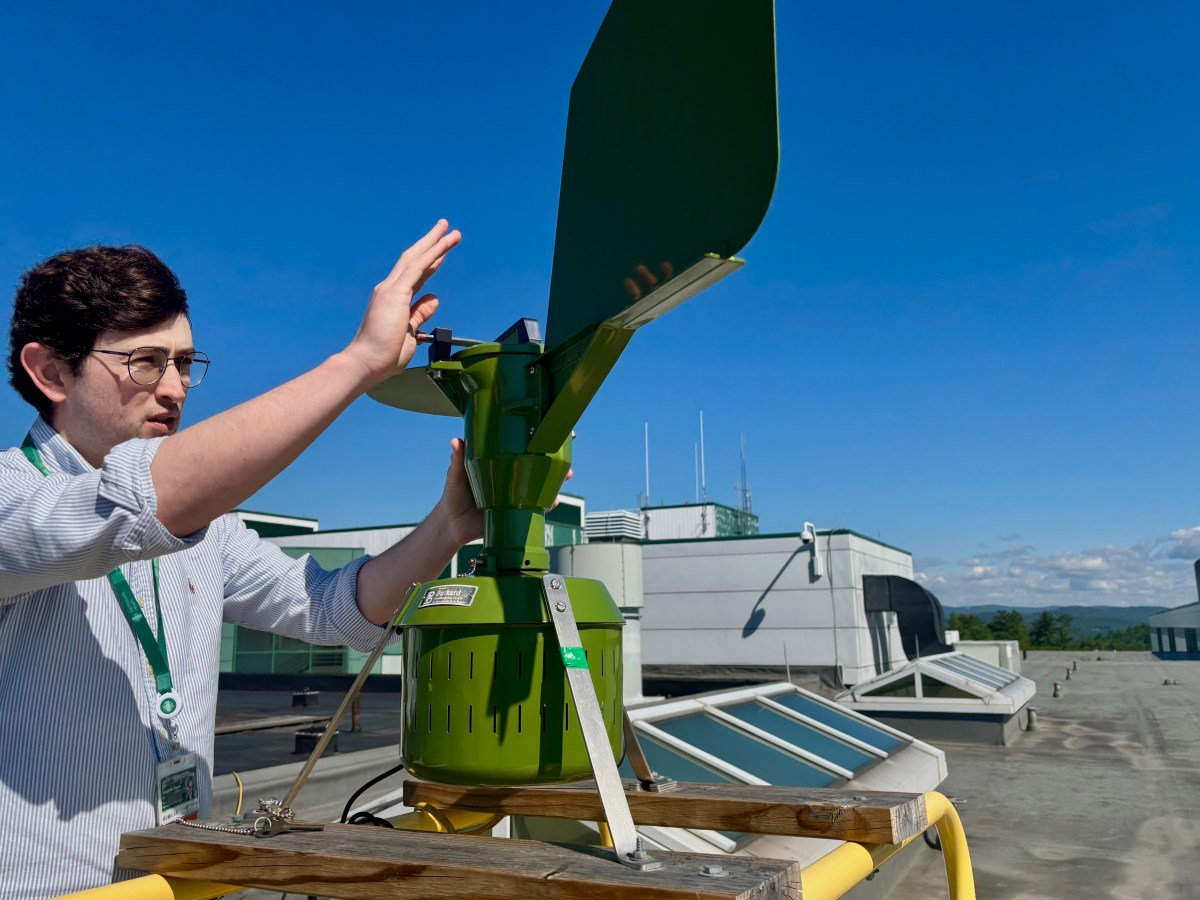
LEBANON, N.H. — On the roof of Dartmouth Hitchcock Medical Center, cast against a backdrop of the Upper Valley’s rolling green hills, a green metal motor no bigger than a blender hums as its rudder directs it to spin and turn with the breeze.
This unassuming device is the only one of its kind in New England. It’s a counter that catches pollen from the air and traps each day’s sample on a sticky strip of petroleum jelly nestled inside its metal drum.
It allows clinicians in Vermont and New Hampshire to have a better understanding of what exactly is in the air. Up until April 2025, when the device first came online, they relied on the closest device in Rochester, New York, for a snapshot of our skies.
Every week, March through September, Dr. Alex Zajack visits the device.
“Oh, that’s the most fun part,” Zajack said of his weekly rooftop sojourn. As a second-year fellow in allergy and immunology at the medical center, he assists with the day-to-day work of the project.
He repeats this ritual of visiting the hospital’s roof, emptying the drum and studying the particles under a microscope. He then shares the results with the National Allergy Bureau of the American Academy of Allergy, Asthma & Immunology.

This summer marks the first that Dartmouth Hitchcock has collected continuous data, after a May malfunction in the device cut collection efforts short last summer.
On Wednesday, Zajack pulled out a round metal disc from the collection device to find it rather sparse.
“It’s been a rainy week,” he said, explaining the relative lack of pollen. Sometimes, he removes the disc to see it covered with yellow dust.
By late June, the region is coming down from a big spike of pine pollen, Zajack said. He’s starting to see more grass pollen, alongside oak, maple and birch.
This spring’s quantity and type of pollen tracks pretty closely with that of last year.
“Everyone is always like, ‘This season is so much worse,’” Zajack said, “but I think they just forget how bad allergies are over the winter.”
It’s helpful to have a finer local measurement, as well as insight into what types of pollen are dominant, so clinicians can tailor allergy tests and treatments.
“We want to customize allergy shots, and we can adjust the (allergy testing) panel,” said Dr. Erin Reigh, who specializes in allergy and immunology at Dartmouth Hitchcock and leads the station.
She established the project in the fall of 2024, after the National Allergy Bureau of the American Academy of Allergy, Asthma & Immunology approached her about setting up a New England counter.
Identifying the different pollens in the samples, though, is not an easy task.
Zajack separates each day’s measurement from the device’s sticky film and turns them into slides that he reads under a microscope. A busy spring day can yield hundreds of pollens on a slide and can take hours to analyze.
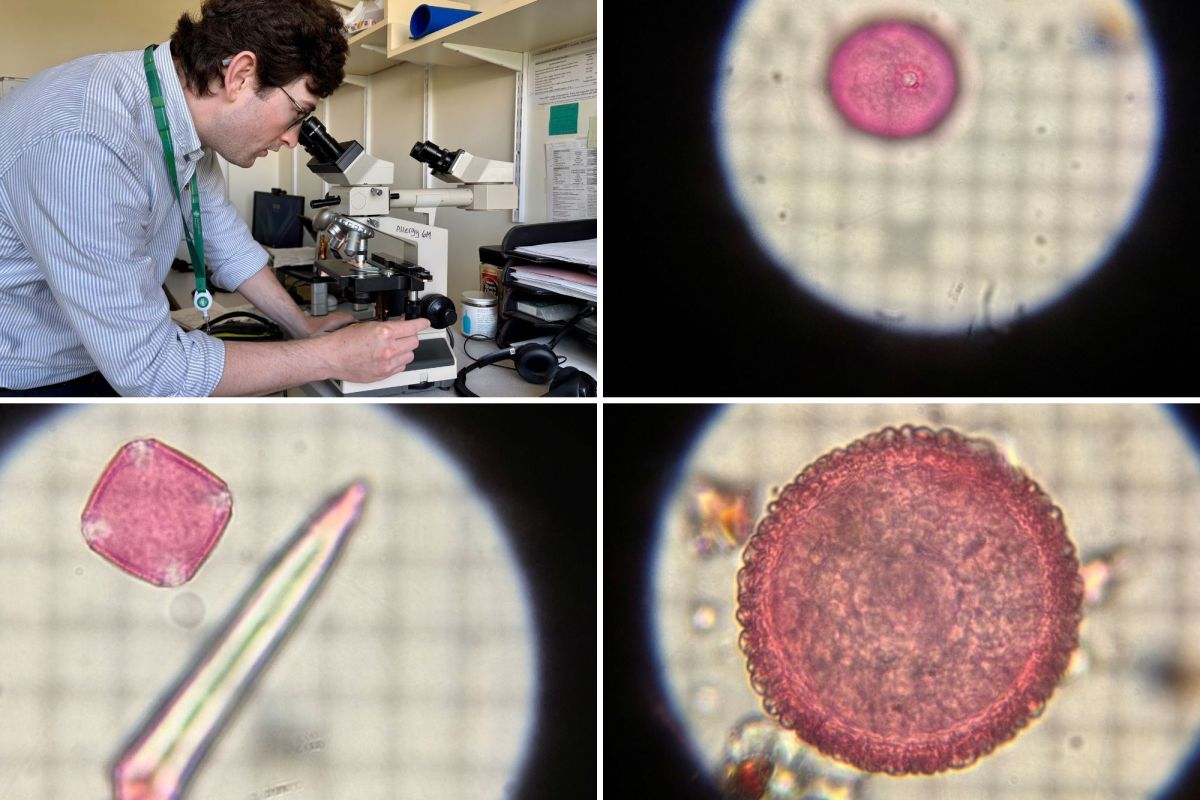
To an untrained eye, many of the pollens are indistinguishable — varying types of round, ragged circles. Zajack looks for traits in the pollen’s pores, their shape, size and edges. Pine pollen, for instance, has a distinct “Mickey Mouse ears” look of three overlapping circles. Grass, on the other hand, yields merely a circle.
Both Zajack and Reigh see the value in collecting long-term data for this national database, not only for clinical purposes but also for future research around weather and climate.
National data has shown that higher levels of carbon dioxide, which increases with the continued combustion of fossil fuels, can increase pollen production. Other research has indicated that warmer average temperatures extend plants’ pollen producing days, making for longer allergy seasons.
If nothing else, Zajack said, it’s empowering for patients to read the data in the National Allergy Bureau’s database, the same as a clinician or researcher might.
“It’s cool to give patients access to pollen counts,” Zajack said. “They can have a sense of their own care, and see what they are most reactive to.”
