


The road to Barre’s municipal elections is a bumpy one — literally.
The Granite City’s roads are full of potholes, an issue that has become a pet project for Barre Mayor Thom Lauzon. Lauzon persuaded the City Council to raise the city’s paving budget to $800,000 for the municipal budget vote that will be held along with local elections on May 12.
“I think everybody expects smooth and safe roads, and it’s gotten to the point in Barre where at times there are areas that get downright a little dangerous,” he said.
But the city’s monetary needs go well beyond its paving budget. While the candidates for this year’s elections seem to agree on what Barre needs — flood-safe housing and a thriving economy — they disagree on how money should be distributed to achieve those goals.
“We have very limited resources, and we can’t just go pick money off a money tree or just raise taxes, because the affordability issue is more acutely felt,” said Ward 1 city councilor Sonya Spaulding.
This year Lauzon — a local property developer who is in his seventh term as mayor — is set to go up against Bern Rose, a Democratic activist who has volunteered for many local organizations.
The City Council also has one competitive election between Spaulding and challenger John Hood, a local business owner endorsed by Lauzon.
And the Barre Unified Union School District plans to host a revote on a school budget, which failed in its initial vote in March.
The mayoral race
This year’s elections are coming off a disappointment of sorts for Barre. The city had pushed for a major federal grant to redevelop the North End neighborhood, the hardest-hit area of a city that was hit hard in the 2023 and 2024 floods.
But in April, the state’s Agency of Commerce and Community Development rejected Barre’s request for a grant, sending the city back to the drawing board.
Lauzon said he wasn’t going to point fingers at anyone.
“The overall message was that our vision for the North End wasn’t percolating to the top,” he said.
At the same time, he said he does sometimes feel frustrated that Barre seems to get passed over in favor of its surrounding communities. Montpelier and Plainfield’s grants were both accepted.
“I have a community here where we lost 50 homes in the North End,” he said. “And I see you funding new projects in other communities, and I have to scratch my head and say, ‘Well, why aren’t you helping the people who are hurting?’ But I lobby hard, I lobby respectfully, and I make the case for Barre.”
He said he’s now considering what options Barre itself might have through funding pathways like tax credits, a system the city has used with previous projects like City Place downtown.
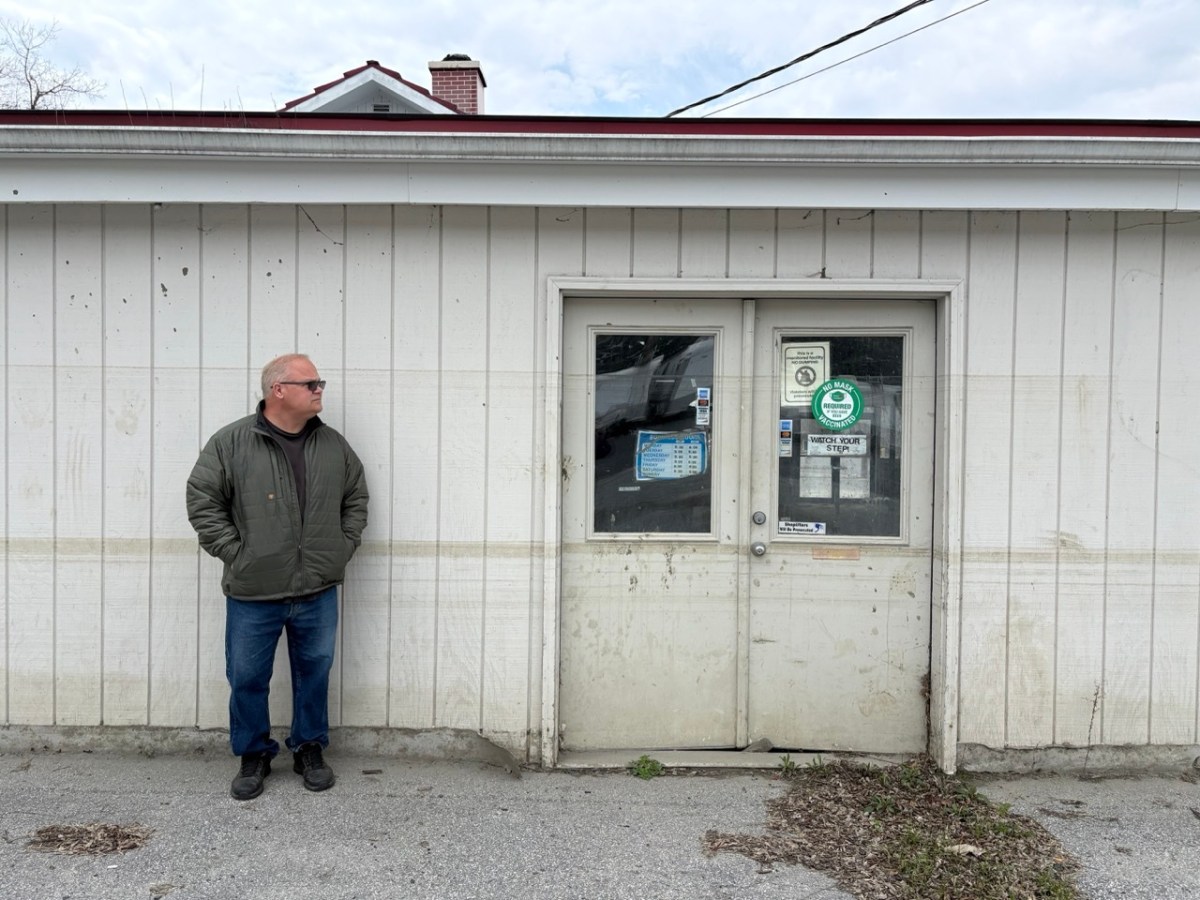
However, Rose, Lauzon’s challenger and a newcomer to election politics, was critical of the way city officials have handled the North End recovery. She said that while the city had pushed for state grants, it had neglected the North End at a local level in favor of projects that have local developers attached — like Prospect Heights, a potential housing development championed by Lauzon and the Barre Area Development Corporation.
Without naming any specific people, Rose said there’s a “network of power and resources” that influences the decisions being made.
“I see that possibility, if I — when I — become mayor, about bringing some of the balance back to the people and decisions back to the people, a little bit more,” she said.
She also disagreed with another major real estate purchase. The city allocated $400,000 in January 2025 to help the Barre Area Development Corporation buy 143 North Main St., a vacant building that once housed a five-and-dime store. The corporation ultimately raised a total of $800,000 and bought the building, according to its website.
Lauzon said he was disappointed that the former property owners, Jeff Jacobs and Steve Lewinstein, had refused an earlier, lower offer, but he said he looked at the site as an opportunity to bring money into downtown.
Rose said the funding vote was rushed and lacked transparency. The vote took place late in December and brought back recently resigned city councilor Teddy Waszazak, now a Democratic state legislator for Barre, who temporarily withdrew his resignation to vote in favor of the measure.
“I’d like to see more transparency on all levels, and I would like to see (that) when people from the community come to City Council, I want them to be welcomed, heard, and I want us to take whatever it is they bring seriously,” she said.
City Council
This year’s City Council race highlights the political divide in Barre, a city that elected both a Democratic and a Republican legislator to the Statehouse in 2024.
John Hood, the Ward 1 council challenger, has been endorsed by conservative-leaning people like Lauzon, Ward 3 city councilor Michael Deering and the 802 Scoop podcast. Spaulding, the incumbent, has campaigned with Rose, who served on the local Greater Barre Democrats committee.
Hood was not available for an interview, citing his busy schedule as owner of The Meltdown Grilled Cheese and Tap Room. In his campaign materials online, he said his years of experience in Barre helped him understand “the kinds of decisions that actually impact people’s day-to-day lives.”
“I’m committed to being accountable, staying transparent, and focusing on practical solutions that move our community forward,” he said on Facebook. “That includes making it easier to get business done in Barre and supporting the people who keep our local economy going.”
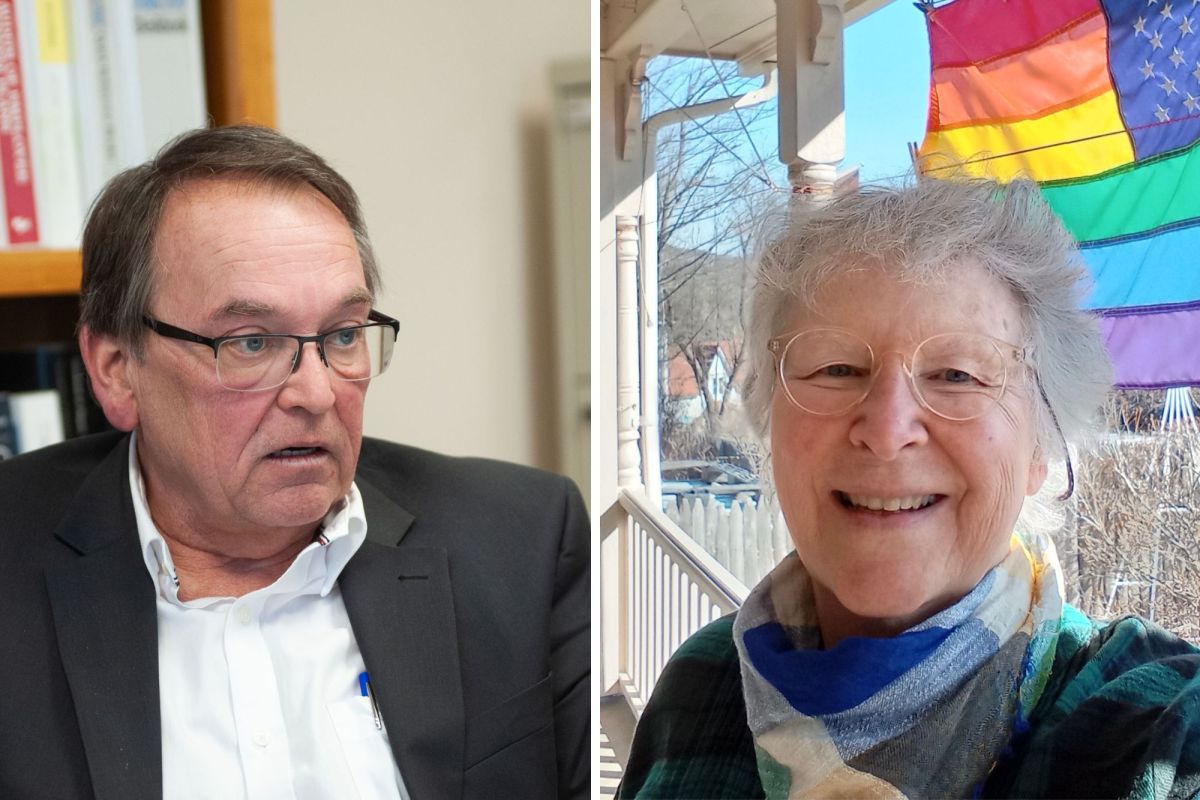
Spaulding, meanwhile, has spent much of her term focusing on ways to help unhoused people and residents on the verge of homelessness in Barre. She recently proposed a measure to provide small grants to residents dealing with financial emergencies that could lead to bigger challenges.
“Some people maybe become unhoused because they have a very short-term, small-expense issue, like their car breaks down,” she said. “They need $1,000 to fix their car, or $2,000 to fix their car so they can keep their job, so they can continue to pay their rent.”
School budget
Garrett Grant, chair of the Barre Unified Union School Board, said he thinks Barre’s school district has a “bare-bones” budget. He recently went to a conference and was shocked to hear other districts have things like social media managers.
“People have to wear multiple hats in our district,” he said. “There are dreams that can’t be realized.”
Yet in March, the school district’s initial proposed budget increase of 3.36% was voted down, 603-317. The district includes voters from both Barre City and Barre Town. Now the board is coming back to voters with a more modest 2.73% increase.
Grant said the way the March ballot measure was phrased may be partly to blame for the loss. Barre was legally required to put the per-pupil spending increase, which was 11%, on the ballot.
“I heard from some folks at the polls that they thought the budget was going up by that amount,” he said.
As the Statehouse debates education reform, Grant said he was personally “a little jaded” about the potential for state politicians to fix education funding in a way that benefits Barre.
“I kind of cringe when I hear they’re working on stuff, because they’ve kind of been working on stuff for years, and it seems to get worse,” he said. “So I’m kind of done believing any of the promises.”
