

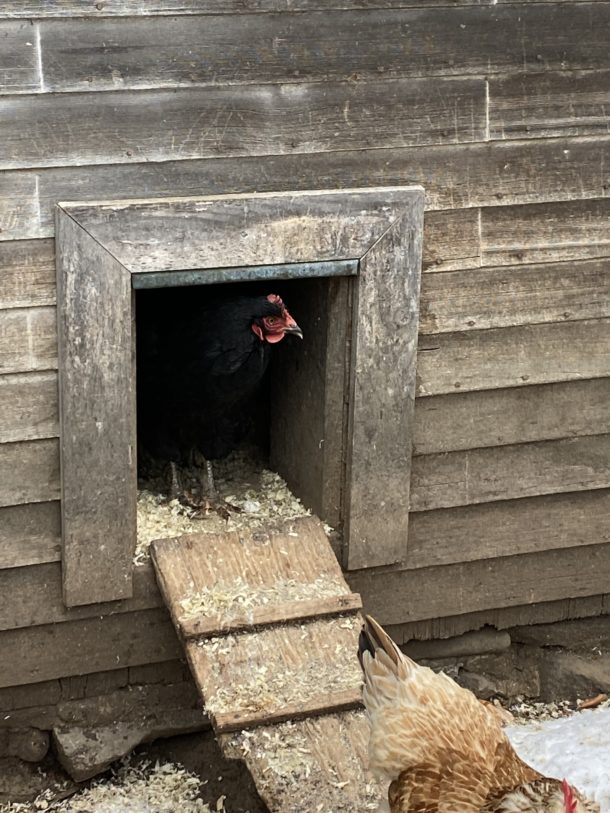
Jon Lussier has been selling eggs from his small flock to neighbors and locals around the Hardwick area for years.
Now, with the price of eggs rapidly increasing in grocery stores across the country, his eggs are in demand more than ever.
“We are getting more inquiries, to the point where — usually we start 10 or 12 hens a year and this year we are thinking of starting 30 if we can get them, because the demand is there,” Lussier said.
Vermont is not immune as nationwide egg prices are higher, on average, than Americans have seen in years, driven by inflation and a national bird flu outbreak that has forced farmers to reduce their flocks.
In January 2022, the average price nationally for a dozen large, Grade A eggs was $1.93, according to the Bureau of Labor Statistics. By December, that average was $4.25, the highest in the last 10 years.
On Monday, the cheapest option for a dozen eggs at Hannaford market in Barre was $5.09, while the most expensive choice landed at $7.29, according to the market’s website. At the Shaw’s in Montpelier, the most expensive option for a dozen came in at $7.99, according to the grocer’s website.
Shoppers can expect to see a decrease in egg prices as the holiday season recedes, according to Erin Sigrist, president of the Vermont Retail & Grocers Association.
“People are cooking and baking more during the holidays, so we usually see an uptick in demand,” Sigrist said. “As we get farther away from the new year, the demand will start to slow and the number of egg-laying birds will start to increase,” she said, “so we should see some of that price correcting OK as we get further into 2023.”
But Sigrist also pointed to the nationwide increase in bird flu cases as having a lasting impact, with many farmers forced to cull poultry flocks, and egg prices subsequently rising.
In 2022, over 50 million birds nationwide were infected with the highly pathogenic avian influenza, according to the U.S. Centers For Disease Control and Prevention.
The Vermont Department of Fish & Wildlife has reported only two backyard flocks with the bird flu as of Dec. 27, 2022, according to its website. The two flocks, located in Caledonia and Lamoille counties, have been depopulated, according to the department, which believes that the infections stemmed from wild birds.
While concerns about the bird flu have hit Vermont, regional farms maintain that inflation is a significant force behind the steep prices in grocery aisles.
Pete and Gerry’s, an organic egg supplier based in New Hampshire, supplies eggs throughout markets in Vermont. The company emphasizes the influence of inflation on grain prices.
“The rising costs of the USDA Certified Organic supplemental feed we provide our free range hens, along with other pandemic-related changes, has led us to make the very tough decision to raise the price on our eggs,” a spokesperson said via email.
In its Jan. 13 Egg Market report, the U.S. Department of Agriculture underscored the reality of record-high prices, stating that “prices for shell eggs at retail have begun to ease but remain at historically-high levels — sufficiently high to raise concern but not enough to dampen consumer taste for eggs.”
In Vermont, the staggering prices at the grocery have led some shoppers to seek a different source: their neighbors, such as Lussier in Hardwick.
While Lussier’s eggs are far cheaper than what many stores have to offer, he is not exempt from market effects. He raised his prices from $3 a dozen to $4 due to the increasing cost of grain.
