

[L]awmakers will put off until next year to decide whether the Vermont adjutant general should be picked by the governor or continue to be elected by the Legislature.
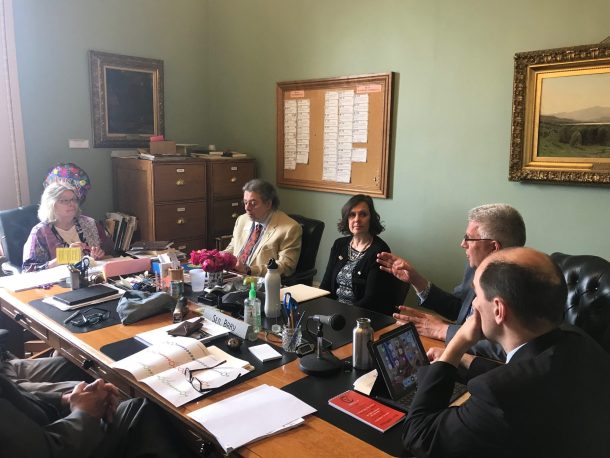
House and Senate conferees met four times without success before pulling the plug Thursday morning.
Several conferees noted the lack of urgency to make a decision this year because the current adjutant general, Greg Knight, was just elected to a two-year term in February and would not be up for re-election until 2021.
Both chambers were eager to change the selection process and make it less of a “popularity contest” where candidates to lead the Vermont National Guard had to sell themselves to lawmakers.
Vermont is the only state where the Legislature, not the governor, selects the head of the state militia.
The House and Senate bills that passed both included a new vetting process where a board would review the applicants and forward qualified candidates. The bills also both moved the election to the second year of the legislative biennium, not the first year.
However, on the key issue, the House voted to maintain the power to choose with the Legislature, while the Senate opted to give the governor that power. The votes were overwhelming, with the House approving H.530 by a 123-15 margin. The Senate voice vote was almost unanimous.
Sen. Jeanette White, D-Windham, said reaching a compromise was difficult because the options were either/or, not an issue where the two sides could split the difference.
“It’s different than a lot of conference committees … the end answer is yes or no,” White told the five other conferees. “There’s not much in between.”
Rep. Tom Stevens, D-Waterbury, said both chambers’ bills made progress improving the selection process and that lawmakers should not rush to decide who makes the appointment with time running out before adjournment. Gov. Phil Scott favors making the pick a gubernatorial appointment.
“Let’s just leave it for now,” Stevens said. “It will stew for all of us. And if that’s acceptable, I just think that the last day I would rather not do something wrong and create — there’s already been enough agita in the building on other issues — I would just as soon keep the respect for what we’re trying to do on this level.”
House members cited tradition and wanting to avoid having the governor pick a crony as reasons to retain the power. Senators said the governor was more qualified to investigate candidates’ backgrounds and serves as the state commander-in-chief.
White conceded after the conferees shook hands that the two chambers may not be able to resolve the difference next year.
“I don’t know if we’ll have any better chance next year,” White said. “It may end up being a stalemate.”
Sen. Anthony Pollina said the pressure to give into the other side will have to come from members inside each chamber.
White and Pollina noted the full House never voted on whether to give the governor the power. That House bill didn’t make it out of committee.
“It’s a frustration because it’s something we continue to revisit,” said Pollina, P/D-Washington. “It’s a little bit frustrating but it’s not an economic justice issue.”

