


Rough Landing is a special series and podcast on the debate over basing F-35 fighter jets in Burlington. Read Part 1, Part 2 and Part 3.
[F]or nearly three decades, Col. Rosanne Greco served her country in the U.S. Air Force. But for the past five years, she’s been engaged in a fierce battle with the military over the planned basing of F-35 fighter jets at Burlington International Airport.
In Greco’s tenure in the military, she was involved in nuclear arms control negotiations with the Soviet Union, conducted intelligence missions for the National Security Administration and worked for the Joint Chiefs of Staff. She rubbed shoulders with presidents of both parties, including Ronald Reagan and Bill Clinton, and was stationed all over the world, from Texas to Thailand.
And while Greco looks back fondly on her service, her perspective on the military — and jet noise — has changed dramatically since she began asking questions about plans to base 18 F-35s in Burlington, scheduled to begin next fall.
“I just get sort of a thrill with that loud noise, so it never bothered me personally,” Greco recalled. “As a matter of fact, we used to run out and listen to it. Although I emotionally enjoy loud jet noise, now my head knows that it’s not really good for me. … Now when I hear the noise I connect it to the people who are trapped, who really have nowhere to go.”
The impact of increased noise on the densely populated community around the airport is just one factor in opponents’ efforts to halt the F-35 rollout and seek an alternate aircraft for the Vermont Air National Guard.
Citing negative health effects, declining property values and the loss of affordable homes, Greco and her allies were successful in placing an advisory resolution on Burlington’s Town Meeting Day ballot Tuesday opposing the F-35.
Greco’s skepticism of the plane has morphed from a pet project into a years-long fight. In the process, the South Burlington resident has become one of the world’s chief critics of the F-35 stealth fighter jet. Not only has she studiously worked at picking apart the military’s justification for bringing the planes to Burlington, she’s also advised community activists opposing F-35 basings in Wisconsin, South Carolina, Florida, New Mexico and Idaho. She’s also recently assisted communities preparing for the planes in England, Denmark and Japan.
Along the way, Greco’s been deemed a turncoat by military and political leaders. They have questioned her credentials, accused her of having a “personal agenda” and charged her with “peddling” phony information.
“It is less important that we give her a timely response (she’ll only misuse the information),” one Air Force colonel commented after Greco inquired about F-35 flight hours, “than that we not give her something that contradicts what we or others have said.”
Greco sees these attacks as proof of her effective organizing, which was said to have startled top military brass.
“They trained me, so I think they were concerned,” Greco said recently at the kitchen table of her South Burlington home, a copy of Air Force Times nearby. “Because I was educated, I was informed, I knew the system. I knew how they operated. I knew how they did things. I knew how they hid things.”

Greco was initially hesitant to dive into the F-35 fight. After retiring to the Green Mountain State in 2008, she imagined a quiet life in a pleasant surrounding. To familiarize herself with her new community, Greco began attending South Burlington City Council meetings. Then, in 2011, she sought — and won — a seat on the council. She developed a slogan in which she self-identified as a non-native who was, nonetheless, dedicated to the community: “I wasn’t born here, but I’m going to die here.”
After residents began seeking her views on the F-35 basing, Greco said she reached out to Vermont Air National Guard officials, who assured her the plane was essentially a newer model of the F-16 and posed no additional burden to the community. Satisfied with the response, she initially supported the planned deployment of the stealth fighter jets.
But Greco wanted to better understand the issue. When the Air Force began releasing extensive materials on the basing as part of its Environmental Impact Statement (EIS), Greco’s skills as an intelligence officer kicked in. She spent weeks analyzing and underlining large volumes of military data, and was shocked by what she found.
Contrary to what Greco had heard from the Air Guard, the F-35 would be significantly louder than the F-16. Furthermore, Burlington appeared the least viable of all the Air National Guard bases that had been under consideration. The EIS enumerated significant concerns related to noise, cost, home values and public safety.
Given the newness of the stealth jet, the report also included several important caveats. “Because the F-35A is a new aircraft that is under development, some data normally used to predict noise, air quality, and safety conditions cannot be obtained at this time,” the document read.
As a former nun and military officer, Greco has been inclined to place her trust in powerful institutions. But as she uncovered more irregularities about the basing process, she began to lose faith in her former employer.
Greco spent weeks digging into the Environmental Impact Statement documents, looking to poke holes along the way. She found, for example, that certain analysis was conducted with U.S. Census data from 2000, meaning that community impacts were significantly underestimated. By bringing this one error to light, Greco forced the Air Force to recalculate its noise maps, thereby delaying release of its final assessment.
In her analysis, an abundance of questions entered Greco’s mind: Why, out of more than 200 potential bases, was Burlington being seriously considered? How would the F-35 impact community members in South Burlington and Winooski? Why were Vermont’s political leaders on board with a basing that could be harmful to their constituents?

Following weeks of research, Greco drafted and sent along 17 pages of comments and questions to the Air Force in June 2012. The document was signed by Greco, then the chair of the South Burlington City Council, and three of her colleagues.
The EIS analysis had so exhausted Greco that she and her husband headed off to Arizona for a quick vacation. Greco thought the EIS comments would essentially be the extent of her involvement in the process, and that the sojourn would distract her from the complex jargon and noise tables that had consumed her life for the better part of the previous month.
But a day after returning home, Greco’s phone rang. The caller was a whistleblower, who confided that the basing process was being fudged.
Armed with information from this whistleblower and other sources in the government, Greco began following political threads, eventually concluding that U.S. Sen. Patrick Leahy, D-Vt., had been the key force behind the Burlington basing.
Energized by this development, Greco then teamed up with Save Our Skies, a group of activists, lawyers, veterans and residents living near the airport. In short order, she became commander of one of the most active anti-basing campaigns in the country.
The activists wrote op-eds, launched a website, placed ads, held demonstrations and knocked on doors. She and her colleagues aggressively pushed Vermont’s political leaders to explain their support for the basing, and helped land critical F-35 stories in local and national media outlets, including the Boston Globe and the New York Times.
The public messaging was largely shaped by Greco, who devoured new information as it was released, corresponded with former colleagues and studied past basing decisions.
Greco also joined forces with Ben & Jerry’s ice cream co-founder Ben Cohen, who helped bankroll her anti-F-35 efforts.

While the two other Air National Guard bases being considered for the F-35 saw a total of 20 public comments — all of them positive — thousands of comments and letters were logged in opposition to the Burlington basing. Internally, Air Force officials described Vermont’s opposition as “vocal and well organized.”
The military had its own savvy media strategy for selling the Burlington basing. Officials encouraged F-35 supporters to attend public meetings, author supportive newspaper columns and draft talking points. On a national level, the Air Force created weekly media assessments filled with charts and graphs on how the F-35 was being covered. Between April 20-27, 2012, for example, 27 percent of F-35 stories had a “negative tone.”
In 2010, Lloyd Goodrow, the former director of public affairs at the Vermont Air National Guard, emailed Brig. Gen. Steven Cray about an upcoming interview on a statewide news show. In the back-and-forth, Goodrow assured Cray that he would work with the television reporter to “craft the interview to make sure the right focus comes out.”
The military was bolstered in its fight by endorsements from prominent community organizations like the Lake Champlain Regional Chamber of Commerce and the Greater Burlington Industrial Corporation (GBIC).
“The economic benefits for Vermonters with the basing of the F-35 are tremendous,” wrote Ernie Pomerleau, a real estate developer and GBIC member in a 2013 op-ed. “Housing markets will continue to thrive. The downside is minimal. If the discussion is somehow taken off-track by unsubstantiated fear, area residents and Vermonters as a whole will suffer.”
The Air Force announced in December 2013 that Burlington had been selected to receive 18 F-35s.
In response, Greco and her allies filed suit against the Air Force, alleging it had violated the National Environmental Policy Act (NEPA) by failing to gauge properly the potential impacts of the basing on surrounding communities. The city of Winooski was a plaintiff in the suit, and South Burlington submitted a legal brief in support of the coalition.
Lawyer James Dumont argued on behalf of the opponents that the Environmental Impact Statement did not adequately disclose the risks posed by the F-35, including those related to increased noise and a potential crash. The suit also alleged that federal authorities failed to consider Vermont’s strict zoning laws, such as Act 250, despite taking similar regulations into account when evaluating bases in Idaho and Utah.
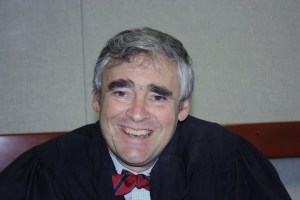
Once again, the activists suffered a loss. On Aug. 10, 2016, Judge Geoffrey Crawford ruled against the F-35 opponents, writing that the EIS “meets the requirements that the agency action not be arbitrary, capricious, an abuse of discretion, or otherwise not in accordance with law.”
Dumont appealed the decision to the U.S. Court of Appeals, which upheld Crawford’s ruling. Dumont said he believes his argument was hindered by the fact that NEPA requires the government to consult with experts and produce projections of potential community impacts, but has no requirement that the information be exhaustive or objective.
“As long as a federal agency has considered an issue, they are in keeping with the law,” Dumont said. “It’s not the judge’s role to tell the agency whether the expert analysis was wright or wrong, or whether other experts disagree with the findings.”
Greco and her allies were crushed by the ruling, and some activists decided to give up the fight. Greco, however, continued to develop new strategies to push her battle forward. In recent months, a group of activists stood outside grocery stories and knocked on doors for signatures in hopes of securing the Burlington ballot item on the F-35.
They obtained the requisite 1,785 signatures, meaning that next Tuesday Burlington residents will be asked if the City Council should “request the cancellation of the planned basing of the F-35 at Burlington International Airport, and request instead low-noise-level equipment with a proven high safety record appropriate for a densely populated area.”
That effort received a boost Thursday when seven Burlington area lawmakers released a letter urging city voters to approve the advisory resolution. Chittenden District Sens. Philip Baruth (D/P) and Chris Pearson (P/D) were joined by Burlington House members Brian Cina, Selene Colburn and Diana Gonzalez (all Progressives), and Democrats Curt McCormack and Mary Sullivan.
At a recent mayoral forum, Burlington Mayor Miro Weinberger argued the ballot item was nonbinding and nonsensical. “We made this decision, and we can’t reopen it at this point without very significant consequences,” he said.
But after VTDigger provided Weinberger with past examples of communities that had reversed course on F-35 basing, Weinberger opened the window for action, which heartened Greco and her supporters.

Greco’s six-year campaign has not come without a cost. She has been on the receiving end of nasty phone calls and death threats. On two occasions, vandals covered her mailbox with pro-F-35 stickers. Shortly thereafter, a bench that Greco had dedicated in the community to a beloved dog named Charlie was defaced.
The vitriol came to a head after publication of a 2013 Burlington Free Press story in which she had discussed the possibility of F-35 crash. The responses that ran below the online article were so vile that the newspaper had to shut down the comment section and South Burlington police had to send a squad car to patrol outside Greco’s house. She said she also decided to redirect some of her backyard critter cameras toward the front of her house.
“At times, I have thought that, if we won and the Air Force didn’t base the planes here, I would be in danger,” she said.
Greco and her allies are hoping Burlington voters approve the advisory resolution calling for cancellation of the controversial basing plan. If the ballot item is not approved, Greco said she would continue to apply political pressure to Vermont’s leaders, and is considering a class-action lawsuit once the planes arrive. Despite a string of setbacks, Greco’s determination has not waned in the least. She said she remains optimistic that the “people’s voice” will rule the day, even if that day is many months away.
“The one piece of advice I convey to all the small activist groups I advise is ‘Don’t give up,’” Greco said. “They are counting on you to give up. But if you don’t give up, and you stick with the facts, you have a very good chance of stopping the planes. The truth will come out; you just have to keep repeating it.”
Read Part 1, Part 2 and Part 3 of our special series on the F-35 debate. Hear more from Rosanne Greco in our Rough Landing podcast:

