

A House committee advanced a bill Wednesday to create a board charged with oversight of racial disparities in Vermont.
The bill, H.492, introduced in late February with backing by racial justice advocates, initially included a section changing state policies concerning fair and impartial policing requirements for law enforcement agencies.
However, lawmakers opted to separate the two initiatives into distinct pieces of legislation. One, H.492, will create a 15-member board charged with overseeing issues of racial justice in Vermont.
That bill passed the committee Wednesday with seven votes in favor, two opposed. Two members who were not present will be able to cast their votes later.
The other bill, which has not yet been introduced, will address fair and impartial policing.
The move to decouple the proposal raised some concerns from advocates, who say the division and refocusing of the bills will weaken the initiatives.
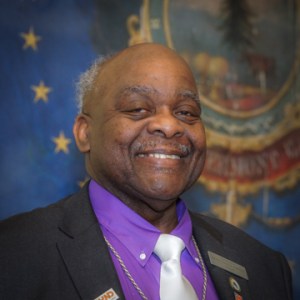
Rep. Kevin “Coach” Christie, D-White River Junction, a co-sponsor, said Tuesday that it “made sense” to separate the oversight board from the sections of the bill addressing fair and impartial policing.
Under the more recent drafts of the bill, the board will consider issues of racial disparity across the state of Vermont in a wide range of areas, such as housing, school discipline and more. Initially, the proposal focused the board on examining disparities in the criminal justice system.
“That had far more reaching ramifications I think as far as racial disparity throughout the state,” Christie said.
Rep. Diana Gonzalez, P-Winooski, noted that often off-session work goes into bills of the magnitude of H.492. However, this legislation was introduced almost two months into the session. Also, she said, the House is just one part of the legislative process.
“The Senate does not take everything that we say and rubber stamp it,” Gonzalez said.
Rep. Kiah Morris, D-Bennington, said the timing for moving the legislation forward was a challenge.
“It was a great idea that was brought forth, but it was brought within a timespan that made it really difficult to do the deep dive and make sure the stakeholder buying was as robust as we could make it be,” Morris said.
However, some have concerns that the changes to the legislation could weaken the intention.
Mark Hughes, of the racial justice group Justice For All, said the bills have “digressed” from the original intent.
“It’s kind of missing where we want to be,” Hughes said.
He had concerns about splitting off the racial justice board from the fair and impartial policing language. The initiatives paired well together because fair and impartial policing was the “cornerstone” for addressing implicit bias in Vermont and the subjects are interconnected, he said.
Hughes also has reservations about a change in the focus of the racial justice board. As proposed, the panel would have initially targeted the criminal justice system, but the bill has been revised so that the board will have oversight of a wide range of subjects —from housing to employment and more.
Hughes fears the “macro” focus of the board will be too broad initially.
“The idea that we would be able to be effective in doing that is just not realistic,” he said.
Hughes argues that the scope of the board should begin with the criminal justice system, because there has already been substantial groundwork laid in that area under existing law. After the board is established, its scope could be expanded, he said.
However, though Hughes has concerns, Justice For All continues to back the legislation.
“As long as this thing still has legs to make it across to the other chamber, then we support it,” Hughes said. “I didn’t come here to kill it.”
Other advocates are pleased with the decision by House lawmakers to separate the bill’s two initiatives.
Curtiss Reed of the Vermont Partnership for Fairness and Diversity advocated for decoupling the board from the fair and impartial policing section of the initial bill proposal.
Creating the board with a broader focus signals that Vermont is “focusing globally” on racial justice in systems across the state, such as economic development and housing, he said.
The initiative could help Vermont attract people from across the country to do business in the state, he said.
“The racial justice board gives an opportunity to say to the marketplace, Vermont is serious about eliminating racial injustice,” Reed said.
Reed said the racial justice board will provide a platform to recognize work by parts of state government, such as the Vermont State Police, to address implicit bias and racial disparities.
“There are pockets of state government that are doing really great work and a justice board can shine a light on that,” Reed said.
Editor’s Note: This story was updated Friday at 4 pm with additional information.

