

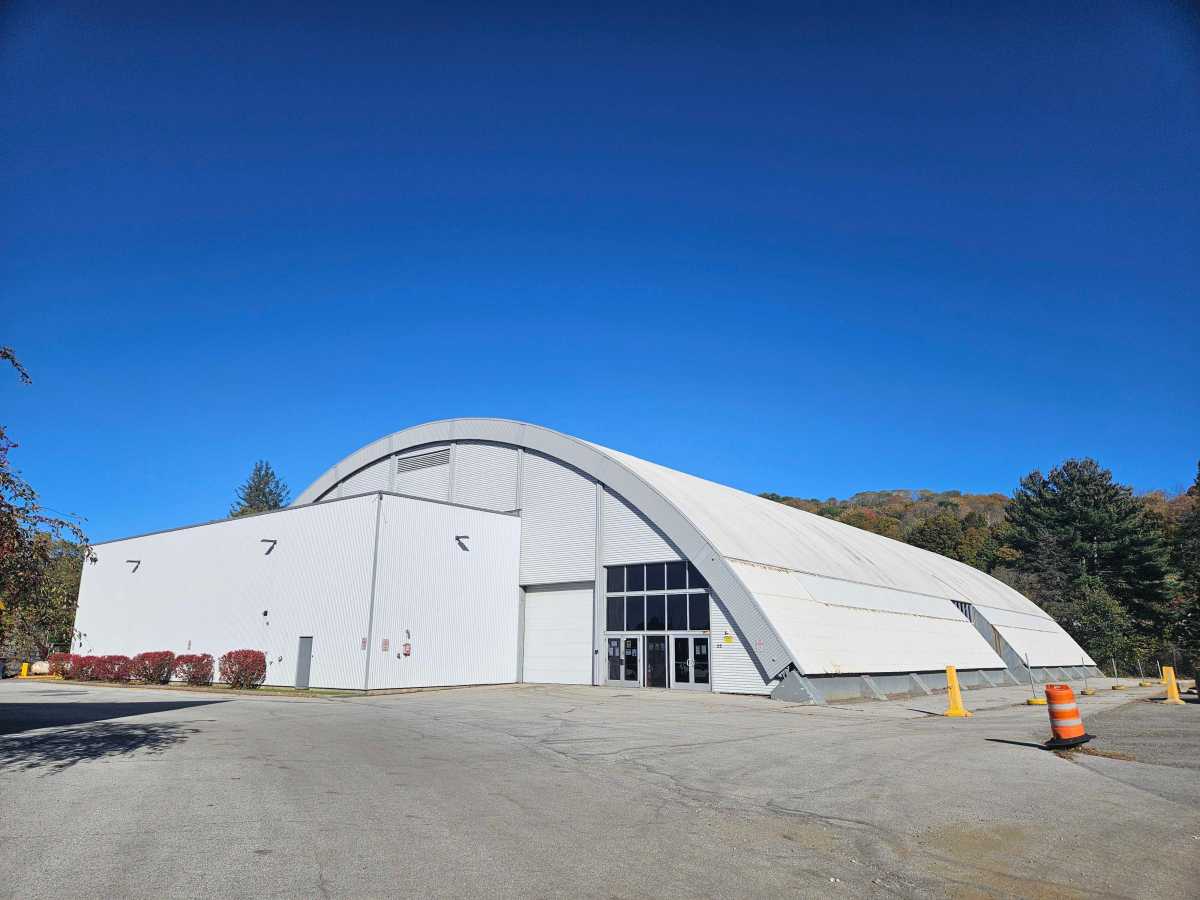
BARRE — As a boy visiting his grandfather in Barre, Brian Wilkin could see the arches of the city’s new ice arena as he walked down the hill. His grandfather lived next to the arena, and Wilkin understood what the new building meant: He would be able to play hockey in his own hometown.
And he did. So did his father. Eventually, his daughter did, too.
Now Wilkin, the Spaulding High School girls hockey coach, is wondering how his players could cope without the rink that has given three generations of his family a place to play.
“It’s going to be hard to keep a group of kids together when you don’t have a home,” Wilkin said.
Needed emergency repairs could keep Barre’s BOR Arena open this winter after city officials announced last week that failures in the pipes beneath the ice would force it to close for the season.
Even if repairs save this season, however, Barre must still confront an aging arena in need of more work.
“I think we got a little complacent and figured, ‘OK, if there’s a problem, we’ll just fix it,’” said Barre Mayor Thom Lauzon. “And it’s time to take a real hard look at replacing the system. I don’t want to go through this again.”
For Wilkin’s players, the arena is more than a place to practice and compete. It is where they watch movies, train off the ice and spend time together. Those hours help a roster become a team.
And while Wilkin said he has promising young players coming in this year, a prolonged shutdown could make it harder to build that camaraderie.
The uncertainty extends beyond his team. Spaulding’s boys also practice and play at the arena, which hosts youth hockey, figure skating and public skating. In summer, the ice gives way to turf for soccer, lacrosse and walking.
“We use it daily for practices, it’s used for all of our games,” said Derek Cipriano, Spaulding’s director of athletics and activities. “It’s kind of like our home base of operations.”
Teams have worked around trouble with the ice before. Last year, Wilkin’s players finished their final week of the season at other nearby arenas after a smaller break in the system.
Barre has also provided ice for others. U-32 High School’s team has borrowed the arena toward the end of its season when its home rink converts to turf.
But a short disruption is different from losing an entire season at home. Cipriano said “there isn’t a ton of ice time available” at other facilities.
“If the BOR doesn’t have ice, we’ll be having some really early morning practices,” he said. “We’re trying to piece together where we can fit our schedule in.”
Trouble below
The rink’s history began with a much more visible failure.
Its roof collapsed during construction in 1972, forcing the city to rebuild, according to a 2015 Times Argus account. The arena eventually opened in 1974 at a cost of $400,000. Half came from the federal Bureau of Outdoor Recreation, whose initials supplied the building’s name.
This time, the trouble is underneath the ice. City officials said last week that the pipe system had developed several major problems, prompting the closure announcement.
Four local contractors — Trym Chouinard, Ed Patterson, Colby LaPerle and Jeff Gould — volunteered their time to attempt emergency repairs. By Tuesday morning, Lauzon said, he had heard they had repaired the first loop of cooling pipes.
“What they’re going to do over the next two or three days is they’re going to repair the leaks, and hopefully we don’t have any more issues with it,” he said.
Beyond that immediate work, Lauzon said the city needs to consider a more comprehensive overhaul. Borrowing about $2 million for repairs would require annual payments of roughly $130,000, he estimated.
That is about as much as the city brings in each year from ice rentals, according to the mayor. Keeping the arena open, if Barre can, is worth doing, he said. “(We’ll) have no net revenue, but we’ll have a nice rink,” he said.
For Wilkin, the building’s value also lies in what happens between practices and games: the movies, the conversations and the time his players spend together in the rink where he once played.
It is where, as he put it, they “come together as a team.”
