

COLCHESTER — A deployment can leave a military spouse managing the bills, child care and every problem at home alone. A new center at Camp Johnson is intended to ease some of that strain.
“We understand that the Vermont National Guard is a family, and that family is not just the men and women in uniform. It is the people back home, especially the children,” U.S. Sen. Bernie Sanders, I-Vt., said Wednesday.
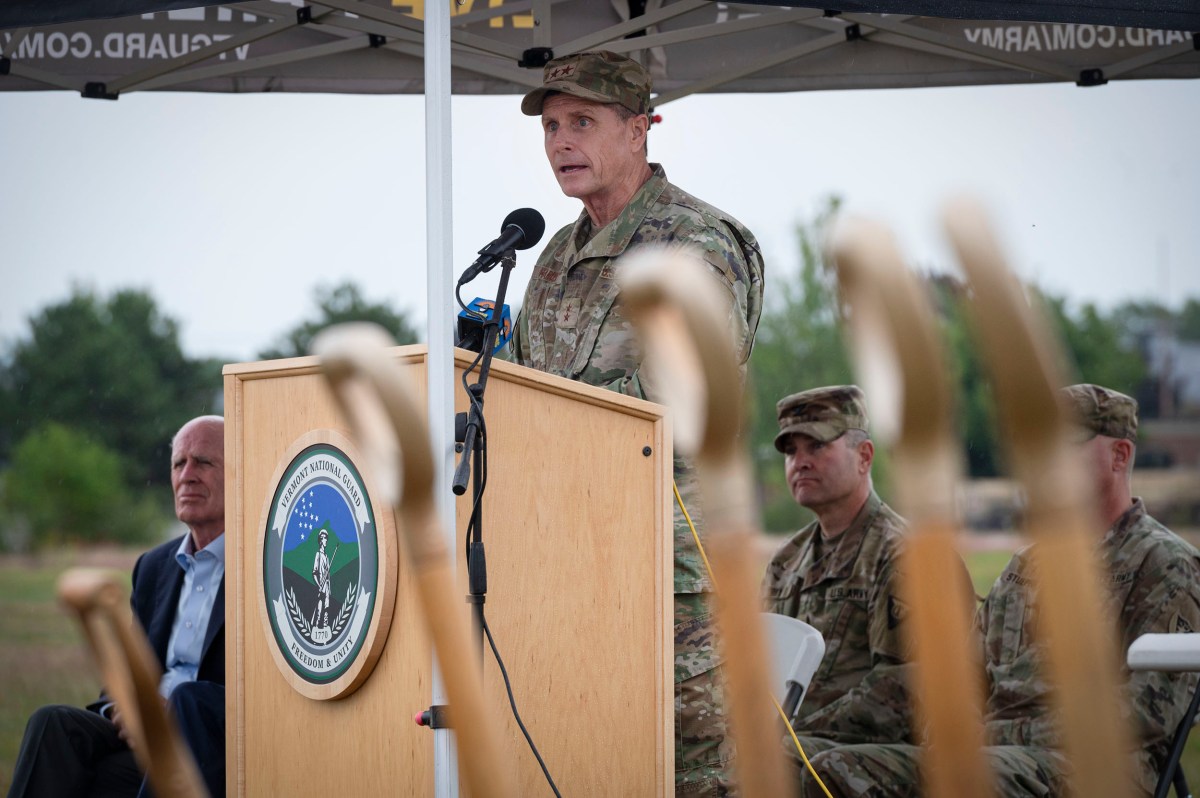
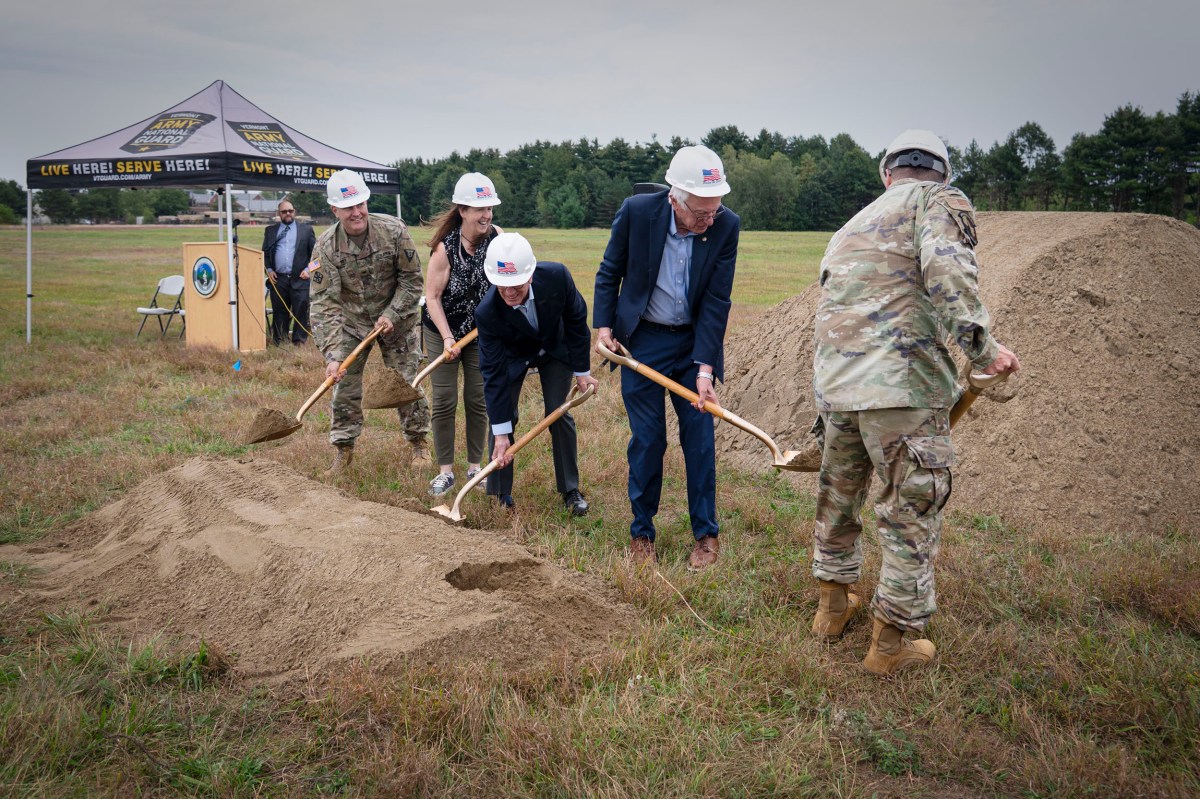
Vermont National Guard officials and members of the state’s congressional delegation broke ground Wednesday on the Family Readiness and Support Center in Colchester. The federally funded center will consolidate services now scattered across Camp Johnson for service members, veterans and their families.
“What you do to help each other is so necessary,” U.S. Sen. Peter Welch, D-Vt., told the Guard members and families. “But for most of the country, including Vermont, it’s invisible. Life goes on.”
The center will offer legal assistance, financial counseling, retirement services and suicide-prevention support, according to Maj. Gen. Henry “Hank” Harder Jr., adjutant general of the Vermont National Guard.
Guard families can face a range of practical problems during a deployment, Vermont National Guard spokesperson Joseph Brooks said. A spouse may need financial counseling or help finding child care after the household’s primary earner leaves. In other cases, the person at home must learn to handle tasks, such as repairing a dishwasher, that the deployed family member would normally manage.
“This means that instead of trying to hunt around this post, we can send them to one place,” Brooks said.
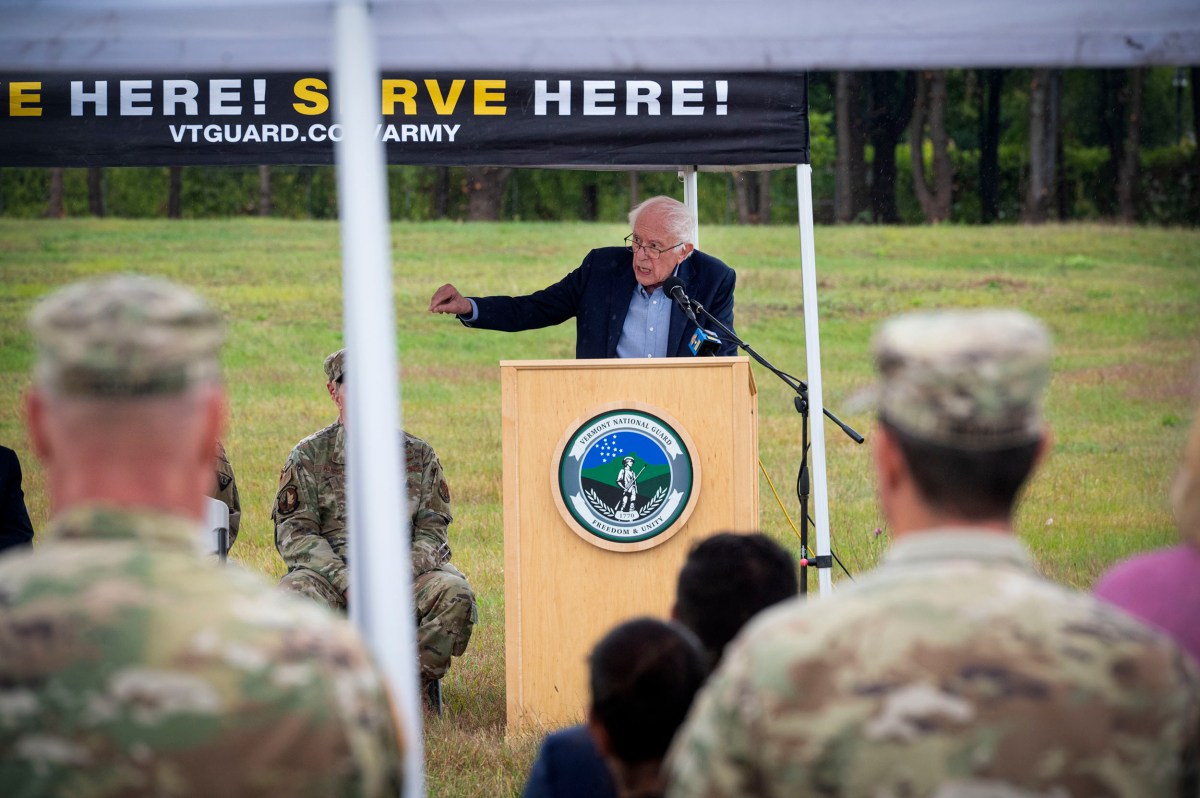
Harder said the building also is meant to show families that their needs are central to the Guard’s mission.
“It’s about what we say to our families when they walk through the door: a modern, welcoming, purpose-built facility that tells them that they are a priority and not an afterthought, tucked into whatever space happens to be available,” Harder said.
Sanders secured $4.6 million for the project through the fiscal 2022 congressional spending process. Planning later stalled when pandemic-era inflation drove construction costs above that appropriation, Harder said.
Welch later worked with Sanders to secure an additional $2 million. Federal funding will cover the center’s construction, according to Guard officials.
Wednesday’s ceremony came days after members of the Vermont Air National Guard returned from an eight-month deployment to the Caribbean and Middle East.
“This has been a very long deployment,” Welch said. “It’s also in very harsh conditions. Our soldiers out there did not have the resupply that is normally available and should be available.”
Welch said families also shoulder the consequences of deployment, often without their neighbors understanding what they are experiencing. The isolation can be especially acute in rural Vermont, where many Guard families live far from Camp Johnson and one another.
“They’re on their own. Their neighbors aren’t really aware of what they’re going through,” Welch said. “So having a convening place for the families to be together, they can share their experience and give each other mutual support.”
Since her husband was deployed in June, Kim Buckley said her community has been invaluable. She and her spouse usually divide parenting responsibilities between them, but now she’s managing every ride to sports and trying to provide differing levels of support for both her kids, who have very different needs.
“They don’t always feel seen individually, like it was when Dad and I can just split up duties and give them equal attention,” Buckley said.
Her community has been stepping up around her, offering meals and helping out with transportation, she said.
In an effort to encourage community support, the Vermont National Guard Charitable Foundation recently launched an online service that connects Guard families with Vermonters offering counseling, child care, tax preparation, snowplowing and other assistance.
Sanders asked those attending the ceremony to consider what a deployment means for the children of service members.
“It means that kids suddenly don’t have their dad or their mom at home, and they, in fact, worry whether or not their dad or mom will ever return home and when they will return home,” Sanders said. “That is enormous stress on Vermont families.”

