

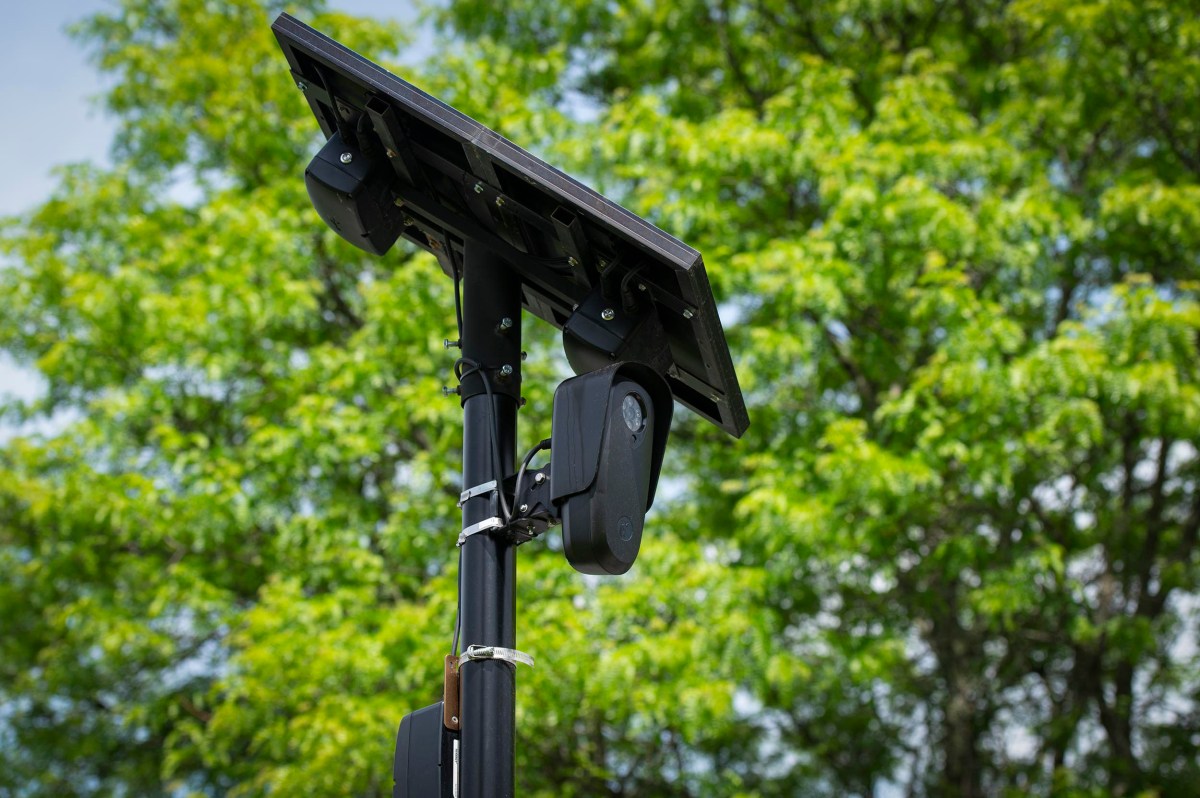
This story by Ryan Pacheco was first published in the Manchester Journal on Aug. 25, 2026.
MANCHESTER — The future of Manchester’s controversial use of Flock cameras was discussed but ultimately not resolved at a public selectboard meeting at the Manchester Town Hall on Aug. 18.
Manchester currently has five Flock cameras. According to the surveillance watchdog project deflock.org, they are located on Bonnet Street, Depot Street and three on Main Street: one at the Manchester Center roundabout, one near the intersection of Main and Union streets, and one near the intersection of Main Street and Barnumville Road.
The cameras have been in place since 2023 and have been used by local law enforcement to assist in previous investigations.
Flock cameras have drawn criticism both locally and nationally for concerns regarding privacy, potential misuse and the creation of surveillance-state infrastructure. Critics point to documented cases where law enforcement officers in other states, with access to the camera data, were able to use the camera’s artificial intelligence-powered license plate tracking to surveil romantic interests for personal reasons. The use of AI further concerns critics, who cite documented cases of people being falsely flagged by the technology and arrested in communities across the country that have implemented it.
Proponents of the technology claim that Flock cameras serve as a valuable tool that law enforcement can use to identify, track and arrest suspects, streamlining enforcement operations and making the job safer.
During the Manchester meeting’s Flock discussion, Manchester Police Chief James Blanchard discussed the positive impacts of the cameras but made clear that he was not there to defend Flock. The meeting concluded with members of the selectboard agreeing to table the issue until an upcoming visit to the police station, intended to further inform their perspectives about the nature of the cameras and their data collection specifics, and look into the possibility of implementing less privacy-invasive options.
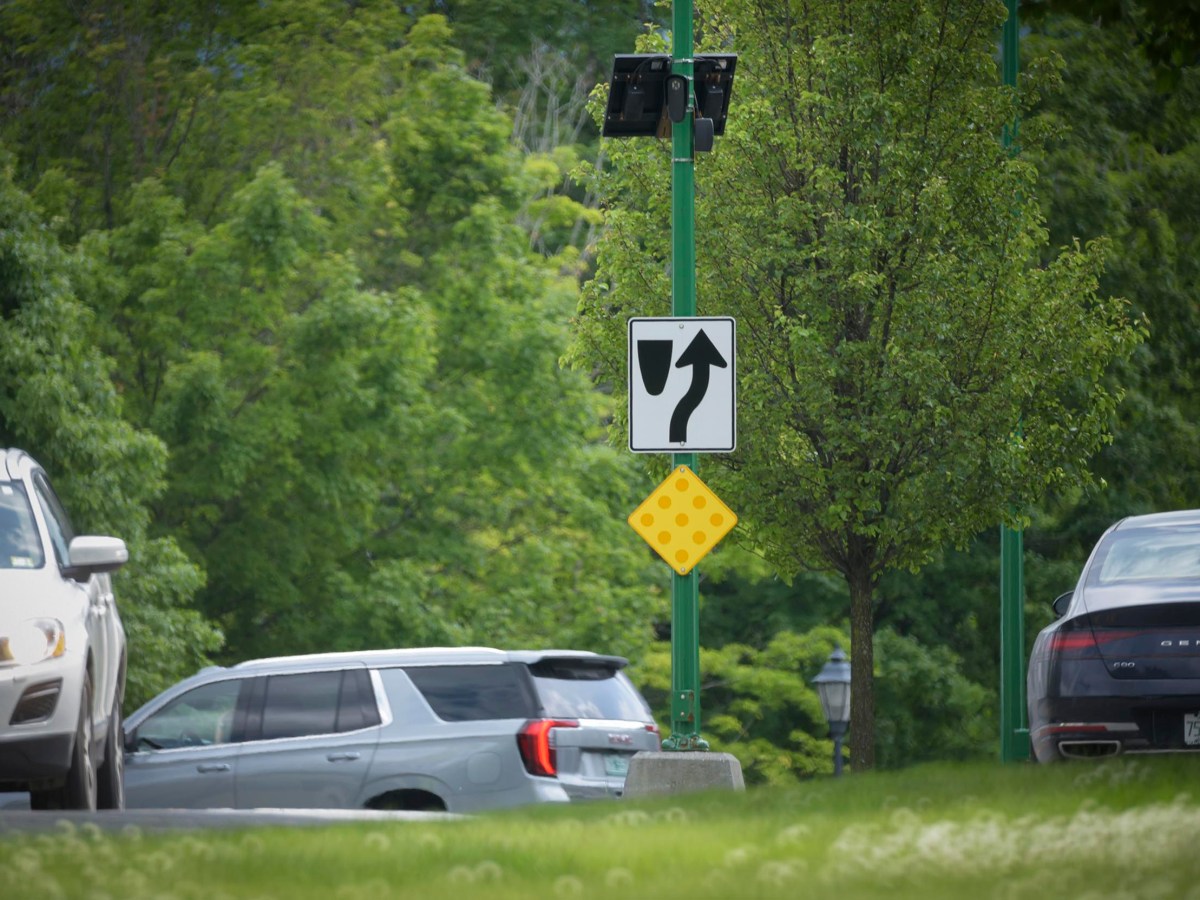
After the meeting the Manchester Journal caught up with Blanchard, who said the town is taking measures to limit data-sharing features and attempting to balance the public safety benefits with avoiding possibly intrusive features.
“My focus is less on the company itself and more on how we use the technology here in Manchester,” said Blanchard. “We control our own data, we decide who has access to it, we’ve intentionally limited the sharing features, and we have policies in place that govern how it can be used. Those are the things we can control. I don’t think any technology should ever be above scrutiny. It’s important to keep evaluating it, and making sure the safeguards are working.”
Blanchard said the tool is helpful but not particularly necessary.
“No investigative tool is absolutely necessary by itself. Police departments have investigated crimes for decades without automated license plate readers, and if the cameras were no longer available, we would continue to do our job using traditional investigative methods.That said, the cameras have proven to be a valuable investigative tool. They can significantly reduce the time it takes to determine whether a suspect vehicle entered or left the area, allowing officers to focus investigative efforts more efficiently. As for alternatives, there are other companies that offer similar automated license plate reader technology. I think it’s reasonable to evaluate different vendors and determine which product best fits the needs and values of the community,” said Blanchard.
“My support isn’t about Flock in particular, it’s about having an effective investigative tool that helps us investigate crimes, recover stolen vehicles, locate missing or endangered people, and respond to critical incidents where every minute matters, such as child abductions or locating a vulnerable adult with dementia, while respecting privacy and operating under clear policies and oversight,” added Blanchard.
The current contract with Flock, which has been paid through March 2027 at $15,000 this year, cost $12,500 for the first three years of operation and a camera cost of $2,500. During the meeting, it was suggested that the prospect of removing the cameras could wait until the upcoming budget season, rather than prematurely pulling the plug on a service that has already been paid for through the contract year.
Manchester Town Manager Scott Murphy cited his support for the cameras, before stating his preference that removal efforts remain tabled until budget season.
“If I could just interject for a moment, we have talked about data and civil liberties, but not public safety. We have had circumstances in the last few weeks where this system helped us. We don’t want to turn into a Brown University shooting. That is how that person was caught. Our system right now helps us find, and gets notified if there is someone who threatens a town or school official, which has happened within the last two months,” said Murphy.
“We are paid through until the end of March. When we get to budget time in the fall, that would be the time where the selectboard could defund this at that time. We have already paid town money, taxpayer money for this, and I would like to see us stick to the budget season,” added Murphy.
Community members had the opportunity to voice their feelings and concerns during the meeting, with many stating a desire to move away from Flock. Selectboard member Ivan Beattie later stated that he does not believe it would be realistic for a selectboard to expect to make any decision that did not have negative, unforeseen consequences or disappoint some voters.
“I just want to be clear that almost every decision we make at this table causes harm or discomfort for somebody, somewhere. It could be anything from land use regulations, to taxes, to everything we make a decision on. There’s always somebody who if not hurt by it, will at least be made uncomfortable by it. Some have even more major impacts. We have made decisions here at this table that cause people enough harm that they can’t afford to live here or be able to continue to run their business,” said Beattie.
“There is no way to have a no-harm policy. You would never be able to make any decision on any subject. You have to weigh the risk versus the reward. I understand that there is a lot of risk here, in many ways that I do not understand,” added Beattie.
Selectboard member Jonathan West, citing privacy, data and civil liberty concerns — echoed by many of the critics and concerned community members who voiced their concerns at the meeting — brought the issue to the table with hopes of opening a dialogue about rethinking the use of Flock cameras.
West told the Manchester Journal that there was no way to anticipate how advanced and concerning the technology would become when the town decided to install the cameras in 2023.
“I understand why the technology was purchased at the time, but the decision we made four years ago was in a very different technological environment. What began as a very straightforward license plate reading tool has evolved into a much larger, cloud-based network capable surveillance platform. For me, that really changes the question,” said West.
“It is not about whether or not we trust our own police department here in Manchester, which I do, but it is about whether or not Manchester should participate in a system where sensitive information about people traveling through our community is stored through infrastructure that we do not control, using technology that we do not control. We have no idea where this is going to be in a year. I want technology where Manchester can establish boundaries and guardrails that can maintain meaningful control. Right now, what we have with these Flock cameras is not, and it is susceptible,” added West.
West encouraged community members to speak up and voice their opinions regarding the issue at upcoming selectboard meetings, which can be found on the town website.
