

MONTPELIER — Vermont’s economy is in “impressive” shape, the state’s top fiscal analysts reported Tuesday, especially after what they described as a year of chaotic decisions by the Trump administration that are threatening economic stability.
Massive business spending to develop artificial intelligence technology is one of the few things keeping the country’s economy, and by extension Vermont’s, steady in the face of those headwinds. That comes with tremendous risk, they said.
For now, though, the report had good news about state coffers. Vermont’s major operating funds brought in almost exactly as much revenue in the 2026 fiscal year as the economists last projected, they told a panel of legislative leaders and Gov. Phil Scott, collectively known as the Emergency Board.
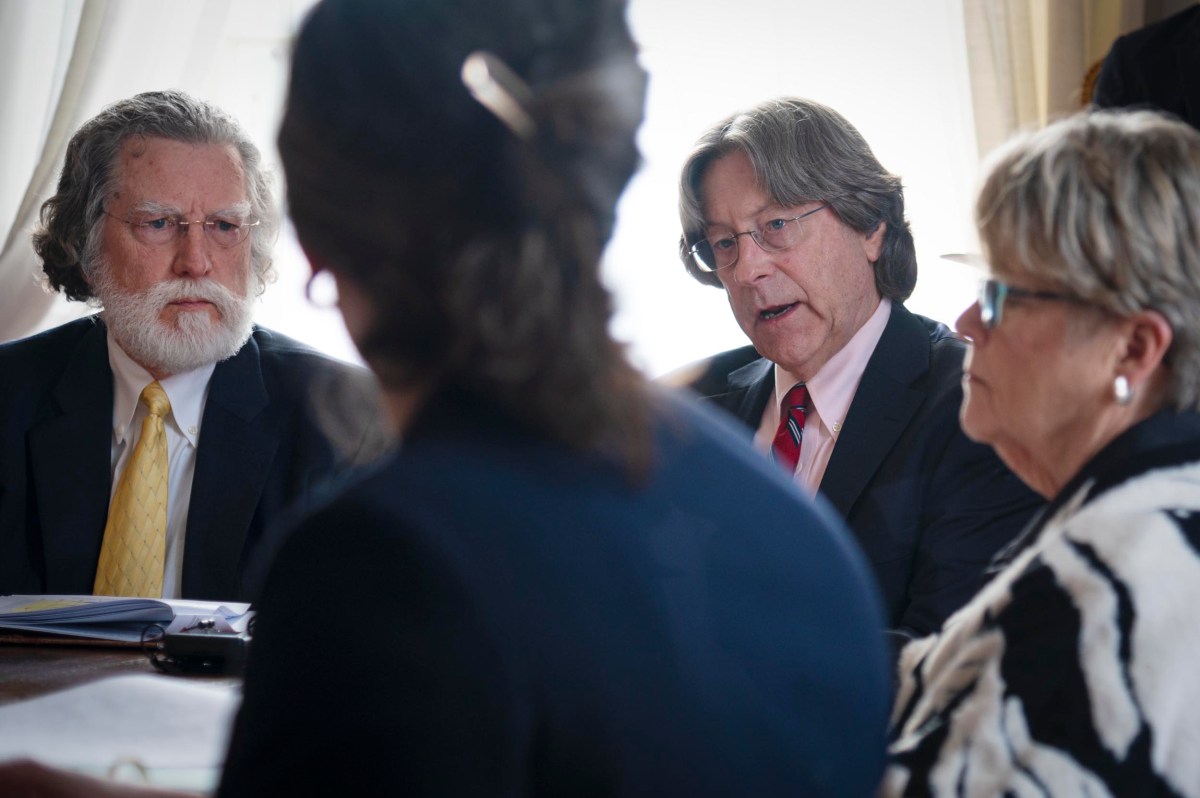
The board meets twice a year to hear its economists diagnose the state’s financial health. Tuesday’s meeting had a similar takeaway to those in January and last July: calm for now in the face of deep uncertainty. Lawmakers and the governor rely on the economists’ conclusions to inform their proposals for a state budget each year.
The latest full fiscal year started July 1, 2025, and ended last month. Total receipts for that period came in higher by 1.2%, or about $44 million, than the economists projected at the start across the General Fund, Education Fund and Transportation Fund.
That’s a small drop in the bucket of the state’s $9 billion annual budget. But it shows “we’re holding the line,” Tom Kavet, one of the economists, told the board Tuesday.
In a written report, Kavet and his colleagues described recent threats they see to Vermont’s economy, including the president’s “freezing of immigration flows, the mass deportation of productive immigrant workers, the costs and economic distortions from arbitrary and capricious tariffs and the instigation of expensive foreign wars.”
Reducing the number of immigrants who settle in Vermont is a detriment to a state that’s in desperate need of more working-age people, they wrote, calling the president’s immigration enforcement campaign “violent and performative.” And the U.S.-Israel war with Iran, they added, has increased energy costs and resulted in higher inflation.
“It’s hard to overstate just how much better the economy could be” were it not for those actions at the federal level, they wrote.
At the same time, Kavet told state leaders Tuesday, the impacts have been blunted by a handful of trends that are having the opposite effect.
Huge investments in artificial intelligence are driving economic growth around the country and, especially, spurring growth in the stock market. The influx of capital has given wealthy consumers — including in Vermont — more money to spend, he said.
The state also brought in a record amount of personal income tax revenue over the past year, and at a level higher than what the economists had predicted.
“AI, in all its varied economic manifestations, is the pillar of growth and promise that has, to date, largely powered the U.S. economy through these headwinds,” the economists wrote.
To be sure, that also carries significant risk, they added, because so much money is being invested into a relatively small number of companies that are all competing with one another to develop similar products.
“Our economic dependence on this single pillar is such that if it falters, it could create a tidal wave of economic distress,” they wrote.
The economists also cautioned that the economic benefits of AI are not distributed equally. Recent stock market gains across the country are concentrated among the wealthiest 1% of households, who own about 50% of all stocks, they wrote.
Speaking to reporters after the meeting Tuesday, Gov. Scott said he thought the economists’ concerns about AI underpinned the need to enact stricter regulations on the companies that are developing the technology.
In May, Scott vetoed a bill that would have set up a state framework to regulate large data centers, including those that could be used for AI. But the Republican governor said he thinks the changes that need to happen could only be made effectively at the federal — or even international — level.
“It’s exciting in some respects, terrifying in others,” Scott said. “I do think that there needs to be some regulatory reform to make sure that we’re doing this in a measured way.”
