
When 17-year-old Darius Niyonkuru from Rwanda first heard he was accepted into an international exchange program and was coming to the U.S. for three weeks, he almost didn’t believe it.
It wasn’t until he received his visa that he realized his dream of coming to America was finally coming true.
“I wanted to study abroad here even for one day, and then I saw three weeks and I thought, ‘This is impossible,’” he said.
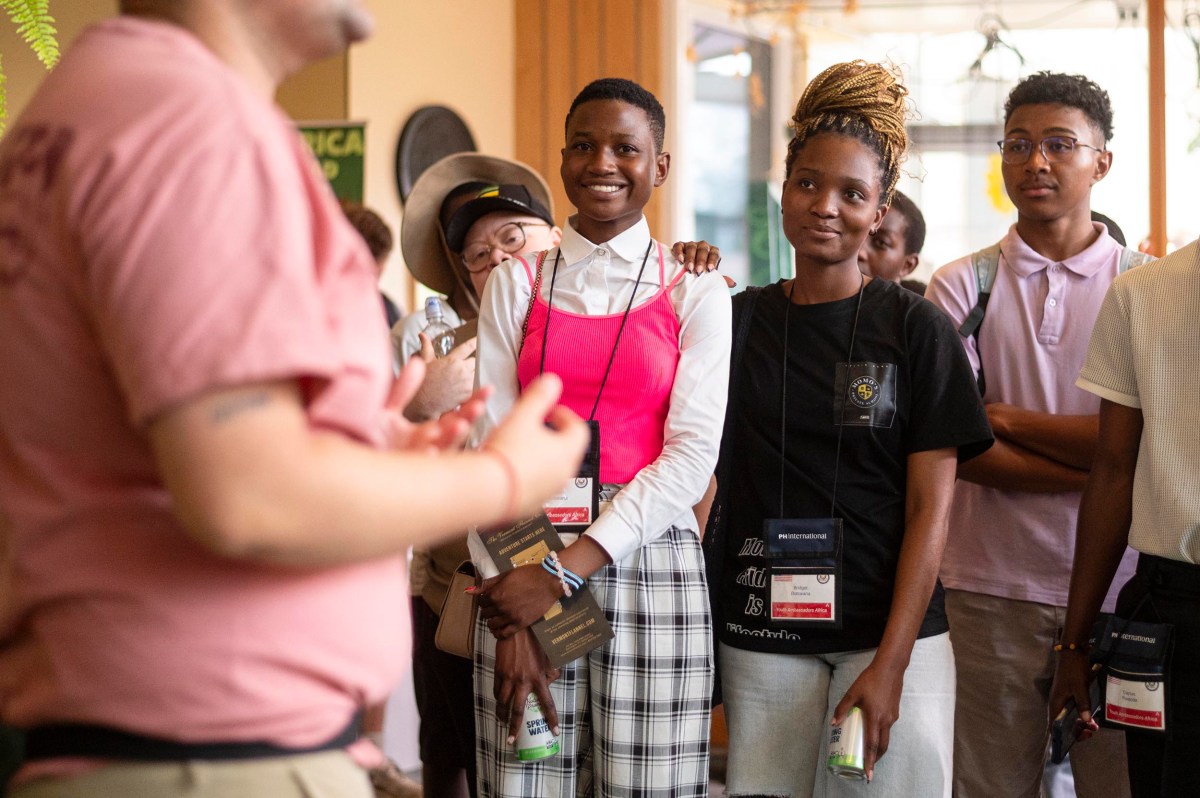
Niyonkuru was one of 65 high school students staying in Vermont as part of the Youth Ambassadors Africa Program by Project Harmony International, a Waitsfield-based organization that runs exchange programs worldwide.
From July 8-July 28, the program is bringing students and mentors from 10 countries across sub-Saharan Africa to four different parts of the U.S.: Washington, D.C., Vermont, Alabama and New York. To account for one of the largest groups the organization has seen, the 65 students and 10 mentors were split up into three rotating groups, with each group starting in a different location.
The first group of students made their way to Vermont July 10 for their six-day stay. While they were here, the students participated in activities intended to facilitate leadership development, entrepreneurial skills and a sense of community in the U.S.
“These young people are between the ages of 15 and 18, so they’re at the end of their high school career and thinking about what’s next,” said Meg Harris, executive director of PH International. “This provides a good introduction and gives them a good sense of the world, specifically the U.S., and how they might play an important role in it.”
In early 2025, U.S. foreign assistance was cut by over $8 billion with the systematic dismantling of the U.S. Agency for International Development, more familiarly known as USAID. Previously funded by USAID, Harris said PH International had lost an estimate of $6 million for selective programs, among other program suspensions.
Despite the cuts, however, PH International is still able to run their foreign exchange programs through exclusive funding from the U.S. State Department’s Bureau of Educational and Cultural Affairs, Harris said.

Jennifer Plante, program director for the Youth Ambassadors Africa Program, said the programs are necessary to encourage foreign education on both the academic and cultural level.
“I think when people can talk face to face from different parts of the world, or even different parts of the country, it’s a good thing to just show people what they have in common and what they can agree upon,” Plante said.
For 16-year-old Mariah Lissa Meme from Seychelles, being exposed to new cultures and ways of life was a major factor for doing the program.
“I wanted to experience something new and meet new people, and just get out of where I was,” Meme said.
A taste for the Green Mountain State
Throughout their stay, the students toured the Statehouse, visited Vermont Public, tasted local cider from Cold Hollow Cider Mill and partook in a beloved Vermont tradition — trying their first maple creemee.
But for Meme, the people were the most memorable part of Vermont. She emphasized the “welcoming” nature of the state, a switch from what she is accustomed to back home.
“Here people mind their business while being nice,” she said. “But in my country, you mind your business and you are rude.”
Amicha Malano, an 18-year-old student from Guinea, agreed, saying she was in awe of the tight-knit communities in Vermont.
“I like how everybody comes together to make their community grow,” Malano said. “Whether they’re children, teenagers, grown-ups or the elderly, all of them come together and they all have a word to say. It’s not just about the leaders, and that’s really good.”
Families from Jericho to Salisbury hosted two or three students each as part of the program’s cultural immersion. Harris said the outreach to find the families was mainly done through Front Porch Forum and contacting families that had previously hosted students in the past.
“We don’t provide any funding or any incentive for them to do it,” she said. “They truly want to be able to show these young people what it’s like in Vermont.”

One host family from Middlebury, Liz Murino and John Nordmeyer, found their way into the program when they hosted students from Russia in 2016.
Now, for the first week of the Africa program, Murino and Nordmeyer hosted three students: Claudia June from South Africa, Ashanti Lindiwe from Mozambique and Liza Belinda from Rwanda.
“We raised three daughters … so it was reminding us what it was like to have our daughters around,” Murino said.
Murino and Nordmeyer took the three girls to a farmers market in Middlebury, Bartlett Falls swimming hole, a World Cup watch party and Joe’s 19th Hole in Pittsford, where the students indulged in their first creemee.
Murino and Nordmeyer joked that part of their weekend went off script, however, when the girls were eager to tag along with the boy students to a car show in Rutland.
“What we learned is that teenagers are the same everywhere,” Murino said.
After saying goodbye to the students they hosted for a week, Murino and Nordmeyer said they felt the students had left behind pieces of their cultures just as much as Vermont had left an impression on them.
The family recalled a time when chaperoning the group at an outdoor funk concert in Ripton turned into an uncommon, surreal sight for Vermont.
During the concert, at the center of the crowd, the students formed a circle and began doing an African dance, causing the other concertgoers to cheer them on.
Nordmeyer said the night was a moment he hoped the students would take with them when they left, because it would live on with him for a long time.
“The whole rest of the audience was just watching this multicultural display that they weren’t particularly expecting in Ripton,” he said. “So they extended out from not just their cultural experience or our cultural experience, but also became part of the whole community.”