

This story by Michael Bielawski was first published in The Bridge on July 1, 2026.
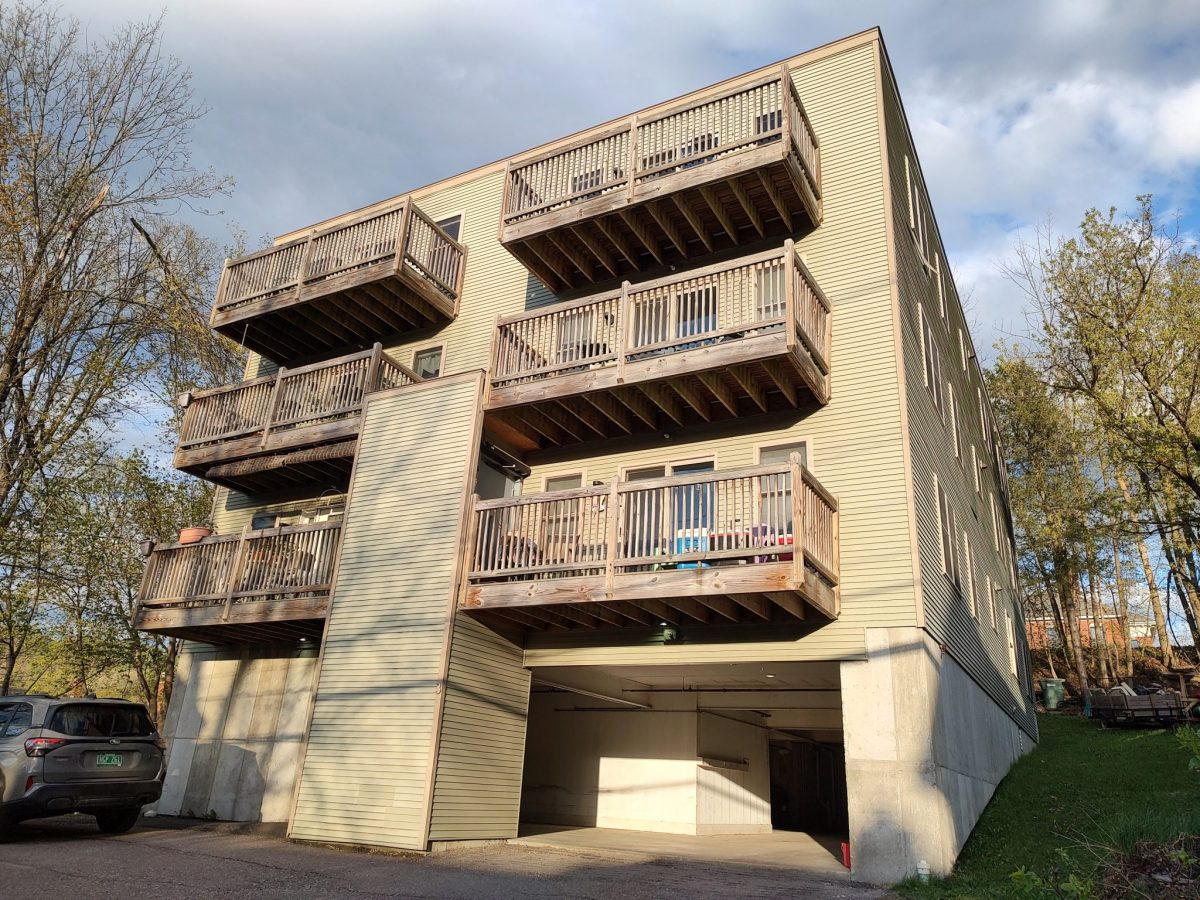
MONTPELIER — Planning commissioners have been considering the possibility that buildings could start getting taller in Montpelier’s River District.
Planning Director Mike Miller recently spoke with The Bridge about the direction in which the commission is going in terms of shaping the city’s future development, starting with zoning.
The conversation focused on the River District, or “that stretch, from the Nature Conservancy up through Barr Hill,” according to Maria Arsenlis, vice chair of the commission. She also said, “I would love to see that as kind of a pro-development area similar to the CCR (Country Club Road). Kind of like, ‘Yes, please develop here. … We want six-story apartment buildings here.’”
During a Planning Commission meeting in April, Arsenlis mentioned she wouldn’t mind seeing 10-story buildings on Stone Cutter’s Way, which connects Main Street to Granite Street.
Miller said current zoning downtown already allows for six-story buildings, but for the most part, developers aren’t doing it.
“For 50 years we have allowed six-story buildings in the downtown, and we haven’t had anyone build six-story buildings,” Miller said. He later added, “It’s a policy decision, and it’s for the public and the Planning Commission and the City Council to decide.”
At the meeting, Montpelier resident Peter Kelman spoke about his vision of a new river district, which commissioners jokingly refer to as Gasoline Alley.
“I think you guys should talk to Jon Copans (executive director of the Foundation for a Resilient Montpelier) and the people who are really thinking about the river as being in some ways much more of an inviting place for, yes, restaurants and music venues but not so much gas stations and automobile parts,” Kelman said.
The initial discussion was about design review zones, which require extra consideration for changes to building designs. Miller said these zones can help protect the historic character of Montpelier.
Commissioner Sean Linehan suggested that no matter how the city is zoned, development always takes time.
“These changes that we make, the time scale to see results from this are going to be quite long. It is going to be less impactful than both supporters and detractors hope and fear. We could make the entire city urban, and if you come back in 50 years it’s still going to look like it does today,” Linehan said.
There was much discussion about simplifying the various zoning districts from the current number of smaller zones into fewer, larger ones.
Responding to a question about possible pressure to increase housing development, Miller said, “We need housing. I mean, every study says we have a lot of homeless (people) in central Vermont because we have a housing shortage.
“It adds a lot of stress to the housing system, and then people who are housing-stressed are more likely to have that one thing that happens that bumps them into homelessness.”
