

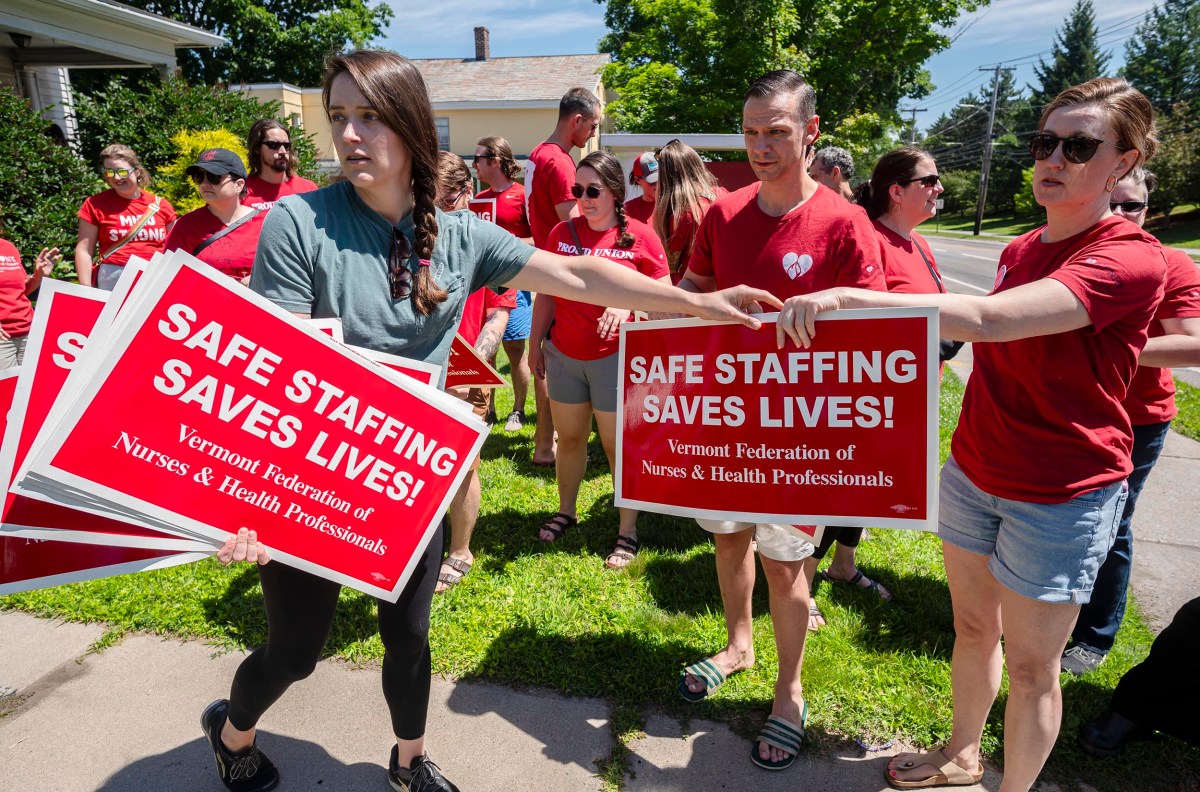
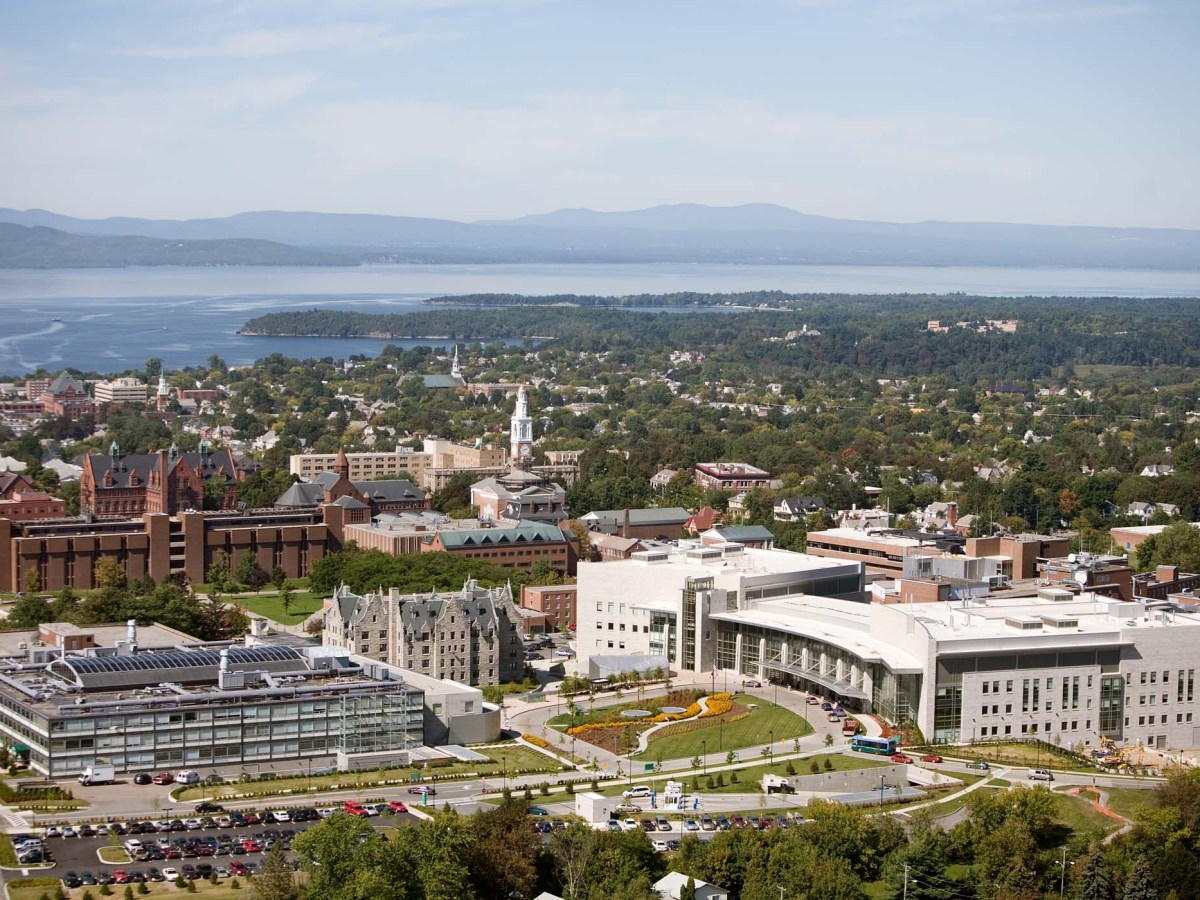
When the University of Vermont Health network laid off more than 140 employees last week, it sent shock waves through the state’s largest healthcare provider.
As some staff try to make sense of the sudden news, others weigh just how much the estimated $9.5 million in annual savings can help the hospital meet its goal of cutting expenses by $300 million in three years.
The network, which includes three hospitals in Vermont and three in upstate New York, said it focused its cuts on administrative and non-patient-facing roles. It eliminated 76 positions and intends to post the remaining 66 as new roles with restructured job descriptions.
The hospital network has not released a list of specific positions affected, citing privacy concerns, but said the majority of changes came in positions in the network’s Medical Group — which acts as an umbrella group for the physicians in the network’s hospitals and clinics — as well as in its Data Management Office and Population Health Services Organization.
Through representatives for the hospital and its various unions, VTDigger was able to confirm that the cuts include a number of positions in support staff roles, such as administrative assistants, financial coordinators and schedulers.
Additionally, VTDigger confirmed that nearly 60 director and assistant director roles in the Medical Group are subject to restructuring. Those positions are currently responsible for budgets, staffing and productivity as well as other performance measures.
Six staff members in a cytogenetics lab, which does chromosome analysis to assist in various diagnoses, are being cut, effectively closing the lab and leaving the hospital to send samples elsewhere.
The nurses’ union estimates that 10 nurses are also losing their jobs, with the cuts spread among primary care, internal medicine, obstetrics/gynecology and fertility clinics based at UVM Medical Center in Burlington and Porter Medical Center in Middlebury.
Three emergency department social worker positions were also cut, union representatives confirmed.
“Our unions have profound concerns about the decisions the hospital is making,” Nicole Divita, the president of the Vermont Federation of Nurses and Healthcare Professionals, wrote in a statement on behalf of her union and the UVM Medical Center Support Staff United union.
She said the layoffs hit 53 union positions, 48 of which are directly patient facing. She worried that the cuts will lead to longer wait times and hindered quality of care.
It has been difficult for the union to determine exactly which positions were cut and who is affected, said union representatives, as the hospital first asked for voluntary departures from some, followed by formal layoffs.
Some outside observers see the changes as in line with the downsizing that regulators and lawmakers have long called for.
In May, an independent liaison recommended that the hospital cut its spending by $100 million in each of the next three years. Hospitals in Vermont and beyond are expecting steep losses in revenue due to changes in Medicaid reimbursements.
UVM Medical Center estimates that it is losing $460,000 every day, the network’s CEO and President Dr. Steve Leffler told lawmakers in April.
Owen Foster, the chair of the Green Mountain Care Board, which regulates hospitals’ finances, noted the context. “I think for people who think ‘this is a lot, this is too disruptive,’ you have to be very cognizant that macro issues and challenges are coming at them very fast and very hard,” Foster said. The board does not make granular decisions about where to make service changes.
These financial challenges have been mounting for years, Foster said. He thinks of a letter Gov. Phil Scott signed in 2022, which painted an almost prophetic picture of how precarious healthcare could become in the aftermath of the pandemic.
“We knew this was going to happen. We knew there needed to be changes. It’s not necessarily a bad thing,” Foster said. “Doing nothing would be worse.”
Still, staffing reductions are just a part of addressing much more dire financial problems.
“It’s not just about cutting. It’s also about the efficiency of the operation, the footprint of the operation,” Foster said.
UVM Health staff are concerned about what the layoffs will mean for workload and patient care.
The cuts to nursing staff are likely to lead to longer wait times for patients seeking care before they come into the clinic, said Sophia Simkins, a triage nurse at UVM Health’s South Burlington family medicine clinic. Nurses like her respond to digital patient messages, prescription refill requests and phone calls from patients with symptoms. On average, she can do about seven of these various “encounters” in an hour. Each morning, her clinic receives between 300 and 400 new messages. She doesn’t think a clinic can handle that volume with half its nursing staff.
“It’s very mysterious to us how patients are going to have their needs met,” she said. “You will notice a difference in calls being received, in meds’ refilling.”
Hospital employees also worry that administrative cuts, without deeper systemic restructuring, affect patients too.
Melissa Lavallee is a finance and administrative assistant for the psychiatry and mental health departments in the UVM Medical Group. She spends her days ordering supplies, reimbursing for conferences and professional licensure renewal, processing contractor payments and coordinating the schedules for about 150 clinicians.
“It’s triage all day,” she said.
She was spared by the layoffs, but her counterpart in the neurology department of the medical group was not, nor were the directors she works with.
Lavallee covered the neurology department job, in addition to her own, for a period before the neurology department hired someone.
“I was swamped, swamped, swamped. Everybody was waiting weeks for things,” Lavallee said.
Monday, when the network officially asked her to take over the role in neurology again, Lavallee said no.
Pushed to her limit, she sees no room for consolidation.
“They want blood from a stone,” she said. “They’re squeezing a system run dry.”
