

This story, by Report for America corps member Carly Berlin, was produced through a partnership between VTDigger and Vermont Public.
After more than a year of gridlock caused by federal funding cuts, the public housing authorities that issue rental vouchers to thousands of low-income Vermonters are on steadier financial footing.
One of the state’s largest housing authorities has begun issuing new vouchers again, following an 18 month freeze. Others are out of shortfall status – meaning they’re no longer spending more than they’re bringing in – but money is still tight.
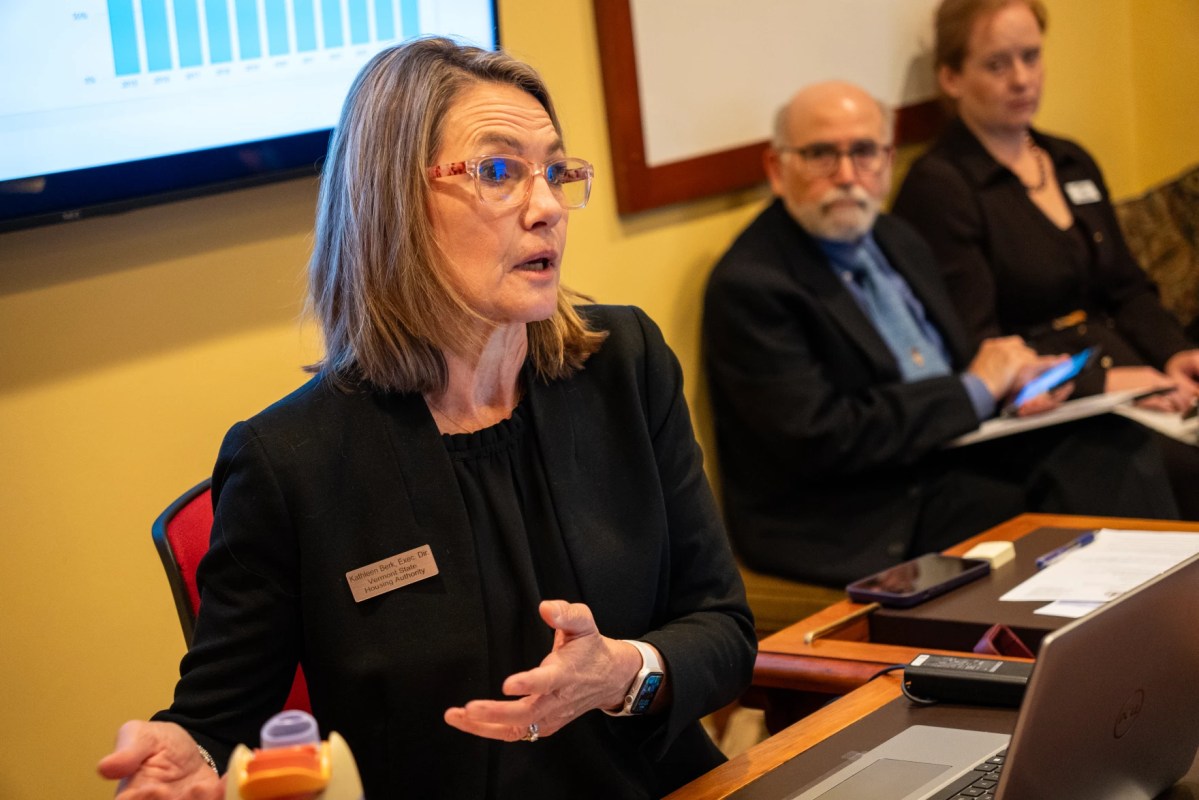
“It’s a very, very lean budget,” said Kathleen Berk, director of the Vermont State Housing Authority.
Federal housing vouchers, sometimes known as Section 8, play a crucial role in sustaining housing for low-income people who can’t afford market-rate rents. Voucher recipients pay a third of their income toward rent; a local agency administering the federal program pays for the rest. The vouchers offer one of the few avenues out of homelessness for the thousands of Vermonters sleeping in shelters, motels and outdoors.
In 2025, a funding reduction from Congress meant many of the nine local housing authorities in Vermont stopped issuing new rental vouchers off their lengthy waiting lists, rescinded vouchers from people looking for an apartment to use them, and shelved vouchers when tenants died or moved out. The state lost hundreds of housing vouchers in 2025 through attrition.
Most housing authorities began 2026 in shortfall, and feared the situation could drag on for months, leading their directors to plead to state legislators for stopgap help.
Now, the picture has improved – if moderately. Last month, local housing authorities received relatively encouraging notices from the U.S. Department of Housing and Urban Development about their funding levels for 2026. The housing authorities have not needed to continue their pursuit of state funds after lawmakers set up a pathway for them to do so this winter.

But access to new vouchers depends on where you live in Vermont.
The Burlington Housing Authority has begun the process of issuing new rental vouchers off its waitlist, according to executive director Steven Murray. The agency took early, aggressive measures to contain costs when it first anticipated the funding cuts in January 2025.
He hopes the housing authority can issue around 200 vouchers between now and the end of the year, though that number is far from set. The agency is prioritizing issuing specialized vouchers for families, young people leaving foster care and people with disabilities because of the nature of the available funds.
If the housing authority issues too many new vouchers all at once, those households will vie for a limited number of available apartments that fall within the voucher program’s modest cost thresholds, Murray said. And if a family can’t find an apartment to apply their subsidy within 180 days, they drop to the bottom of the waitlist.
“If I flood the market with Section 8 voucher holders, they’ll be competing against themselves – and people who might have been on the waitlist for two, three years will not lease up and lose out,” Murray said.

The Vermont State Housing Authority – the largest provider of rental vouchers in the state, primarily serving areas that lack a local agency – is not yet prepared to begin issuing new vouchers off its general waitlist, Berk said.
The agency has enough funds to provide long-term vouchers to 52 victims of domestic violence who currently have temporary vouchers through a Covid-era program that expires next month, Berk said.
The housing authority will also be able to make good on commitments for “project based vouchers,” or subsidies that are attached to an apartment rather than a renter. Those 26 vouchers are helping support affordable housing projects in Newport, Middlebury and Waterbury, Berk said.
Kevin Loso, CEO of the Rutland Housing Authority, said his agency was also able to follow through on similar promises for a new affordable housing project in the city that was dependent on the funds. But it came down to the wire.
“Up until two weeks ago, I said… ‘I can make no guarantees that the subsidy is going to be available,’” Loso said.
His agency has enough funding to issue a handful more renter-based vouchers this year, about 10 or 15. But a HUD official indicated that the housing authority should not begin issuing them again, Loso said. He has asked for clarification as to why, but has yet to get a clear answer from the severely understaffed federal department.
“We’re a small program, but 10 to 15 is significant in terms of the impact that it would have on the community,” Loso said.
