This story, by Report for America corps member Carly Berlin, was produced through a partnership between VTDigger and Vermont Public.
Ally Quirk loved her Winooski apartment, with its scenic river views, proximity to restaurants, and amenities like in-unit laundry. But the monthly rent of $2,450 for a one-bedroom was straining her budget. So Quirk, a therapist, decided she’d move out this summer and look for a better deal.
Yet when Quirk recently asked her landlord, Redstone Properties, to rent her apartment month-to-month while she continued her search, she was in for a surprise – and a good one. When the property management company relisted Quirk’s unit, they’d cut the price to $2,100, citing vacancies across their buildings, Quirk said.
At first Quirk was angry that Redstone hadn’t proactively approached her with the lower rate. Then relief set in. Last week, she signed her lease for another year.
“Obviously, moving is really stressful,” Quirk said. “I was thrilled to be able to stay in my apartment and pay a reasonable amount of money for it.”
Quirk’s experience is the result of a cooling rental market in Chittenden County, where the lion’s share of Vermont’s rental homes are located. As of June, when many leases turn over, the county’s rental vacancy rate – a measure of vacant units compared to total rentals – was 3.3%, according to Brad Minor, a real estate appraiser for the South Burlington firm Allen, Brooks and Minor.
That’s approaching the 5% vacancy rate experts consider indicative of a healthy market, and it’s a far cry from the sometimes sub-1% rate that marked the white-hot rental market of the pandemic years.
In response, prospective tenants are taking longer to sign leases as they shop around for apartments, and landlords are working harder to attract and retain renters with deal sweeteners and price cuts.
“We used to list an apartment for rent – if we listed it in the morning, by lunch we’d have it rented,” said Erik Hoekstra, managing partner at Redstone, which manages around 600 apartments and 1,000 beds of student housing. “Now we list an apartment for rent, and we’ve got dozens of other apartments for rent at the same time, and so does everybody else in the market,” he said.
A banner year for building
A few factors are contributing to the loosening market, according to Minor. Rent stabilization programs designed to keep people housed during the Covid-19 pandemic have ended, he said, and the wave of newcomers arriving in Vermont with well-paying remote jobs has slowed.
Yet perhaps the most critical driver of the higher vacancy rate has to do with supply, not demand, according to Minor. Chittenden County has seen a dramatic jump in the number of new apartments opening up in the last several years, Minor said.
In 2024, over 800 new units opened – nearly two and half times the average annual growth in rental housing stock in the county, and a record since Minor’s firm began tracking the data in 2000. Last year, over 500 new units opened. That includes employee and student housing, large-scale apartment buildings, and duplexes and triplexes tucked into neighborhoods.
Since late 2024, as the rental market has absorbed those new apartments, the county’s rental vacancy rate has fluctuated between 3% and 4%, Minor said. Meanwhile, the rate of inflation for rents – the measure of how much rent costs have gone up – has shown signs of slowing, too. In the fall of 2024, rent inflation in the county was 6.1%, Minor said; last year, that figure dropped to 3.5%.
Many of the new apartments are in high-end, newly-constructed buildings, commanding rents as steep as $5,000 a month in some cases. So Hoekstra, from Redstone, wasn’t surprised to see what he called a “supply glut” among upscale units at the top of the market.
What he didn’t anticipate was that the impacts would ripple through the rest of the housing market. As the owners of upscale units have seen vacancies and adjusted prices down, then the owners of more moderate-income housing – who had brought in higher rents during the tight market of the Covid years – have needed to adapt to the new reality, too, Hoekstra said.

“This is how supply and demand is supposed to function,” Hoekstra said. But the Burlington area has been drastically undersupplied for so many years that the current adjustment to a healthier balance feels dramatic, he said.
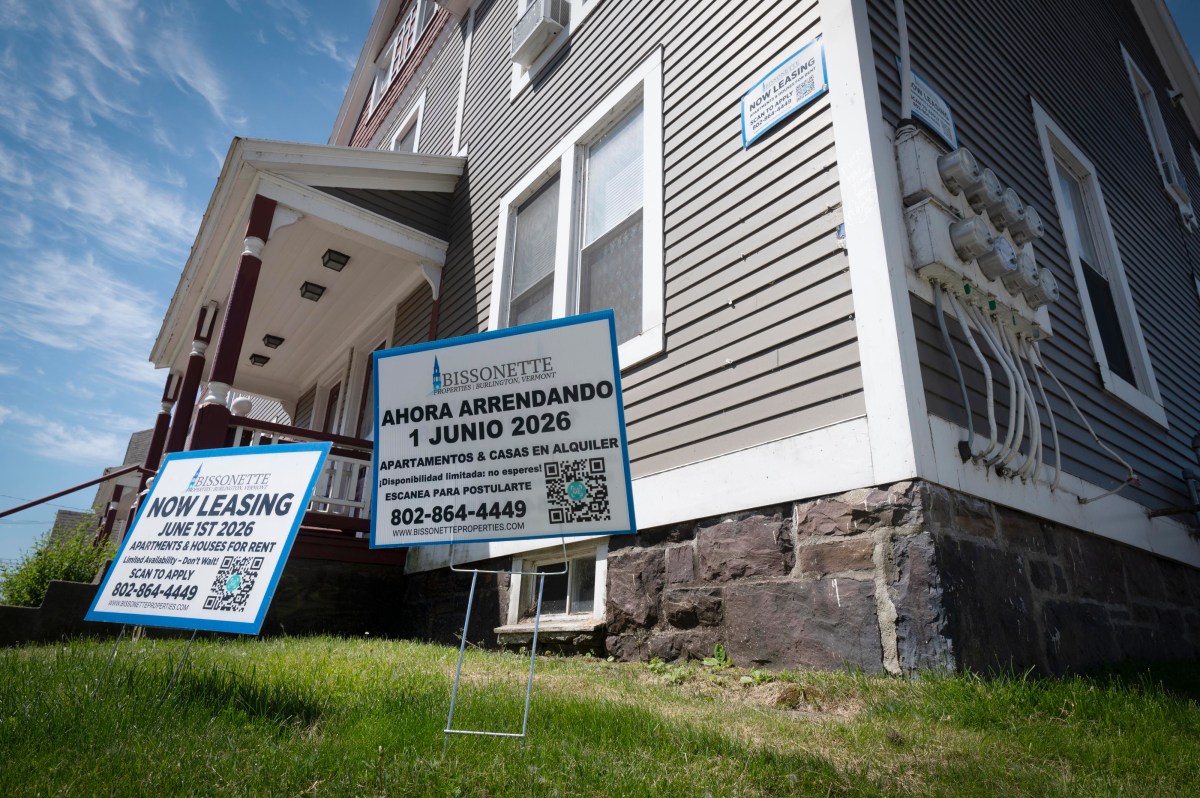
Landlords must now go to greater lengths to fill their apartments. Bissonette Properties, among the largest rental companies in the region, has plastered Burlington’s Old North End with advertisements for its units – and recently added signs in Spanish. The company’s website currently boasts a “price match guarantee”: If a prospective tenant finds a lower rate on a comparable apartment, they’ll match it. Catamount Run, a South Burlington apartment complex designated for University of Vermont graduate students and staff, is currently offering $1,000 off the first month’s rent for some leases.
Brian Armstrong, operating principal at Strong Will Property Management, said he recommends that owners of apartments in older buildings invest in repairs and improvements to compete with new builds that are full of amenities.
“If you’ve got a choice between doing linoleum or a little bit more for pre-finished wood floor, my recommendation to any landlord or property owner right now would be: Spend a little more, make it nicer,” Armstrong said.
‘A little bit more hopeful’
Observers of the market expect more change on the horizon. The University of Vermont’s sharp enrollment decline this fall will likely impact landlords who cater to undergraduates in Burlington’s core. Meanwhile, the electric aircraft company Beta Technologies has become one of the region’s major employers – and as it grows, it’s bringing more new renters to the market.
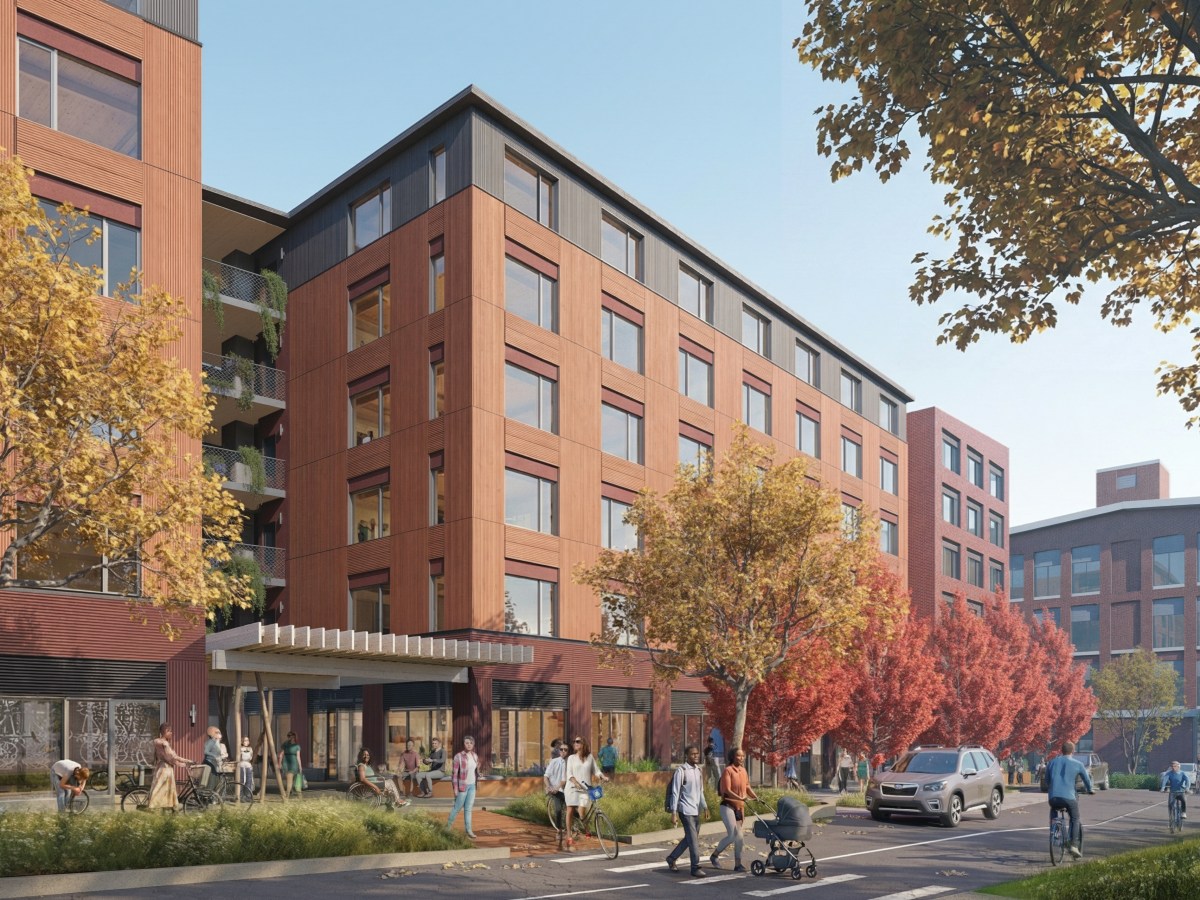
And the current slackening in the market doesn’t appear to have quenched the need for lower-income housing. Chris Donnelly, director of community relations for Champlain Housing Trust, said the nonprofit still has a 10-month waitlist for its units. Its newest apartment building – 38 units in downtown Burlington – was fully leased within a month or two, he said.
“We still have a high demand for the affordable apartments that we lease,” Donnelly said.
Plenty of tenants still see prices that are simply out of reach. Autumn Moen lives with roommates in Burlington and hopes to move into her own one-bedroom apartment this fall. She’s struggled to find anything under $1,500, which she said would suit her income at a food access advocacy organization.
But after the June 1 lease cycle came and went, Moen started getting Zillow updates showing price drops for units that remained vacant.
“In the last week, seeing rent actually starting to be reduced on listings has me, for the first time in my search, feeling a little bit more hopeful,” she said.