

This commentary is by Nina Antin, who is the parent of a Long Trail School student. They divide their time between Manchester and a farm on the Arlington border with White Creek, New York.
Vermont’s new education law, H.955 — which has passed the House and Senate and is now awaiting the governor’s signature — has been described by its supporters as a voluntary framework, one that gives communities the freedom to study consolidation, vote on their future and chart their own course. That description is technically accurate. It is also substantially misleading.
The need for education reform in Vermont was never in question. Property taxes have risen more than 40% in five years. The state has the second-highest per-pupil costs in the nation. Something had to change. The question was always how, and whether Vermonters would be told honestly what that change would look like.
The foundation formula has not yet taken effect. But the merger committee process begins in October 2026, and the spending cap and construction aid differential are already baked into the new law. The financial architecture is now being built around communities that will be asked to vote before the formula arrives. By the time it does, the mergers will already have happened.
School districts will receive a fixed per-pupil amount set by the state rather than funding tied to what they actually spend. That is a fundamental break from Vermont’s tradition of local control. The spending cap prevents communities from raising local taxes above a fixed ceiling regardless of what voters approve. For districts whose real costs exceed what the formula provides, that gap cannot be bridged.
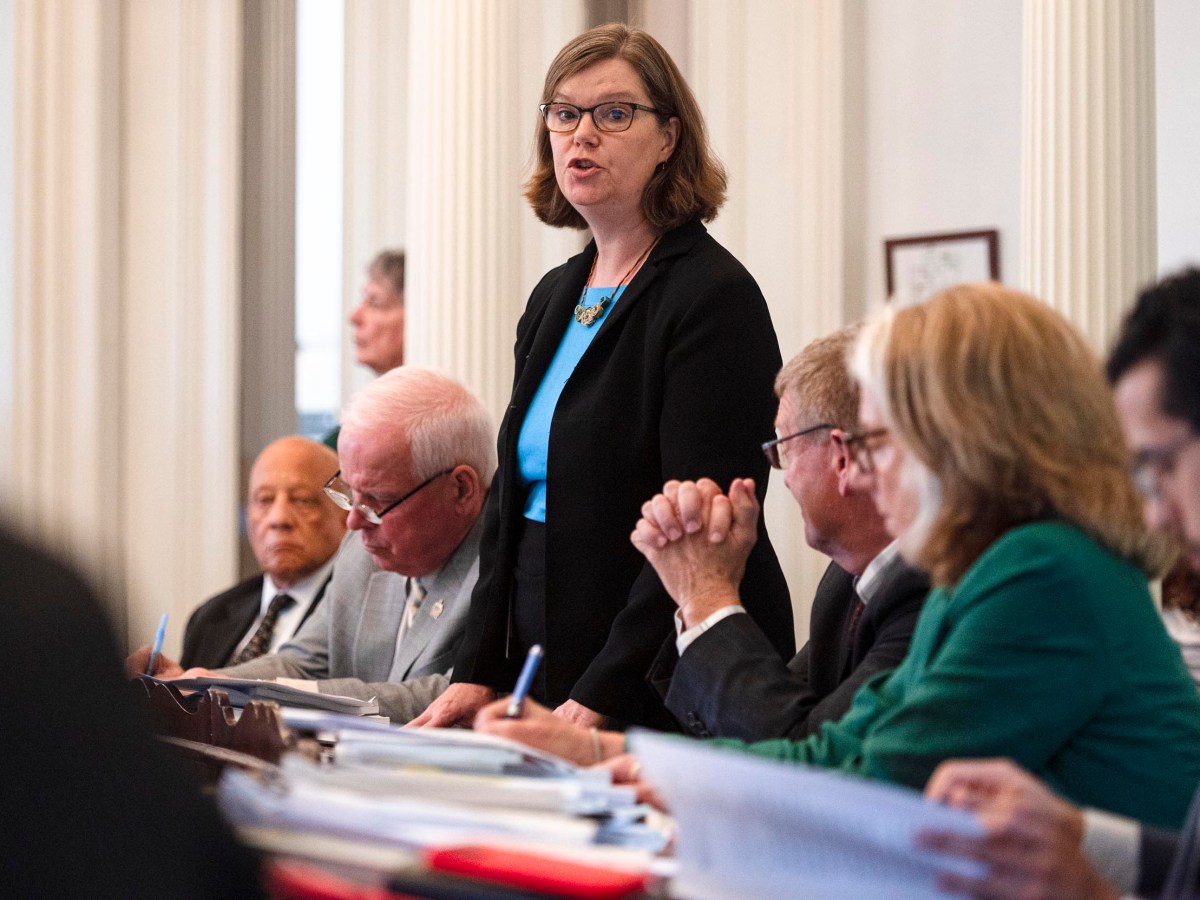
When Sen. Ruth Hardy, D-Addison, presented H.955 on the Vermont Senate floor, she acknowledged this directly, saying small districts that vote against merging will not be able to survive on the foundation formula. That is not a characterization from opponents. That is a statement from someone who helped write the bill.
The construction aid program points in the same direction. Merged districts receive up to 75% of construction costs covered — a 30% base plus up to 45% in bonus incentives available only to consolidated districts. Nonmerged districts get only the 30% base. That 45-point differential is confirmed in the Joint Fiscal Office’s nonpartisan fiscal analysis of H.955. A district that votes “no” faces construction costs nearly 2½ times higher than a merged neighbor.
There is a further consequence for districts that resist. H.955 makes state aid available to cover 75% of debt service costs on school construction debt predating this law — so-called legacy debt. But that aid is denied to any district identified as a bad faith participant in the merger process. The facilitator makes that determination. A district that declines to cooperate risks losing debt coverage for obligations it incurred before this law existed.
H.955 also creates a mechanism for future legislative action. The State Board of Education is required to report to the Legislature by November 2029 on any district with fewer than 750 students that has not merged, with recommendations on whether and how to merge them. The board cannot unilaterally force a merger. But the report arrives with named districts and merger options outlined. A future Legislature will not need to start from scratch.
Once assigned to a merger committee, participation is mandatory. The law explicitly states that a school district shall participate in good faith in the merger committee assigned to it by the facilitator.
The suggested district groupings are guidance, not mandatory maps. Facilitators have some discretion. But that discretion is narrow. Committees must be contiguous, which significantly limits reconfiguration. In most cases, groupings will remain as suggested. And while the groupings are guidance, participation is not. Once assigned, a district must participate in good faith.
Vermont has a long tradition of school choice: towns that send their children to public or approved independent schools rather than operating their own. This financial architecture directly threatens that tradition. When tuitioning communities merge with operating districts, school choice disappears through absorption rather than prohibition, via the structure of the merged district.
The state does not mandate this. It simply makes every available financial mechanism point in the same direction.
The merger committee process begins in October. Attend the meetings. Know who your facilitator is and engage early. Pay attention to who is running for the Legislature this fall. The next session needs to restore protective language for tuitioning communities, enact the secondary student weight legislation and protect school choice in merged districts. Ask candidates what they know about this law and whether they’re willing to stand apart from their party when their constituents’ interests demand it.
The forced merger mandate was dropped. The forced merger outcome was not.
