

This story by Liberty Darr was first published in The Citizen on May 14, 2026.
Some of Vermont’s Congressional delegation heard from a roundtable of town clerks on election integrity earlier this month.
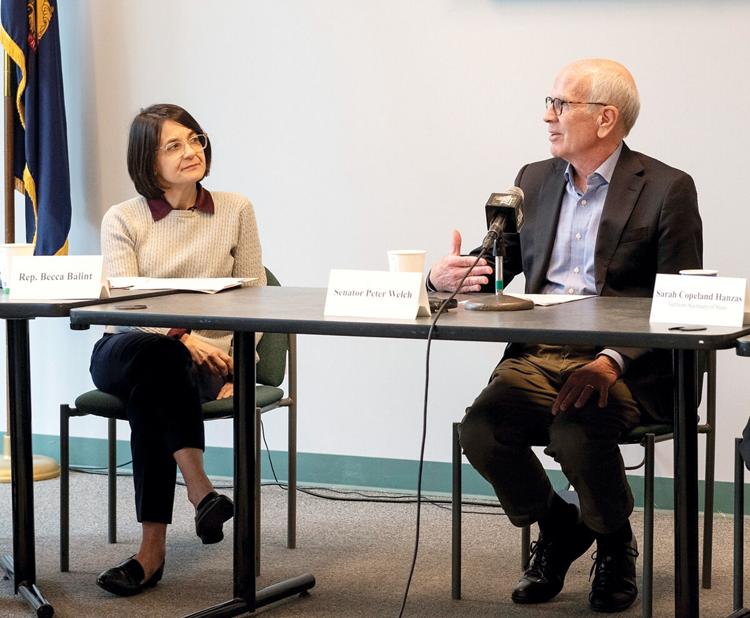
In Shelburne, Rep. Becca Balint, D-VT, and Sen. Peter Welch, D-VT, heard from Secretary of State Sarah Copeland Hanzas and five town clerks just what goes into ensuring election security — a duty that town clerks don’t just fully uphold, but also take very seriously.
The discussion was largely in response to President Trump’s executive orders on voting and the Save America Act, which would require people to show proof of U.S. citizenship — passports, birth certificates or naturalization papers — when registering to vote in federal elections. The bill, Welch argues, threatens to block millions of U.S. citizens from voting and would disproportionately impact women, people of color, seniors and rural voters, and make it harder to register and vote by disrupting online registration and eliminating universal mail-in voting.
“The Trump administration has been on a furious effort to silence citizens and deny them our most fundamental constitutional right — the right to vote. The ‘show your papers’ requirement is an attack on the freedom to vote,” Welch said from the Senate floor in March.
The Save America Act, Welch told people gathered in the Shelburne town offices, is an attempt by the federal government to gain access to voter information. Copeland Hanzas is being sued by the federal by the Trump administration for not turning over voter data — the mention of which elicited applause in the room.
The suit argued Copeland Hanzas violated federal election law when she refused to share registered voters’ addresses, driver’s license numbers and the last four digits of their social security numbers, among other information.
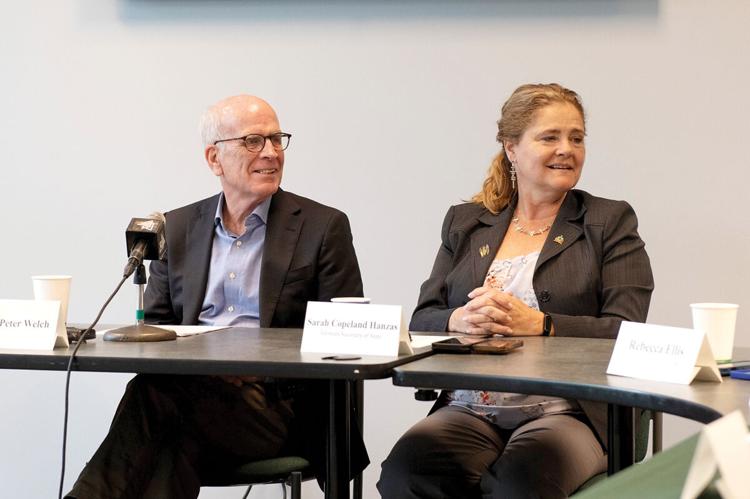
Balint said the topic comes up frequently in public forums, where people are “deeply concerned about the next election.”
“One of the things that I always remind them is that elections are not run federally. They’re run locally,” Balint said. “I remind them that, actually, you do trust your town clerks, and they are the people in our towns and our cities and our villages across Vermont that are making sure that we are living up to our democratic ideals.”
The folks behind the town clerk desk, Balint said, are the freedom fighters.
Each clerk at the roundtable discussion explained in depth each step of the election process, from absentee ballots to voter registration rolls, what happens on election day and verifying elections.
Brattleboro Town Clerk Hilary Francis said there are checks and balances throughout the entire process — regarding both personnel and technology. For example, she said any work done with mail-in ballots or elections always has two election officials present. She said when it comes to technology, Vermont’s elections management system is also designed to double check the process.
To be mailed a ballot, you must be registered to vote, she said.
“If somebody calls us and says, ‘Hey, I want a ballot,’ we’re not just going to mail it to them without going into the system and making sure that they’re registered,” Francis said. “And following that process, there are penalties. Penalties for impersonation are one year, mail fraud or theft is five years, and perjury is 15 years. So those are real, real penalties.”
Morristown Town Clerk Sara Haskins discussed the process of using a standalone tabulator — a device at polling stations that immediately reads, casts and counts paper ballots with no internet connection, to ensure security.
“And then the justices so the peace are going to work in their pairs of the different parties, and they’re going to look for voter intent,” she said. “They’re going to sort through those ballots, and they’re going to look at, ‘Did the voter color in the yes or no that they were supposed to color in for the machine to read? Or did they circle the word yes, and the machine maybe didn’t count that?’ So, we are going to physically touch and look at every single ballot.”
Other parts of the process include keeping voter checklists clean, according to Burlington’s assistant city clerk, Sarah Montgomery. One of the ways to do that is by removing voters that are not eligible to vote anymore — using death notices, notifications from other states that the person registered to vote there, or written authorization from the voter.
“If we have other reasons to believe a voter may no longer be eligible to vote within our municipality. We use what we call a challenge process,” she said.
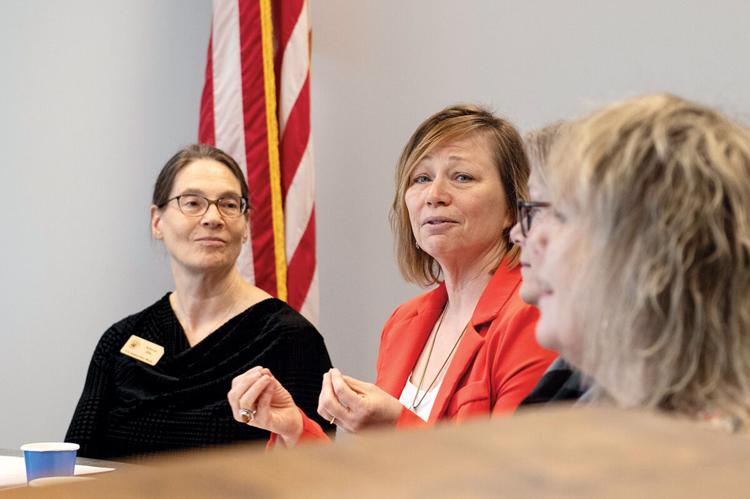
Montgomery added a challenged voter isn’t able to be removed from the checklist for two general election cycles. Challenged voter issues are also able to be resolved right on election day.
“This seems like a really long time, and I think the process is a really good balance of ensuring that voters have access to be registered and also protecting our elections and making sure they’re secure by not issuing ballots to residents who we are questioning that eligibility for,” she said.
Nitty Gritty of food prices
While in Vermont earlier this month, Welch also took a trip to Charlotte to visit the Nitty Gritty Grain Co. — which produces organic, small batch grains for restaurants and bakeries across Vermont — to discuss the impact of the current economy on local agriculture.
There, he spoke with local farmers about how the “trade war” has caused enormous uncertainty for many farmers and producers throughout Vermont, who were forced to pay more for equipment, fertilizer and other costs of production. The war in Iran, which Welch calls “illegal,” has also caused dramatic price increases for fertilizer.
Welch has introduced legislation, such as the CANADA Act, to exempt small businesses, including agricultural producers, from tariffs imposed on Canada. He was an original cosponsor of bills and resolutions to block President Trump’s tariffs.
