
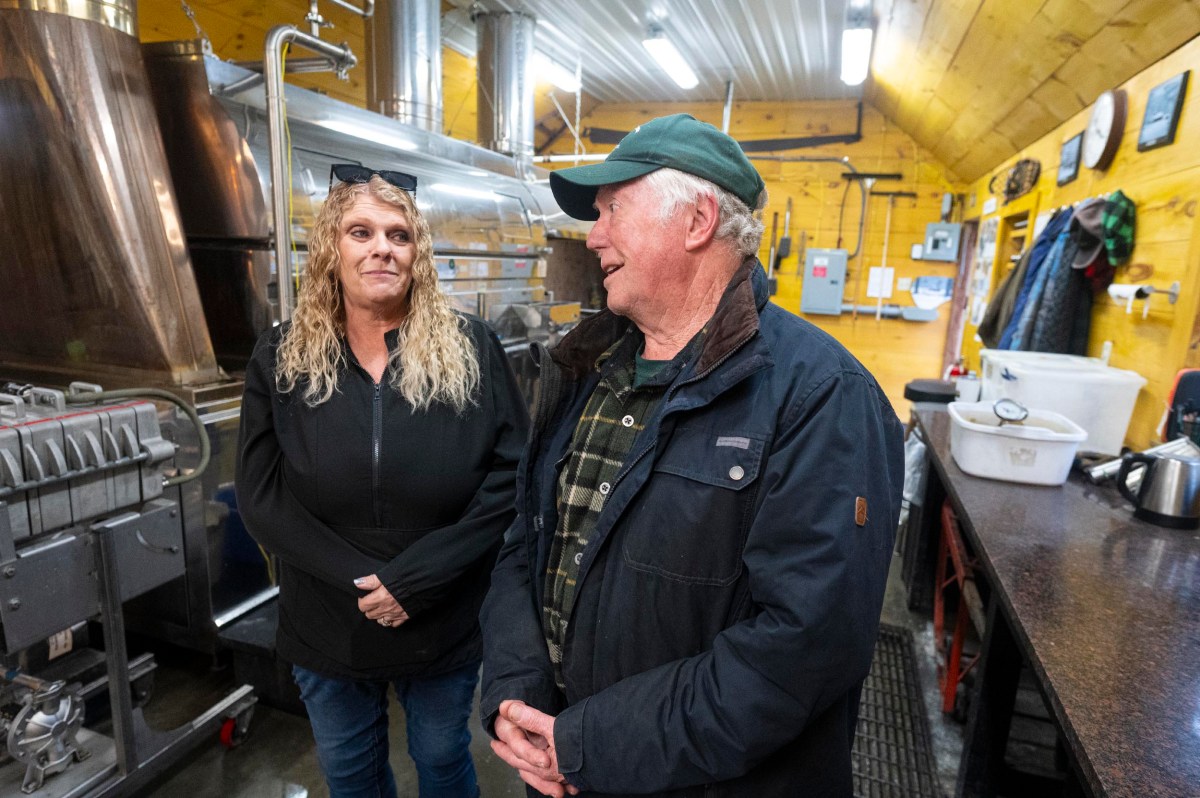
EAST MONTPELIER — Bruce Chapell has been tapping maples at Templeton Farm since 1986 on land his family has owned since 1810. This year he thinks he saw some record-breaking days for sugarmaking.
Temperatures had climbed into the mid-40s after nights in the 20s — textbook sap weather — during a winter Chapell called “more like the old time winters,” with deep snow and bitter cold. On a handful of bountiful days this year, Chapell said he saw some single-day records of sap flow from his trees, more than any other time in the last 40 years.
He wasn’t the only one. Anson Tebbetts, secretary of the Vermont Agency of Agriculture, Food and Markets, said he’s heard from a few sugarmakers who broke single-day records this year, although others say most producers fell short of their goals.
This season, Vermont likely produced about 3 million gallons of syrup, in line with the state’s annual production since 2023, Tebbetts said. That output is more than half the syrup produced in the country, according to Tebbetts. Sugarmaking is the second largest agricultural industry in the state, the biggest being dairy, he said.
While there is no official tally of sugarmakers in Vermont, Allison Hope, executive director of the Vermont Maple Sugar Makers’ Association, estimates about 3,500 people take to their sugarbushes each year.
As the season winds down, Hope said she’s hearing that many farmers in Addison and Franklin County met their yearly goals, though she’s also hearing about a range of results across the state.
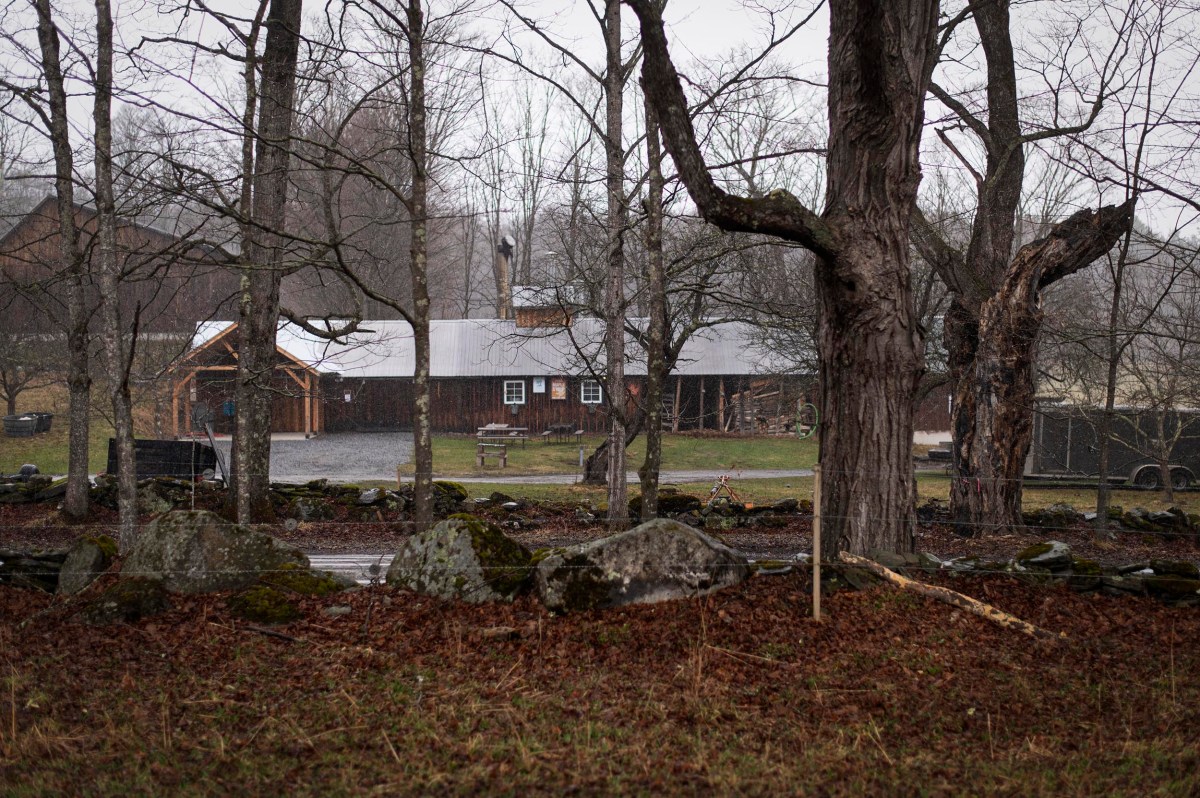
Chappell’s sugarshack, decorated with old snowshoes, smelled more like the damp April rain hitting the roof than sweet fresh flapjacks. He put his love for the hobby simply.
“I wouldn’t want to be anywhere else.”
Chapell and his wife, Sherry Miller, say they’re retired from their paying jobs and embrace work on the farm with help from family and friends. They boast a collection of brochures that tell the history of the farm. One from the sugar makers’ association reads, “Experience… the magic!” amid a scene of a bucolic winter landscape.
This year, the couple said they had about 300 people visit during the annual Maple Open House Weekend in March, when sugarhouses around the state open their doors to onlookers eager to see the sticky process of making sap into syrup.
That process is just winding down for the year, Hope said. Most sugarmakers did their last boil for the winter a couple weeks ago, while some farms in northern Vermont may keep their sugar houses running for another week, she said.
Chapell’s last boil was Saturday. After crunching the numbers, he estimated he produced about 1,600 gallons of syrup, which was 89% of his goal.
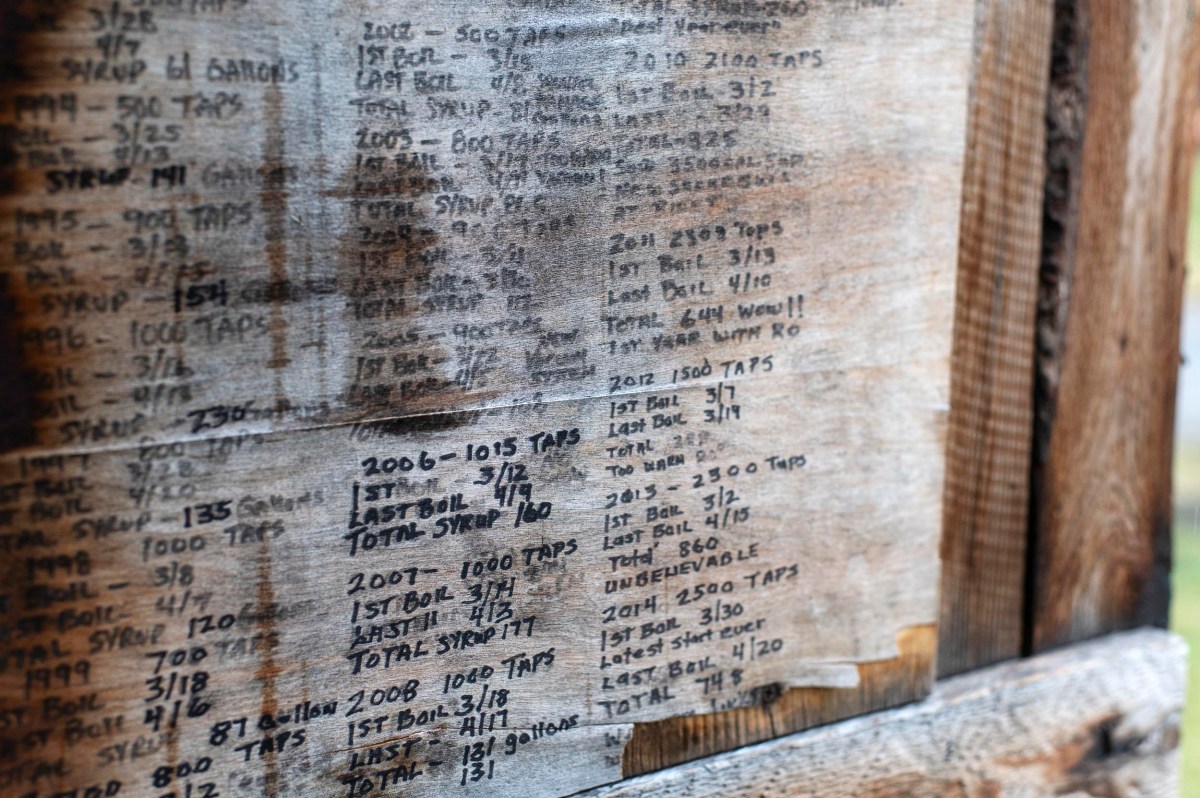
Hope said she estimates that with varying conditions across the state, most farmers got about two-thirds of their goals for this year.
The difference in output from farm to farm can be hard to explain. Sugarbushes across the state are in a range of different terrains and weather conditions, Hope said. Something like the slope of the land under someone’s sugarbush can have a significant effect on production, she said.
“I haven’t heard any horror stories of this season,” Tebbetts said. He’s mostly heard from sugarmakers that the season started a month later this year due to weather, with taps beginning to flow in March instead of February.
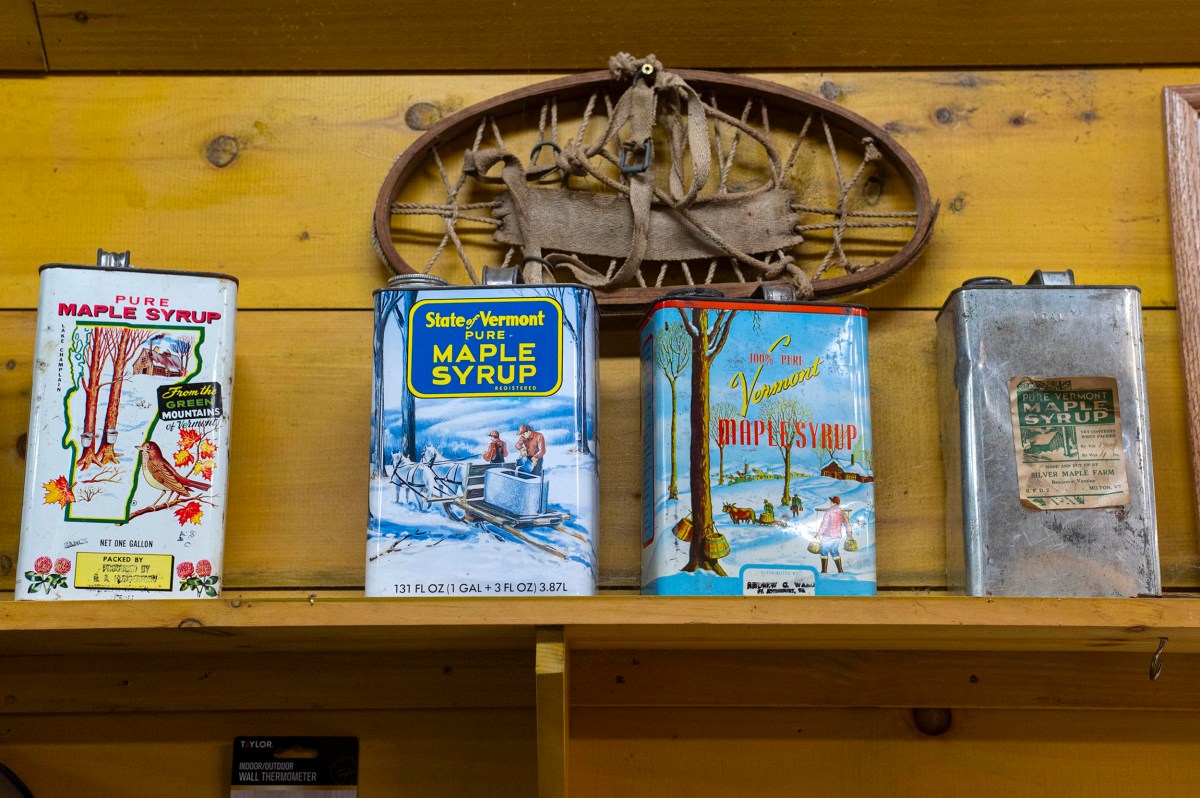
Tebbetts, who grew up in Cabot, said he learned to tap trees when he was a kid. In fact, when Tebbetts was growing up, his father was on the face of syrup cans sold around the country by Maple Grove Farms of Vermont, a supplier in St. Johnsbury.
Sugarmaking seems to be in his DNA. Tebbetts’ grandfather designed a sap spout in the late 1800s that he later patented and sold, Tebbetts said.
Today, the industry employs thousands of people, according to Tebbetts. And many backyard sugarmakers sell their product to larger producers, which brings money into the state, he said.
He thinks there’s still an untapped market in the state. Only about 10% of maples in Vermont are used for sugaring, Tebbetts said. He wants to see the maple sugaring tradition continue.
“It produces a wonderful natural sugar,” Tebbetts said. “It’s part of Vermont’s identity.”