



This story, by Report for America corps member Carly Berlin, was produced through a partnership between VTDigger and Vermont Public.
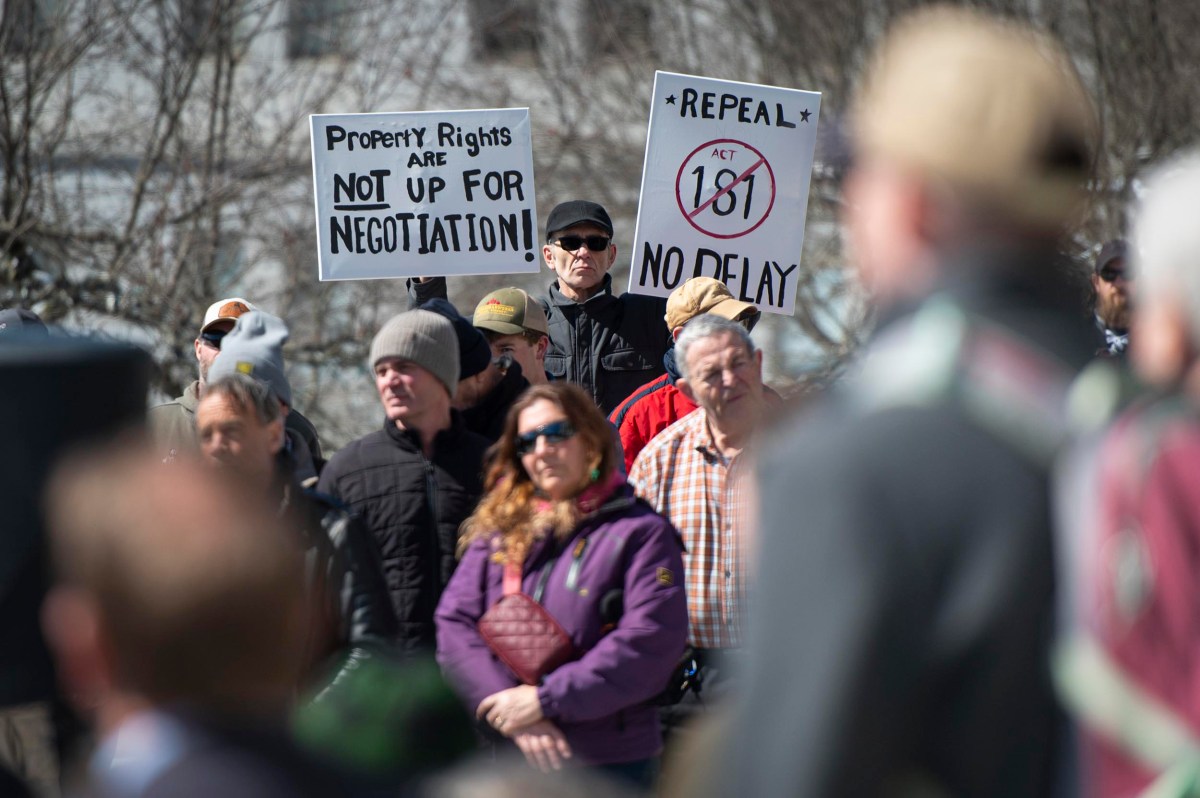
Clad in workwear and toting signs with slogans like “Hands off our land!,” several hundred protesters gathered on the Statehouse steps on Tuesday calling for lawmakers to repeal a major land-use reform law.
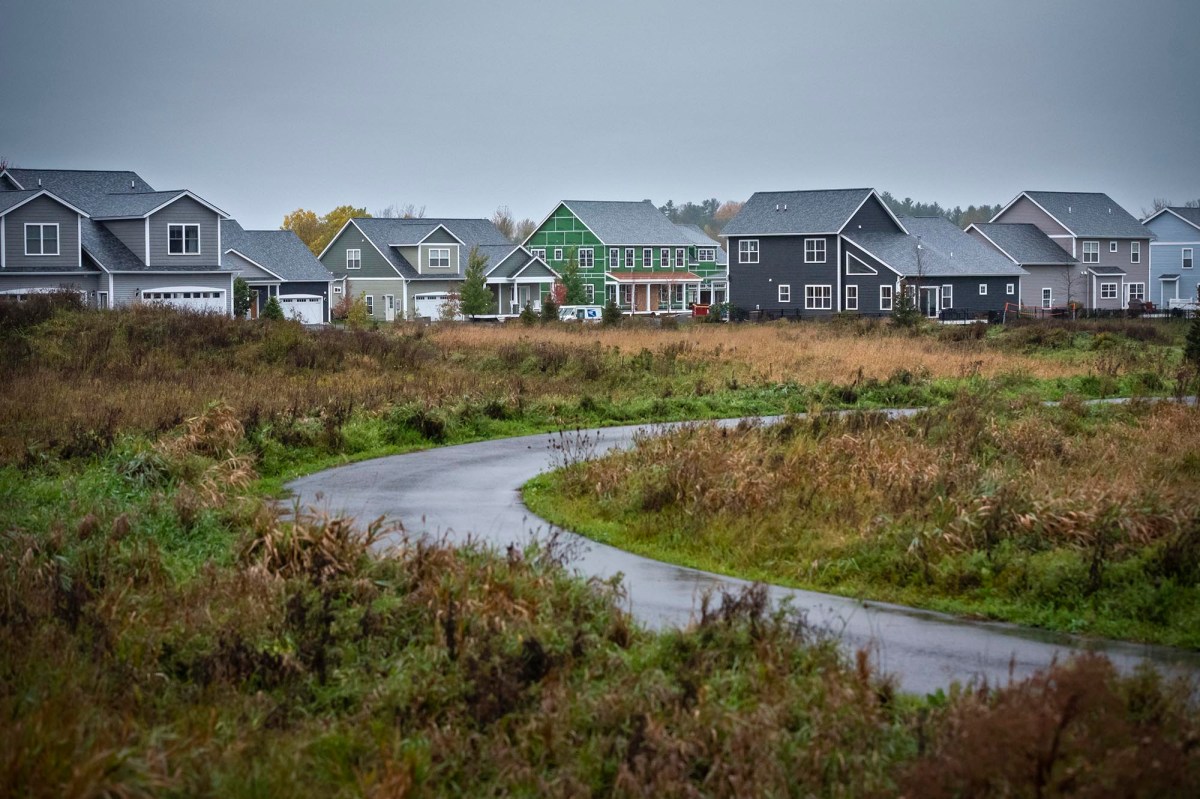
Rural landowners have organized in recent weeks as the effects of 2024’s Act 181 come into focus. The law sought to encourage more homebuilding in already-developed areas of Vermont while boosting protections over sensitive ecosystems.
Though some speakers praised the pro-housing pieces of the sweeping law, many protesters contended that its conservation aims amount to an infringement on property rights in rural areas – and that the whole thing should be scrapped.
“It seems pointless to buy land and have a dream when maps are being made by people you’ve never met, by people that have never stepped foot on your property, and yet they’re trying to control the very land you own,” said Ian Ackermann, who owns a maple sugar operation in Cabot, to roaring applause. “That’s how most of us feel about Act 181.”
Act 181 set in motion a transformation of Vermont’s landmark development-review policy, Act 250, mandating a first-of-its-kind mapping effort that will essentially dictate where future development will be subject to Act 250 scrutiny, and where it won’t be, through a tiered land-use classification system.
That mapping process is still underway, and the state board overseeing it has asked for more time to complete its work. A key Senate committee has advanced a bill that postpones Act 181’s effects until 2030. The bill is expected to face a vote by the full Senate on Wednesday.
Republicans are planning to push forward amendments to repeal Act 181 in whole or in part, said Sen. Russ Ingalls, R-Essex, an organizer of Tuesday’s rally. Many fellow Republican lawmakers joined him behind the podium but so did several Democratic and
independent legislators who have pushed for changes to Act 181 in recent months.
The protesters’ chief complaints center on two aspects of Act 181 that they argue will make it harder for people to build homes and start businesses in rural areas.
The first is the “road rule.” Expected to impact the majority of land in the state in the “Tier 2” zone, the rule stipulates that a private entity that wants to build a road longer than 800 feet, or a combination of roads and driveways longer than 2,000 feet, will be required to apply for a state Act 250 permit. As written, the rule is slated to take effect on July 1, but lawmakers are considering pushing back the start-date until 2030.
Proponents of the rule argue that it will encourage construction close to existing roads and prevent the fragmentation of Vermont’s forests.
Farms are exempt from the road rule, and from Act 250 generally. But Neil Ryan, a Corinth cattle farmer, consultant and self-described “Yankee conservative,” said many farm ventures begin with a house.
“The farmer, her family and her home are not exempt,” Ryan said.
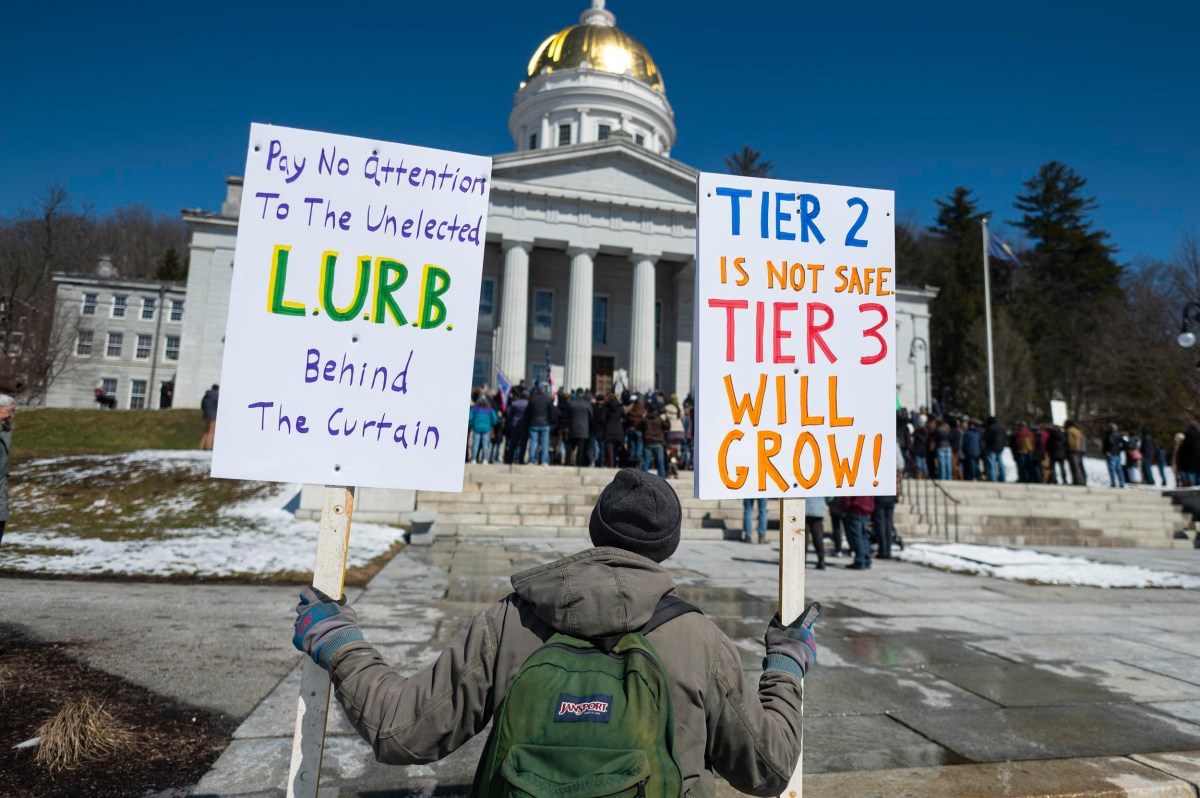
Act 181 opponents are also focused on the potential impacts of new “Tier 3” areas, which will see heightened environmental reviews for certain sensitive natural areas, like headwater streams and habitat connectors.
Tier 3 is expected to cover a relatively small portion of land in the state. Lawmakers and the Land Use Review Board, the body that oversees Act 250, are currently scrutinizing which areas should be included in the maps and determining what kinds of construction the beefed-up permitting process should apply to.
A vocal group of housing advocates, municipal officials and rural property owners have argued that the board’s Tier 3 draft maps put too much land into this more restrictive category. Land Use Review Board members have vowed that their next drafts will shrink down the reach of Tier 3.
Loralee Tester, director of the Northeast Kingdom Chamber of Commerce, said the conservation measures in Act 181 amount to a “displacement.”
“It limits what families can do with land that is often their only meaningful wealth,” Tester said. “We are against policies that place every burden on the people with the fewest resources and the least political power, and then call it progress.”
Some of Act 181’s longtime supporters argue that the protesters’ claims about the law’s potential impacts are overblown.
“For example, saying that, ‘No rural Vermonter is going to be able to develop, you know, or pass along a piece of land to their kids to build a house, entire towns are going to be covered by Tier 3’ – none of that is true,” said Lauren Hierl, director of the Vermont Natural Resources Council, in an interview. “It’s just inflated, overstated, and I think purposefully stoking anger.”
Sen. Anne Watson, D/P-Washington, who chairs the Senate Committee on Natural Resources and Energy, also took to the podium on Tuesday. An ardent believer in Act 181’s core goals, she has backed legislation this session to delay the road rule and Tier 3, as well as extend temporary housing exemptions.
Watson remains wary of repealing pieces of the major land-use law before the mapping and rulemaking efforts it started come to fruition. But, she told protesters – some of whom booed her – that she’s willing to hear them out.
“I want to know your concerns. I want to hear from you,” Watson promised. “I want to work together with you to figure this out.”
