

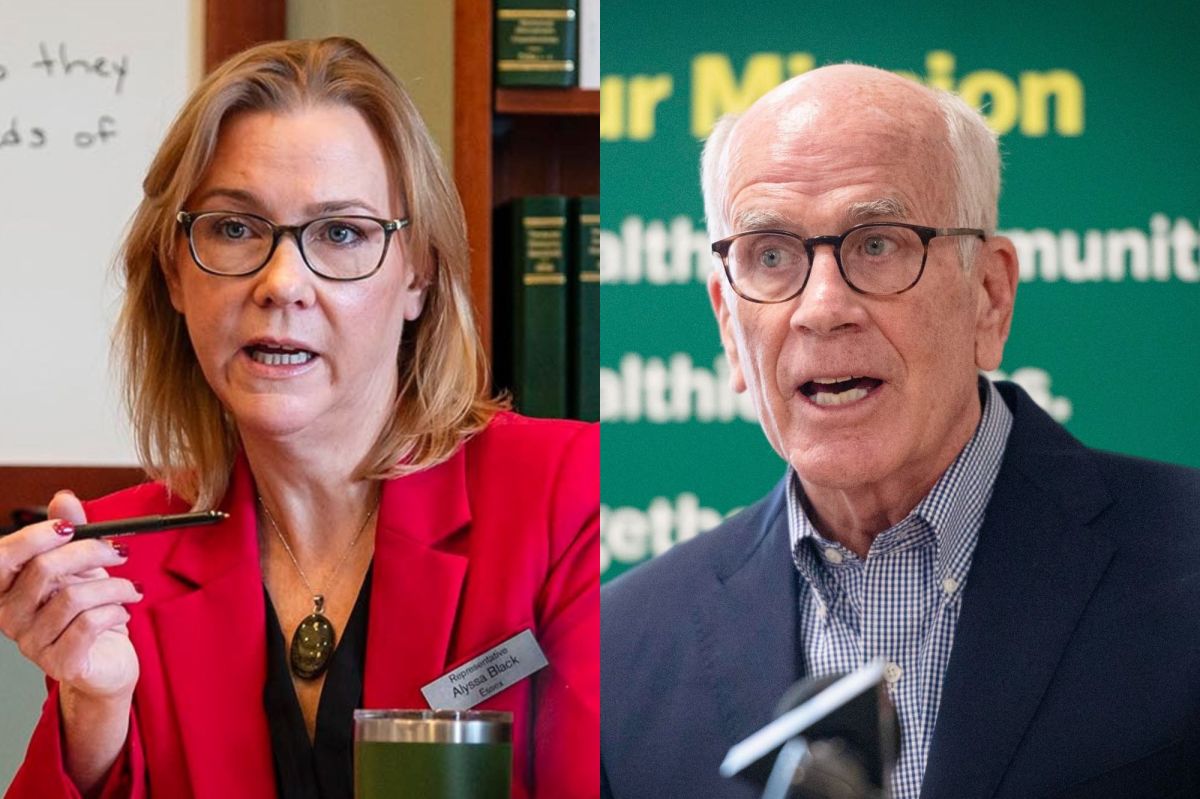
Alyssa Black may find herself singing Talking Heads this week.
On Tuesday, the Democratic state representative from Essex Town plans to travel to Washington D.C. to attend the State of the Union address as the guest of U.S. Sen. Peter Welch, D-Vt.
Since receiving the invitation last week, she said she keeps repeating the line from the song “Once in a Lifetime,” that goes “Well, how did I get here?”

“Just to be chosen is a little surreal,” Black said.
In attending the annual address, which a president typically uses to highlight key issues and policy priorities, Black hopes that she can be the face of the thousands of Vermonters who dropped or reduced their health insurance coverage when enhanced tax credits for Affordable Care Act marketplace plans expired at the end of last year.
It’s an issue Black knows intimately. While she chairs the Vermont House Health Care Committee, Black runs a small auto-repair business and relies on the marketplace to provide her employees with coverage. She’s also someone who buys her own insurance through the marketplace.
Though she has some leverage from her seat in the legislature, she says truly making healthcare affordable is something that requires federal attention and action.
“We can nibble around the edges to try to mitigate what is essentially a failed health care delivery system,” she said. “That is completely dependent on what happens federally.”
Welch said that in bringing Black to the president’s address, he can underscore just how unaffordable health care has become.
After trying to extend the tax credits last fall, Welch continued to work with a smaller group of lawmakers to bring back the Obamacare subsidies. Yet, in recent weeks, those discussions have floundered as questions of abortion restrictions have become tied up in any potential deal.
Welch doesn’t think change will come without attention from President Donald Trump.
“I’m pessimistic about this,” he told VTDigger about Trump’s relative silence on the subsidies.
“The Trump passivity creates anxiety on the part of my Republican colleagues, who are fearful of his negative reaction. We had something that was quite easy and simple, as far as a way to extend these credits.”
Welch said he hears from small business owners like Black often. With the enhanced tax credits, small business owners could shift the cost of subsidizing health insurance to the federal government.
In 2021, the American Rescue Plan expanded subsidies so that people earning more than 400% of the federal poverty level could receive some tax credits, and it increased the amount of support for those already receiving subsidies. Though the expanded subsidies went away, the original tax credits for those under 400% of the federal poverty line remain in place.
More than half of individuals enrolled in marketplace plans last year worked for themselves or a small business. The expanded subsidies allowed small businesses owners, like Black, to pay their employees’ wages, without themselves subsidizing health insurance.
“What I hear from small businesses and employees is that every year when these premiums increase, they have to make a tough decision of ‘Do you get a raise? Or do we spend the raise on the increase in your health insurance premium?’ That’s a brutal choice,” Welch said.
It’s a choice Black herself has faced.
She told VTDigger about one of her employees who is uninsured. His three children receive health insurance through Dr. Dynasaur, a Vermont Medicaid program that children under 19 are eligible for if their household income is less than 312% of the federal poverty level. (For a family of five in 2025 that was anything less than a monthly income of $9,945.90.)
At the end of last year, the employee received a “well deserved raise,” as Black described it. But a week later, he returned and asked to have it taken away. The pay bump would have pushed him above the upper limit for Dr. Dynasuar, putting health insurance out of reach for his children.
“I had to take away his raise,” Black said. “It’s a Catch-22.”
Though Black is trying to use the power she has as the head of the House’s Health Care Committee, she thinks that addressing the depth of health care affordability requires federal action.
Welch agrees, describing Vermont’s failed attempt to implement a statewide universal health care system.
“Anything that a state tries to do, by definition, is on the margins, because the overall health care system is so dominated by Medicare, Medicaid and employer-sponsored health care,” he said, referencing insurance systems that the state has little or no influence over.
He acknowledged, too, that extending the Affordable Care Act tax credits, as he’s been pushing for, would do little to change the high cost of health care itself in the U.S.
“We need a profound reorganization of health care,” he said. “I think it’s time to acknowledge that we have to have health care as a human right.”
