

Via Community News Service, a University of Vermont journalism internship
Vermont lawmakers have advanced a bill that would repeal a state statute requiring college professors to retire at age 70.
H.532 passed the House in late January and is now in the Senate Committee on Education. If passed, the change would take effect July 1.
The bill’s sponsor, Rep. Marc Mihaly, D-Washington-6, told the House Committee on General and Housing on Jan.13 that the bill was introduced after the Office of Legislative Counsel noticed Vermont law wasn’t in line with federal law.
Vermont’s law allows colleges and universities to adopt policies that require professors to retire at age 70. Federal law, however, has prohibited these mandatory retirements since 1994 via the Age Discrimination in Employment Act.
Mihaly described this new bill as a “technical correction” rather than a shift in how the state already operates. He said the Legislative Counsel informed him of the issue in the fall.
Mihaly still thinks making the change is important because the state’s law should match what is and isn’t federally legal.
H.532 has not drawn any pushback in the State House, according to Mihaly. But the question of when professors should retire is part of a larger debate.
Other countries do impose mandatory retirement for professors. In Italy, the age is 70, and in Turkey, it’s 67, though both countries have provisions to extend that timeframe under certain conditions.
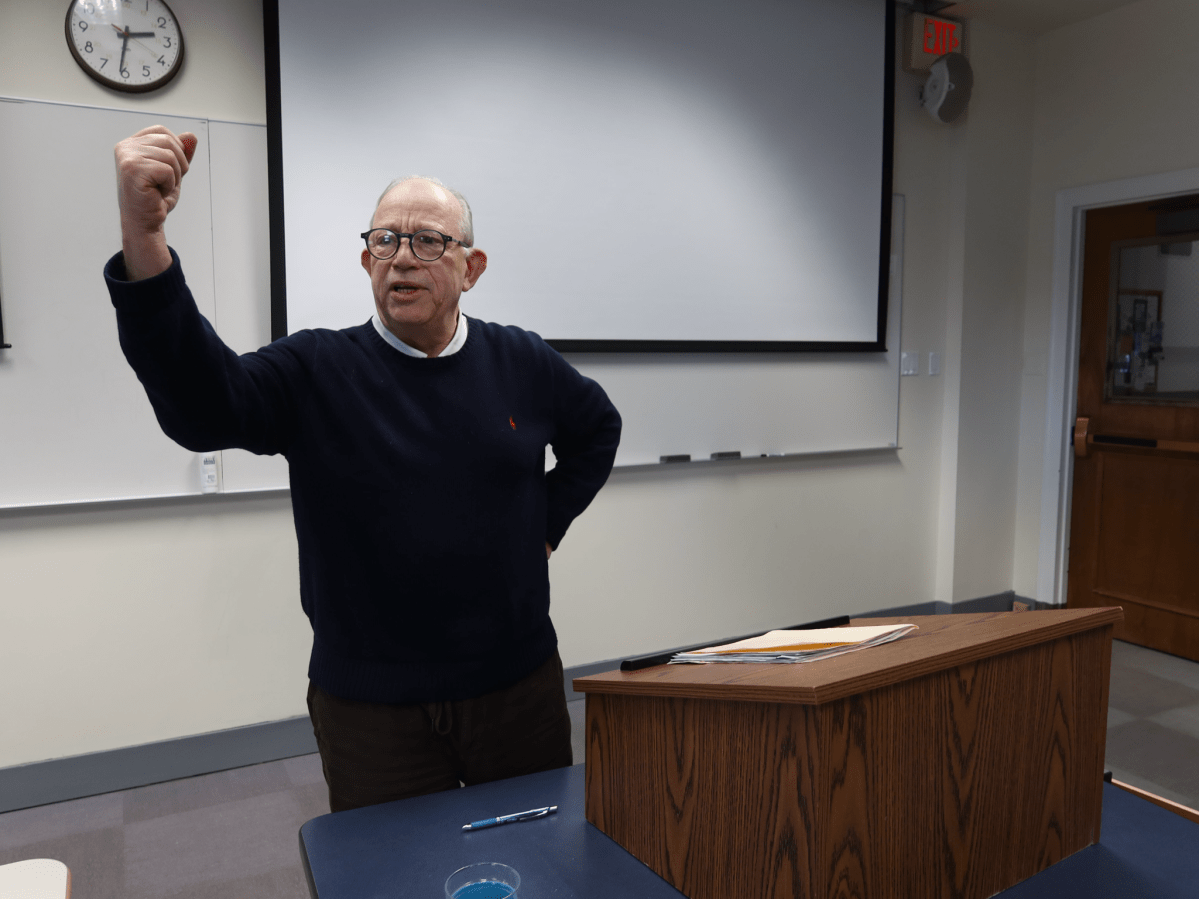
Steven Zdatny, a 75-year-old history professor at the University of Vermont, said he was surprised that Vermont still has a law contradicting federal legislation.
Zdatny said he understands why debates on retirement age can be complicated even when a particular bill is not. He said long careers can bring expertise, but they can also raise questions about stamina over time.
“Experience runs in a different direction than energy,” Zdatny said. “It’s easy to imagine that you get to a certain point and you’re really tired and you’re doing it because you like it and you want the money, but your effectiveness is declining.”
Zdatny also acknowledged that long-term faculty make higher salaries.
“However good a job I do, I’m pretty expensive,” Zdatny said, noting that college administrators prefer to hire someone at a lower cost.
He added that having more older professors in the workforce means there are fewer job openings for younger scholars, which can create pressure on the job market.
Former UVM professor Robert J. Nash, who retired in May 2020 after working at the school for nearly 50 years, reflected on his decision to stay in the workforce in a 2019 essay for Inside Higher Education. In the essay, Nash argued that older professors still have wisdom to offer, noting that his courses were always filled to capacity despite being electives.
“I believe it is my moral responsibility not to retire,” Nash wrote. “I am still incredibly effective at age 80 as both a teacher and scholar.”
