

This commentary is by Julie Wasserman, MPH ,of Burlington. She is an independent health policy advocate who worked for Vermont state government for over 25 years..

First and foremost, hospitals need to be responsive to the needs of their community. As non-profit tax-exempt entities, Vermont hospitals are obliged to provide essential services such as maternity, pediatric and primary care. Yet, hospitals are making decisions that deprive their community of critical services as they prioritize revenue generation over needed care. Hospital care in the public’s interest requires structural changes that explicitly address local community needs.
Vermont hospitals are eliminating essential services, in part, because such services do not generate “enough” revenue. Three examples come to mind. Despite strong community opposition, Copley Hospital eliminated its popular long-standing Birthing Center, creating a “maternity care desert,” where pregnancy, childbirth, post-partum services and reproductive care are no longer available. People must now drive long distances to receive care, and emergency roadside deliveries could become more common. Birthing in Copley’s ER? Unanticipated c-sections? Loss of pediatric backup for newborns and infants? These measures constitute unacceptable care in a hospital setting.
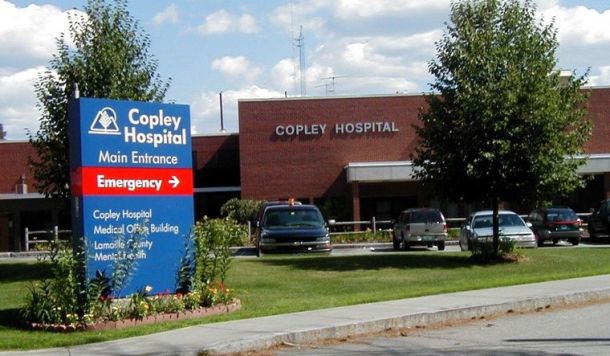
Loss of Copley’s birthing center further deprives this region of essential primary care, which is already in short supply. Copley’s nurse midwives provided low-cost, high quality, easily accessible primary care because they routinely addressed overweight, hypertension, diabetes, mental health and substance use. (Pregnancy can be a motivator for healthy choices.) Adding insult to injury, closure of the birthing center dramatically increases the cost of care since patients will now receive services at more expensive locations such as UVM and Central Vermont.
Copley, a small rural hospital in Morrisville, employs five orthopedic surgeons, whose combined yearly salaries total more than $4 million. Copley’s 2026 Budget includes a new fourth operating room, which increases hospital expenses by 7.9%. Note the loss of the birthing center reduces expenses by a mere 2.4%. The five surgeons and the new operating room are both costly and revenue-enhancing.
UVM Health/Central Vermont Medical Center shuttered CVMC’s Mad River Family Practice, a primary care clinic with a waiting list of more than 500 people seeking to become patients.
Rutland Regional Medical Center’s original decision to eliminate its pediatric inpatient unit offers a third example. Rutland pediatricians, nurses and parents protested this loss of essential hospital care for infants and children who would now be served in the emergency room or sent to UVM Medical Center or Dartmouth. All are more expensive options that further traumatize families and strand those lacking adequate transportation and resources. The hospital has subsequently withdrawn its request, circumventing the regulatory Green Mountain Care Board, and instead will work with the Agency of Human Services.
Will continuation of this “maximizing revenue” approach lead hospitals to cease serving their local communities and further increase Vermont’s healthcare costs, which is one of the highest in the nation? How many more healthcare “deserts” will appear before we address this trend of hospital revenue maximization at the expense of basic healthcare services?
Hospital revenue maximization poses a veiled threat to primary care, an essential service that can prevent expensive hospitalizations. In an effort to improve affordability, the legislature and the Green Mountain Care Board have recently imposed a variety of hospital budget constraints (Act 55, Act 68, Act 49). As a result, hospitals’ low-priced, high-value care appears vulnerable to budget cuts. Individual hospitals may benefit from eliminating low-volume services, but the overall cost to the system rises, along with insurance premiums, while local communities lose access to basic care.
As Erinn Mandeville, a former nurse midwife at Copley noted, “Somehow we live in a world where, if it makes financial sense, that’s all you need to justify a completely unethical decision.” Such decisions cannot be made in a vacuum or left solely to local hospitals focused on their bottom line, especially given looming federal cuts. Moreover, these decisions do not make financial sense for the system as a whole.
Basic essential hospital services cannot be optional. Instead, they need to be broadly available in accordance with Vermont statutes. The State should consider the following:
- Declare a moratorium on hospital service reductions until the state has completed its statewide plan. Otherwise, what is the point of a plan if many of the changes occur before the plan has been formalized?
- Adopt guidelines to guide hospital budget decisions, ensuring affordable and accessible essential services in each hospital service area, which may differ from one region to the next.
The goal is sustainable Vermont hospitals who engender trust, promote goodwill and ultimately endure while providing essential and affordable services to their local community.
