

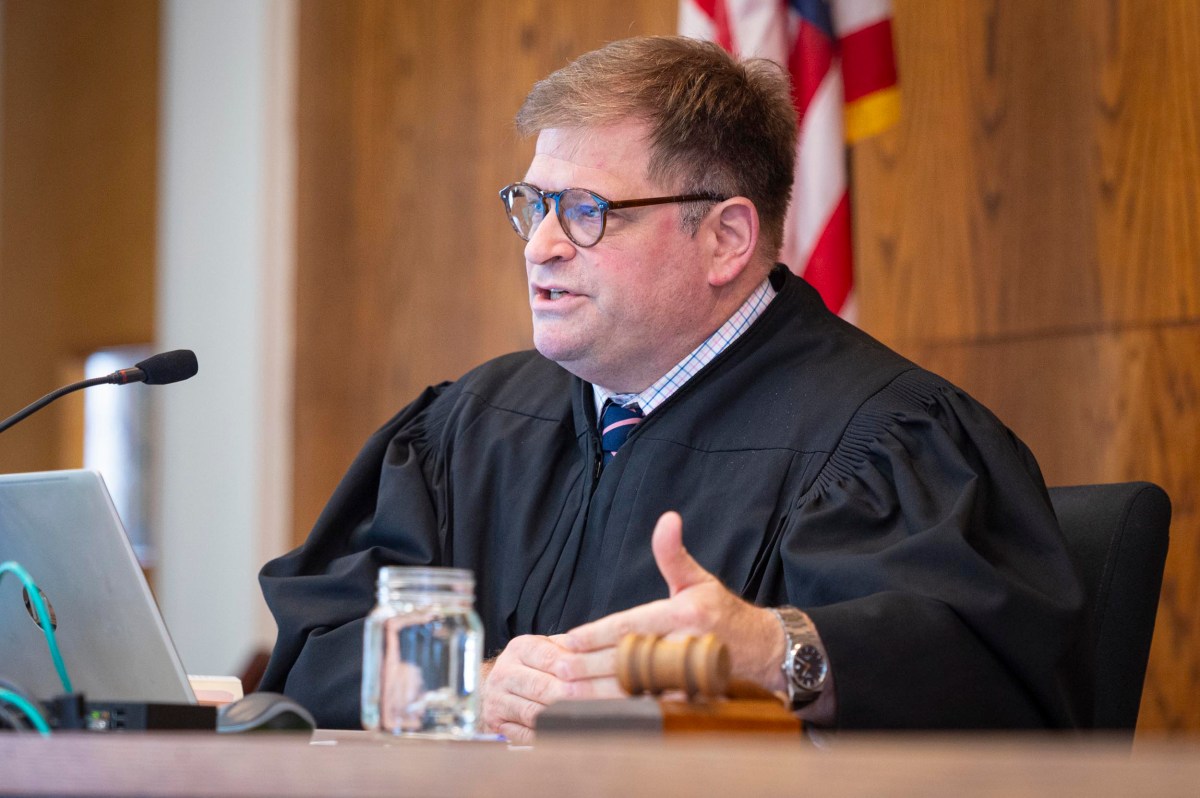
A Vermont judge has tossed out a lawsuit brought by the state against a New York-based facial recognition software company, alleging violations of consumer protection laws.
Washington County Superior Court Judge Daniel Richardson this week granted Clearview AI’s motion to dismiss the lawsuit, which was brought earlier this year by the Vermont Attorney General’s Office.
“The largely uncontested record here shows that Clearview conducts no substantial business in Vermont and never has,” Richardson wrote the eight-page ruling, throwing out the case on jurisdictional grounds.
“It does not have any Vermont customers using its database,” Richardson added of Clearview, “and there is no allegation that Clearview’s data-collection activity bears any connection specific to Vermont whatsoever.”
The state’s suit against Clearview alleged the company had violated Vermont’s Consumer Protection Act by collecting photographs from the internet and then storing the unique facial biometric identifiers of Vermonters — including children — in its database, all without the knowledge or consent of Vermonters.
The company has drawn the ire of privacy advocates over its practices, leading to other legal actions.
Asked Thursday if she planned to appeal the ruling, Vermont Attorney General Charity Clark said in a statement to VTDigger that her office was considering its options.
“Unfortunately,” Clark said “the ruling focused on the contacts by Clearview to a purchaser of their product, but not the likely hundreds of thousands of Vermonters whose faces make up the product. We aren’t the purchaser; we are the purchased.”
Clark said Vermont lawmakers should look into how to address the issue raised by the state in the lawsuit.
“This ruling is a call to the Legislature to act to protect Vermonters — the court has told us they cannot help us,” Clark said. “This is a classic example of technology outpacing the law.”
Clearview, in a statement Thursday to VTDigger, praised the judge’s ruling.
“Clearview AI does not operate in Vermont, and today’s ruling appropriately recognizes that courts should exercise jurisdiction over companies with which they have a meaningful connection,” the statement read.
According to the lawsuit, while Vermont law provides limits on the use of biometric information by state and local law enforcement, Clearview sells access to other state and federal law enforcement.
The state also alleged that Clearview’s actions were invading the privacy of Vermonters, exposing their personal data to potential theft and fraud by bad actors, and provided no way for Vermonters to opt out.
The lawsuit sought a declaration that Clearview violated the Vermont Consumer Protection Act, permanent injunctions against most of its business practices related to Vermont, civil penalties, and a requirement that all Vermont consumers’ photographs be deleted from their databases.
In announcing the filing of the lawsuit in April, Clark said in a statement she was “highly disturbed” that Clearview’s actions were taken without the consent of Vermonters, particularly when it came to children.
“This practice violates Vermont law and is chilling in this moment when the federal government’s overreach in matters like immigration enforcement are impacting our communities here in Vermont,” Clark said at the time.
An earlier lawsuit brought by the state against Clearview in Chittenden County Superior civil court in Burlington was also thrown out by a state judge, who ruled it was not the proper venue for the case.
The refiled case by Clark was brought in Washington County Superior civil court in Montpelier, where the lawsuit stated the venue is proper “because Plaintiff the State of Vermont is deemed to reside in Washington County for purposes of civil actions.”
