



President Donald Trump’s administration recently announced $12 billion available in one-time bridge payments to farmers impacted by trade market disruptions and increased production costs, including some in Vermont.
Up to $11 billion would be used for the Farmer Bridge Assistance Program, some of which could provide relief to Vermont row crop farmers eligible for the program.
The program will consider crop losses during the past year and help tackle market disruptions, high input costs, inflation and market losses due to “unfair trade practices,” according to a press statement from the U.S. Department of Agriculture this week.
The remaining $1 billion would be dedicated to specialty crops not covered by the bridge assistance program. The USDA has yet to share details on what crops would fit into this category and the timeline for allocating the funds.
U.S. Sen. Peter Welch (D-Vt.) said in a statement that the hardships farmers in Vermont and nationwide are experiencing are largely caused by President Trump’s tariffs and trade policies.
“Farmers want to farm, they don’t want endless government handouts,” Welch wrote, pointing out that the funding won’t really help dairy farmers. “President Trump’s proposed bailout will do nothing to end the pain of his tariffs or support farmers in the long-term.”
“Republicans and Democrats in Congress need to work together to pass the multi-year Farm Bill that America’s farmers deserve,” he added.

Wendy Wilton, executive director of the Farm Service Agency in Vermont, said the $11 billion is aimed at commodity crops, which are primarily located in Southern and Midwestern states, whereas a lot of the corn grown in Vermont is for cattle feed. She said it is still unclear whether that will be included in the Farmer Bridge Assistance Program.
But, Wilton added, the $1 billion set aside for specialty crops might have a bigger impact in Vermont.
“That’s where I see Vermont producers being able to apply for this money or to obtain it,” she said.
Brian Kemp, who manages a large dairy heifer raising operation in Addison and Rutland counties, said the farm only had about half the corn it normally produces because of the recent drought, resulting in losses of over $100,000.
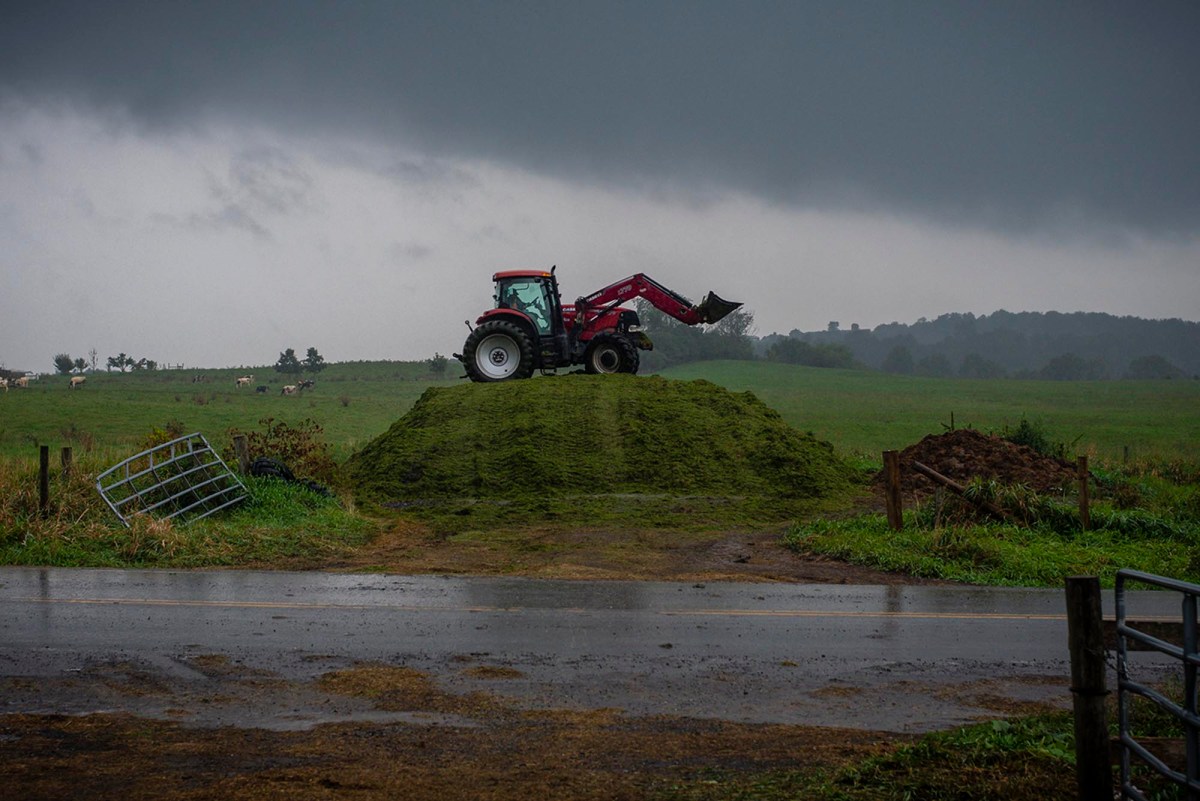
Kemp said he contacted his local FSA office, but it was still unclear whether there would be any money available for dairies like his own that predominantly grow corn.
“Nobody’s really clear yet if this is going to have much of an impact in our region or in the dairy industry,” he said, adding that there are some grain growers in Vermont who might be able to benefit from the program, albeit a small percentage.
Wilton said the agency would provide more information as soon as it becomes clear what crops would be covered among the specialty crops and the process to apply for the funds.
In the meantime, she encouraged Vermont farmers to submit their 2025 acreage reporting by 5 pm on Dec. 19 and contact their local Farm Service office with any questions. Farmers eligible for the $11 billion Farmer Bridge Assistance Program can expect payments to be issued by the end of February, according to the USDA press release.
As some aspects of the aid package are yet to be finalized, Anson Tebbetts, Vermont’s agriculture secretary, said there might be some opportunities for Vermont farmers.
“Over the next few weeks, farmers should at least make contact with their FSA office and see if there’s anything there that they’d be eligible for,” Tebbetts said.
