


Updated at 5:57 p.m.
The three members of Vermont’s congressional delegation all voted against a deal that ended the federal government shutdown because it did not include most Democrats’ key demand throughout the impasse: an extension of health insurance tax credits.
President Donald Trump signed the measure into law late Wednesday, just hours after the House passed it, 222-209. Six House Democrats joined most Republicans to pass the proposal; Vermont’s U.S. Rep. Becca Balint, D-Vt., was not among those who crossed party lines.

“I’m a hell no,” Balint said in a statement following the vote. “I can’t in good conscience vote for something that further damages an already broken health care system.”
The spending package will keep the federal government’s lights on through the end of January 2026. It will fund the U.S. Department of Agriculture, the Food and Drug Administration, the Department of Veterans Affairs, military construction projects and Congressional operations through September 2026.
The deal also provides full funding for the Supplemental Nutrition Assistance Program, as well as SNAP’s program for women, infants and children, known as WIC, through September 2026.
“From the beginning Trump has used the shutdown as a political game — from withholding food from children to harassing air traffic controllers who take on second jobs to make ends meet,” Balint said. “This bill is just another way to ram through his corrupt agenda.”
A breakthrough in the shutdown, which had reached its 43rd day on Wednesday, first emerged in the Senate. Last weekend, eight members of that chamber’s Democratic caucus came to a deal with GOP leaders to support a temporary funding package with an understanding that the Senate would hold a vote on extending the health insurance credits next month.
Asked about the deal at a press conference Thursday, Vermont Gov. Phil Scott, a Republican, said he thought the Democrats who crossed party lines “did it for the right reasons,” citing as an example the uncertainty many federal workers were facing over when they would be paid.
“I think your constituents come first. Your party comes second or third after that, and it’s not — I don’t believe it’s a team sport,” Scott said.
But it’s far from clear that a vote on extending the subsidies will be successful in the Senate, and even less likely the measure would be taken up in the House or signed by Trump.
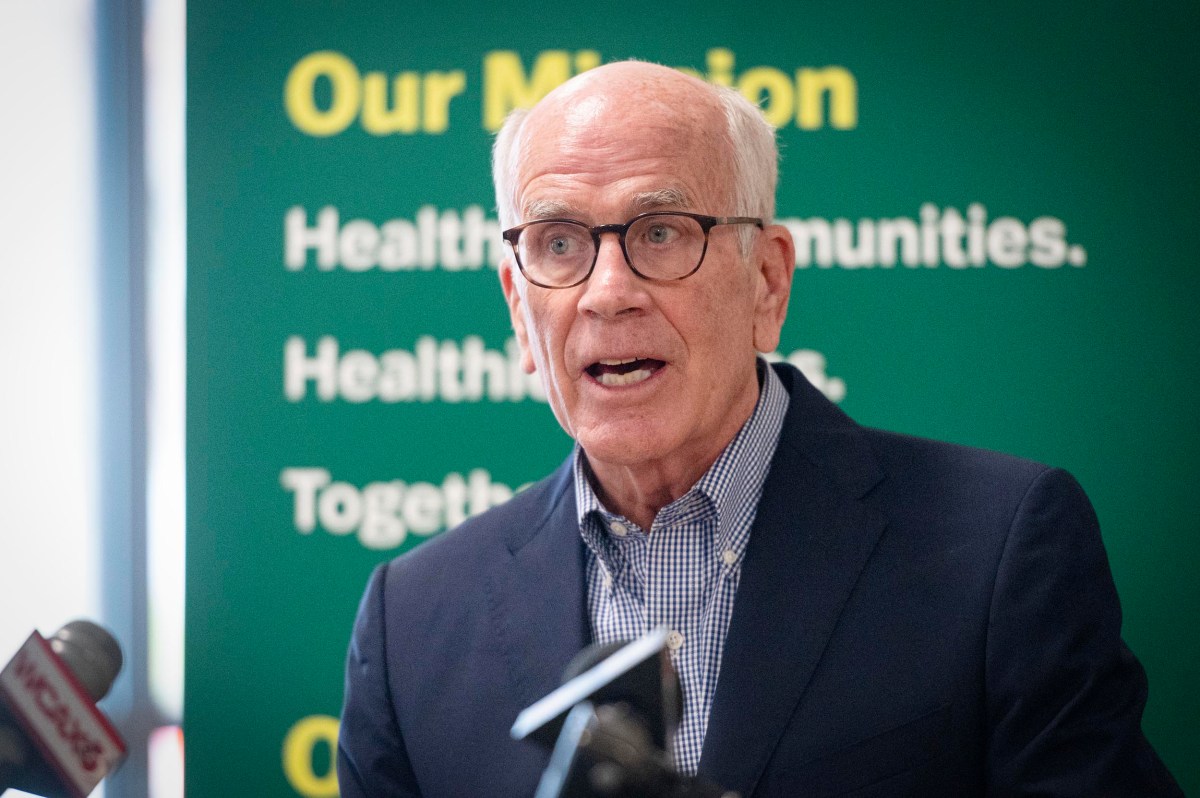
Vermont’s Independent U.S. Sen. Bernie Sanders and Democratic Sen. Peter Welch both voted against the deal when it was up for approval in the Senate on Monday. They’ve both said they have little confidence that a vote on extending the subsidies — a Covid-19-era expansion of tax credits that are part of the Affordable Care Act — would be successful.
The subsidies help millions of low- and middle-income people across the country afford the cost of their health insurance premiums. In Vermont, the credits apply to plans available through the state’s Affordable Care Act marketplace, called Vermont Health Connect.
Without them, tens of thousands of people in Vermont would see their health care costs skyrocket, and many would likely no longer be able to afford coverage. Barring new congressional action, the enhanced credits are set to expire at the end of 2025.
“I cannot vote for a government funding bill that kicks millions of Americans off their health care,” Welch said in a statement after Monday’s Senate vote.
“There was an early recognition from my Republican colleagues that working families, small businesses, and farmers in their states would be really hurt by these premium increases — just as they will be in Democratic states, too,” he added. “That’s why it is so disappointing that Republicans refused to come to the table to extend the Affordable Care Act’s premium tax credits.”
Gov. Scott said he agreed with Vermont’s congressional delegation that an extension of the health insurance credits should have been included in the deal to reopen the government, rather than just the promise of a future vote.
Scott had previously sent a letter to top Senate leaders before the shutdown urging them “to pass a bipartisan, clean funding extension.” A “clean” extension generally means a short-term funding agreement that keeps federal spending at or around its current levels and does not include politically motivated policy changes. But Scott later contended, after facing sharp criticism from the state’s Democratic Party, that he meant to call for a “clean” resolution that also included an extension of the subsidies.
Scott said Thursday that he thought Congress should have addressed the expiring credits sooner so they did not become a bargaining chip in the shutdown fight.
“It’s obvious — health care is too expensive. So, what are they going to do? Both parties? What are you going to do to fix that?” he said. “That’s what they should be focused on.”
