

Updated on Tuesday Nov. 11 at 11:11 a.m.
All three members of Vermont’s congressional delegation are opposed to a deal to end the historic government shutdown that passed the U.S. Senate late Monday and is headed to the House.
The proposal had support from eight members of the Senate’s Democratic caucus even though it would not immediately extend the health insurance tax credits that have been central to Democrats’ demands throughout the impasse. Vermont’s independent Sen. Bernie Sanders and Democratic Sen. Peter Welch were not among those who joined most Republicans to pass the measure Monday night, nor did they back the legislation during an initial procedural vote late Sunday. Both votes were 60-40.
The bipartisan plan, which also needs a sign-off from President Donald Trump, would fund the federal government through at least Jan. 30, 2026. It would provide full funding for the Supplemental Nutrition Assistance Program, or SNAP, through Sept. 30, 2026, among other provisions.

In exchange for their support, the eight senators who crossed party lines — including New Hampshire Sens. Jeanne Shaheen and Maggie Hassan, both Democrats, and Maine Sen. Angus King, an Independent who caucuses with Democrats — have a commitment from the Trump administration to rehire federal workers fired at the start of the shutdown. They also received a promise from Senate GOP leaders for a December floor vote on legislation that would extend the expiring Affordable Care Act credits, which are slated to lapse at the end of 2025.
The subsidies help millions of low- and middle-income people afford the cost of their health insurance premiums. Without them, tens of thousands of people in Vermont would see their health care costs skyrocket, and many would likely no longer be able to afford coverage.
That’s the reason the state’s congressional delegation criticized the funding deal: the promise of a future vote, they argue, does not guarantee any subsidy extension would actually become law.
Sanders said on the Senate floor Sunday that the assurance of a December vote is “a totally meaningless gesture” because he does not believe the Republican-controlled House would actually take up such a measure, nor would Trump sign it into law.

“Tonight was not a good night,” Sanders said in a separate video statement posted to his social media feeds later on Sunday. “This was a very, very bad vote.”
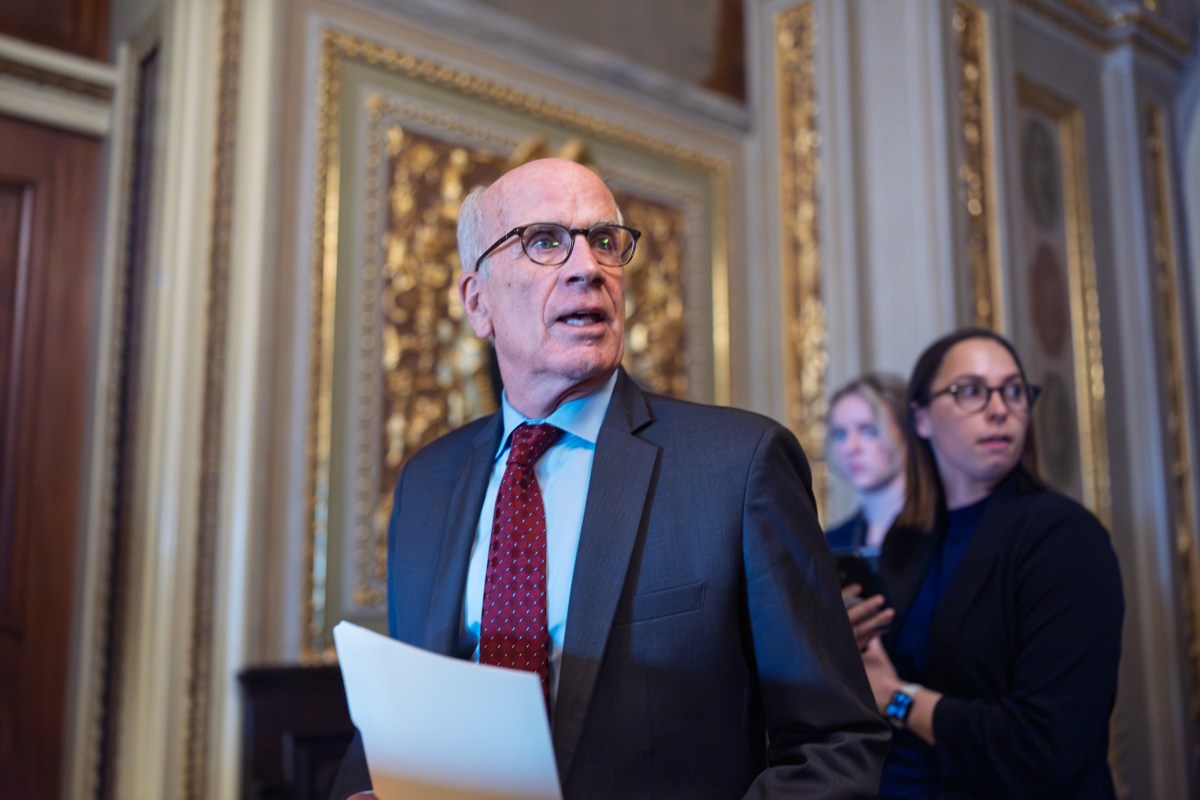
Welch, in an interview Monday afternoon, said he was disappointed that eight of his fellow caucus members backed the GOP-led proposal and said he intended to continue voting against the plan in the coming days.
Reporting by The Hill last week named Welch as one of a group of Democratic senators who had been meeting in the U.S. Capitol to discuss a resolution to the shutdown. The group also included Shaheen, Hassan and King, who ultimately voted for Sunday’s deal.
Welch said Monday that meeting was one of a number of different negotiations he has been part of in recent weeks, with senators from both parties, to attempt to find a breakthrough on the shutdown. He said he had consistently advocated for extending the health care credits in all of those conversations. Once the discussion turned more toward the idea of a future vote on the health insurance subsidies, rather than an extension written into a deal to reopen the government, he said he stepped away.
“That’s when I was unable to continue in those negotiations — because I believe we had to have an outcome that would guarantee relief to the folks in Vermont, and around the country, who depend on these,” the senator said.
Now that the Senate has approved a funding deal, it’s slated for a vote in the House as soon as Wednesday.

Vermont’s sole U.S. Rep. Becca Balint, a Democrat, said in an interview Monday that she thought it was “a mistake” for eight members of her party’s Senate caucus to side with Republicans. Her party needs to “hold the damn line,” she said, as they have done for the past five-plus weeks. The shutdown was in its 41st day on Monday, now by far the longest in U.S. history.
“We’re fools if we think that at this moment, at the eleventh hour, this promise of a vote to extend the ACA subsidies is anything other than just a game,” Balint said.
She said she did not think Republicans had any viable plan to improve people’s access to health care. Instead, she sees the party’s opposition to making the expanded health insurance subsidies permanent as its latest effort to dismantle key provisions of the Affordable Care Act.
On the spending deal advancing out of the Senate, Balint said Monday, “it’s a ‘hell no’ from me.”
