


In a video called Investing In Place: Increasing the Impact of Land Conservation, a cartoonish red push pin hovers over a map of the United States, directing viewers to Norwich Farm, a small dairy operation along the border of Vermont and New Hampshire.
The scene here is quintessential New England. A red barn peeps out from snow while a few people in boots and barn coats crunch toward the barn’s big sliding door. Cows moo somewhere off screen. The camera pans to cheesemaker Chris Gray, his wife, and their five-year-old daughter, sandwiched between them, who calls herself “the cheese monster.”
The family is at the center of a decade-long saga over a contested piece of farmland. The promotional video highlighted what appeared then to be a mutually beneficial partnership between a cheese maker, a state school and a land trust headquartered in nearby New Hampshire. They were working together to conserve land and begin a new agricultural education program on a property called Norwich Farm.
“I hope that Norwich Farms is a place that contributes to the wellbeing of the community as a whole,” Jeanie McIntyre, president of the Upper Valley Land Trust, the land conservation group involved in the partnership, said at the time.
Perhaps the fact that the promotional video was released on April Fool’s Day should have been a clue that the rosy vision would falter in the ensuing years. A decade and many media reports later, the Grays say the story of the partnership could end in the foreclosure of the farm and bankruptcy for their business.
There were strong personalities on all sides, reluctant to compromise. There were millions of dollars at stake in beloved Vermont industries — agriculture and farming — which have continued to confront enormous losses. Today, the saga is reminiscent of parties trying to reclaim the narrative after a nasty break up. It’s also a singular example of how difficult it can be to sustainably finance a farm-based business without additional levers of support.
The land trust
The idea for the Upper Valley Land Trust came about in the 1980s. It evolved from a question that a pestering neighbor asked Dana Meadows, who became the first chair of the board of trustees of the land trust.

“How are we going to keep our farms in farming?” Meadows recalled the neighbor asking in the trust’s 1987 annual report.
Together with her community, Meadows thought community land trusts could be an answer, and in 1985, the land trust was born.
Their goal was to keep agricultural land affordably in agriculture. Agreements between farmers and trusts could protect land and provide money or tax benefits to farmers in exchange for the sale of developmental rights and environmental protections.
Land trusts around the country were originally formed to conserve land for the local community. Conservation was big federal business under President Theodore Roosevelt in the 20th century. Roosevelt launched land protections including the growth of the national parks system.

Things changed in the 1980s, when the federal government drastically scaled back its conservation of public lands. The gap was filled by land trusts and their donors, who receive federal tax incentives. Meanwhile, the global food system was shifting. International trade and technological innovation mutated U.S. farms, increasing consolidation and corporate control while access to affordable land decreased.
More than 61 million acres have been conserved through land trusts across the U.S., according to the Land Trust Alliance, an advocacy group based in Washington, D.C. That includes more than 1.3 million acres conserved through dozens of active trusts in Vermont. They account for more than a fifth of the state’s total acreage.
The scale of these operations vary. While town-based land trusts in Vermont, including ones in Charlotte, Richmond and South Hero, have protected hundreds of acres, massive national conservation groups like The Nature Conservancy and The Conservation Fund have protected hundreds of thousands. By far the biggest holder of state lands is the Vermont Land Trust, which has conserved more than 721,000 acres, according to the alliance, or more than a tenth of state land since 1977.
The Upper Valley Land Trust falls somewhere in the middle of these groups in the size of its holdings. Based in Hanover, New Hampshire, the trust has conserved almost 35,000 acres in Vermont, according to the Land Trust Alliance, and almost 20,000 acres in the Granite State. In 2024, the Upper Valley Land Trust was worth more than $23 million in assets.
In the summer of 2015, the land trust paid $300,000 for 352 acres of farmland now called Brookmead Conservation Area in Norwich. The trust’s intent was to keep the Brookmead Conservation Area’s meadows and pastures conserved and to continue as a working farm, according to a 2018 brochure.
The trust bought the land from Vermont Technical College, which has since become Vermont State University. The land was donated to the college in 2015 by a millionaire named Andrew Sigler, a Dartmouth College graduate who had owned a forestry business, according to court records. Sigler bought the land from the Somerville family, once a Vermont Farm Bureau Farm Family of the Year. The property, where the family raised cows for generations, was the last remaining farm selling milk in Norwich. Before they sold it to the Siglers, it was called Brookmead Farm.
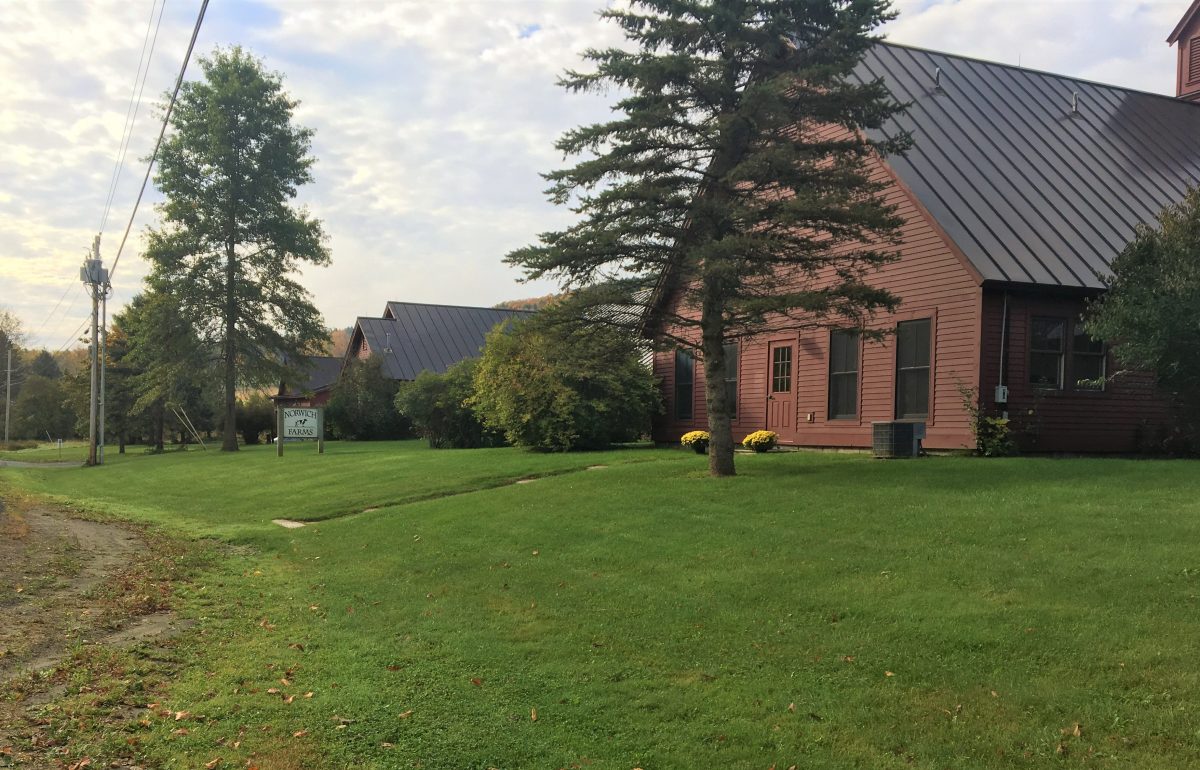
At the time, the trust persuaded the Norwich Conservation Commission, a local municipal group, to provide $30,000 to preserve the agricultural land for conservation and recreation, according to the trust’s request for assistance and subsequent emails.
“Protection of this parcel will ensure that the land remains available for agricultural endeavors in the future,” with possible future site activities like cheese-making and animal husbandry classes, McIntrye wrote in a 2015 funding request.
At the time, the trust’s leaders knew that the state college planned to move its dairy herd to Norwich as part of a new program to educate students about the dairy industry. The purchase would provide the college with enough funds to launch the education program and provide a new opportunity for the trust to pursue its mission of land conservation.
Beyond the transaction, the college retained two parcels on an island cut out from Brookmead Conservation Area. This included roughly six acres of farm buildings, including a top of the line dairy barn built by Sigler, who had a penchant for Holstein genetics. There was also a house on two acres of land.
Under the vision of the college and the cheesemaker, these parcels would host a state-of-the-art dairy, a dormitory, and a small herd of cows that would have access to the surrounding pastures of Brookmead.
“The fact that we’ll be able to really inspire people to pursue an experience in agriculture or at the very least just understand the intimate connection between the food we make and the landscape that surrounds us is a really exciting thing,” Dan Smith, then president of the state college, said at the time.


The creamery
Chris Gray met his wife, Laura Brown, working in the music industry. They began their family in Brooklyn, New York, but dreamt of getting out of the hustle and into food production.
So in 2010, just after their daughter was born, they bought a house and moved their family to southwestern Vermont. With business partners, they began a cheese making company in West Pawlet called Consider Bardwell Farm. (The business closed last year.)
But when the Grays found out about the Norwich property, they decided to uproot again.
“I took one look at this place, and I was like, ‘Oh my god, when do we start?’” Gray said. Over the years, it was overbuilt and underused, he said, but it was the only one like it in New England, with capabilities for a state-of-the-art, value-added dairy. He and Brown named their nascent business Lucky Us Ranch, LLC.
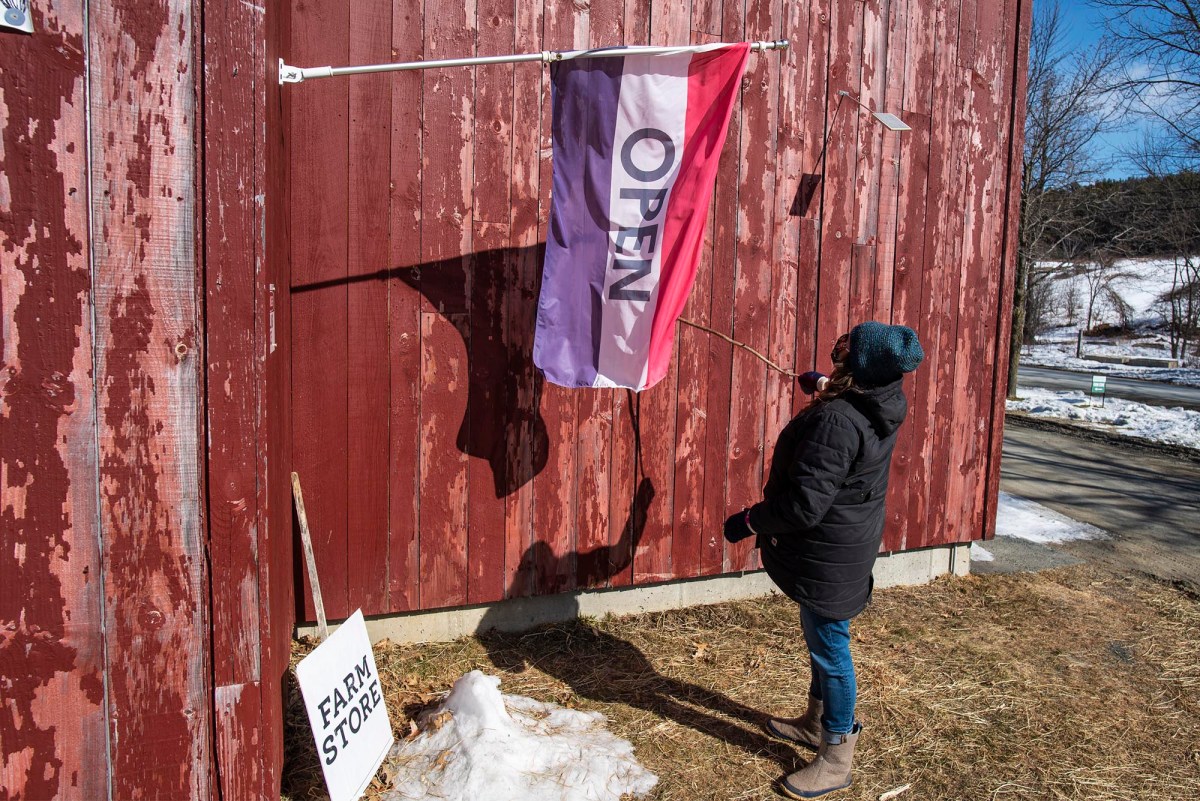
The Grays enrolled their daughter at a nearby school. Gray signed a temporary, one-year lease with the college in 2015. He helped the college design the property’s micro-dairy, and invested $150,000 in the buildout, he said. (According to a 2023 business plan, improvements to the farm since 2015 have cost $1 million; the creamery itself cost $650,000, largely paid for in grants and loans orchestrated by the college.)
By 2016, all the parties were still friendly, sometimes exchanging pleasantries over email. But then, the creamery started losing advocates at the college to job transitions. One of the first to leave was Chris Dutton, the chair of the college’s agricultural department who had championed the project, Gray said. Soon after, Dan Smith, the president of the college, moved to a position at the Vermont Community Foundation.
During the transition, the Grays signed a five-year lease with the college that included two options for ten-year extensions.
Smith did not respond to multiple requests for comment. Emma Allen, the executive coordinator for the Vermont Community Foundation, said Smith was on an unplugged sabbatical until early November and Allen was unable to get in touch with him.
The first semester of the on-farm dairy program was rocky from the start. Brown was hired as a residence director to help manage the six students in the dorm and buy groceries for the group. Gray worked as the cheese maker and a teacher on contract. The family paid $500 a month in subsidized rent for the three-bedroom farmhouse.
Brown said that “a lot has been made” about the family’s low rent. “I want to qualify that we were teaching students,” she said.

Conflicts began to snowball. Gray and the former herd manager disagreed over the care of the cows and the quality of the milk. The creamery got a late start due to a delayed construction process. The students were disappointed in the program. They felt isolated in the small town of Norwich, according to a 2021 testimony from the college to state lawmakers, and they were unhappy being so far from the campus in Randolph.
“I had three students come to speak with me, quite impassioned, of the six we had, saying, ‘This just isn’t working,’” said Patricia Moulton, then president of the college, in the 2021 testimony.
When the fall semester ended, the college planned to take the spring off and reassess the program, Gray said, before bringing students back in the fall of 2017. That spring, after conflicts with the herd manager, the cows left. The college helped pay for Gray to haul in milk. Gray began selling dairy products like ricotta cheese, yogurt, ice cream and bottled milk.
But then the college, facing its own financial crisis, decided to end the program. Moulton, in an email response to questions this October, said the former agricultural program at the college’s Randolph campus later closed but parts of a new agricultural program could launch in the fall of 2026. Moulton did not agree to an interview because she said years had passed and her role at the campus had ended. Moulton is now the state’s flood recovery officer for central Vermont.

Ending the agricultural program in Norwich triggered an option the college had signed when they sold the land to the land trust. This option allowed the land trust to buy the six acre sliver that the college had retained when it sold the land back in 2015 — the pocket where the Grays lived.
The option had set the price the land trust would pay at $50,000, a fraction of its actual market value in the affluent town of about 3,600 people. The median home value in Norwich exceeded $750,000 in Dec. 2024, according to Forbes, making it one of the priciest zip codes in the state.
The dissolution of the partnership could have been less litigious if the Grays had cut their losses and tried to move their business to another property. But affordable farms are hard to come by. The average value of a farm has almost doubled in the last decade and a half, according to data published by the United States Department of Agriculture’s National Agricultural Statistics Service in August. In Vermont, land costs slightly more than the national average, about $4,400 per acre. While farms are getting bigger in Vermont, largely due to consolidation, the number of farms has shrunk, according to a 2022 USDA agricultural census of the state.
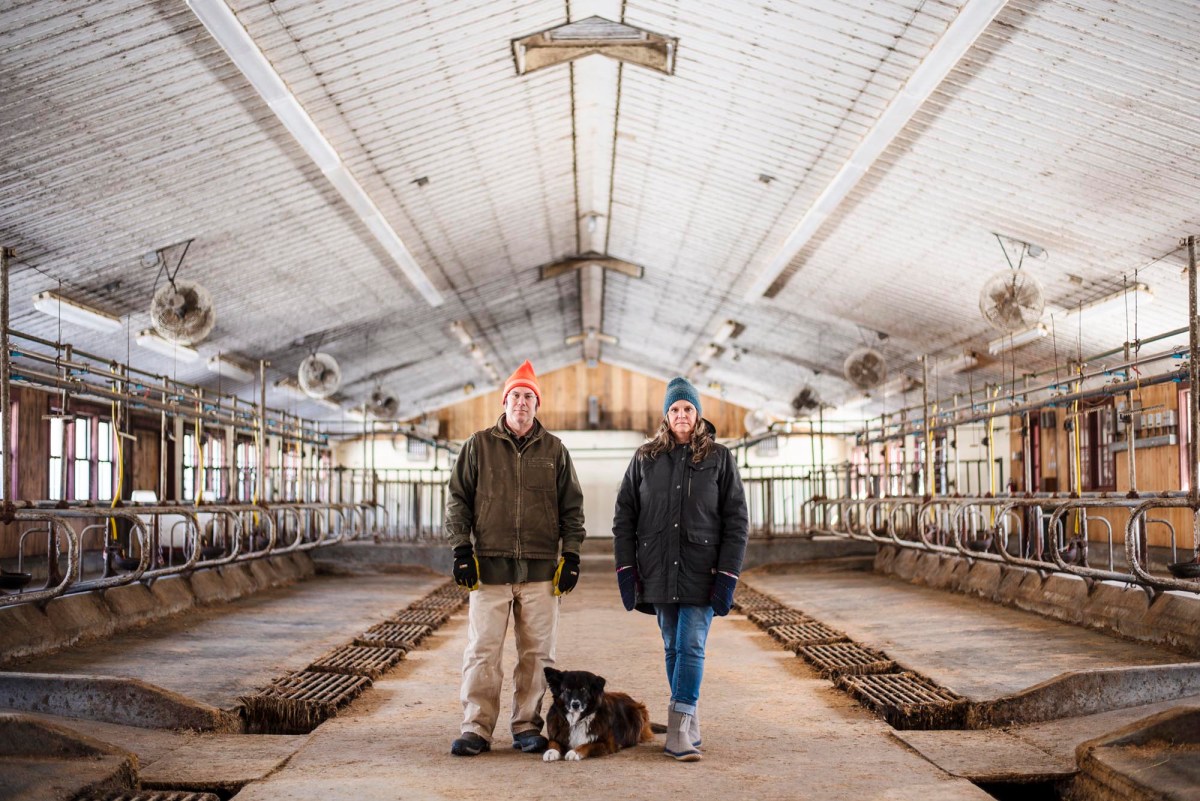
“Everything that you read about us is that we’re horrible people,” Brown said while crying at her table in June. “That we’re tenants that won’t leave. That we’re planning an intensive dairy operation.”
“I feel like the truth needs to come out,” Brown said.
“There’s many layers to this story,” said Anson Tebbetts, the state’s agricultural secretary, in an August interview. “You’ve got land agreements, you’ve got leases, you’ve got a state college going through a very difficult financial situation and that kind of unraveled in the middle. So a lot of things didn’t go as hoped and sometimes things just happen that way.”
The Grays say they sunk roughly half a million dollars into their value-added agricultural business over the last decade. They say the land trust’s refusal to help a working farm sent them spiraling into debt, and now foreclosure could evict them from their home. They continue lobbing accusations against the land trust, claiming the organization orchestrated the debacle facing their small business.
“A lot of people think we should have quit or given up but why would you? It’s literally a $50,000 problem that’s been turned into a million dollar situation,” Brown said.
McIntyre, president of the land trust during the entire saga, called the issue “ancient history,” and said she doesn’t want any part in the debate. Instead, according to McIntyre, it’s the land trust that lost out in the debacle, deprived of the opportunity to permanently protect the six-acre parcel of land.
When asked about the damages that McIntyre claimed the land trust suffered on an August phone call, McIntyre’s voice rose in frustration.
“We would own the building,” McIntyre said. “We would own the property where the Grays are currently located. I’m sorry to be short with you, but what is happening here is the Grays are attempting to create a story about something that isn’t a story anymore. This is done.”

The lawsuit
The Grays realized things were taking a turn for the worse when they met with the land trust in the fall of 2017, after the college’s education program shut down. As the land trust prepared to exercise its $50,000 legal option, they began to feel less confident in the future of their business.
“It became clear immediately that they did not want to work with us,” Gray said.
Part of that legal arrangement between the college and the land trust required the college to deliver the six-acres of land “unencumbered.” This meant that, if the land trust did not make a new deal with the creamery, the Gray family would need to leave.
But the Grays refused to leave. Instead, the couple sent the land trust business plans outlining their proposals to stay in response to a request for proposals the land trust sent out.
In January 2018, as the land trust looked at business opportunities for the property including the one shared by the Grays, they offered the Gray family an estimate for a new lease rate. The proposed rate of $58,941 annually, or nearly $5,000 a month, included capital costs, real estate taxes, insurance, maintenance, and utilities for the farmhouse and surrounding barn properties. It was about ten times the lease rate that the family was paying at the time. Later, the trust offered a lease rate for only the farm house for $2,500 plus utilities. Neither offer included the use of the adjacent farm land.
“No agricultural business could operate at Norwich retail market rates,” Gray said in an email this summer. “They are essentially creating conditions so bad that we would have no choice but to leave.”
McIntyre sees the situation differently. She said the land trust was doing its due diligence to determine whether they could afford to exercise the legal option and manage the property, including its carrying costs.
“We’re a land conservancy, so we can’t have our operating budget distorted or get into an untenable situation,” McIntyre said in an interview in October. “The Grays provided UVLT with a business plan at that time that demonstrated their business would not be able to meet those carrying costs, and they disparaged UVLT publicly for not being willing to let them stay on the property for $500 a month. They didn’t join us in figuring out how to pay for those carrying costs, they just showed us that they couldn’t.”
Although the Upper Valley Land Trust has long promised to maintain the agricultural value of these parcels, the trust didn’t allow the Grays to raise a herd of cattle on the adjoining pastureland. Instead, the trust has leased parcels for grazing to at least two other farmers.
The Grays went on the offensive and rallied their neighbors for support. The neighbors, eager to retain local farm products, eventually formed a foundation to support the creamery.
Even the college tried to advocate for the Grays’ business. Moulton, in a March 2018 email, said she would like to speak face-to-face or by phone with McIntyre. Moulton said she was sending an email outlining plans for the farm because McIntyre “requested that I do so in writing.” Moulton noted that the college did not intend to operate a degree program at the farm but wanted to continue holding workshops with Gray, who in turn wanted to stay on the farm and expand his business.
“Their proposal seems to enable each of us to continue to operate within our preferred areas AND to enable agriculture and value added dairy to remain on the farm which seems to be what folks in Norwich and the neighborhood would like to see happen,” Moulton wrote.
In emails, she asked McIntyre to assign its option to purchase the property from the college to the creamery instead, in exchange for being reimbursed for the expenses incurred to date. The land trust would be able to purchase the property from the creamery for $50,000 in the future if the creamery ceased agricultural operations at the site. The creamery would be able to negotiate with the land trust on using the conserved land for agricultural operations.
Moulton said keeping the site a working farm was “consistent with the spirit of the gift from the Siglers.” (Sigler, who died in 2021, apparently wanted nothing to do with the controversy. “Not my problem,” he told Jim Kenyon, a Valley News Columnist, according to a 2021 obituary.)
The proposal appeared to be a three-way win. It gave the land trust the option to purchase the property in the future while avoiding landlord responsibilities for the creamery. It gave the college the opportunity to divest but continue to conduct workshops and educational operations on the farm. The Grays would own their own farm, and if they decided to leave, the option would again transfer to the trust. Moulton asked for the three parties to get together as soon as possible.
The land trust said such an arrangement wasn’t possible. McIntyre told VTDigger that, as a 501(c)(3) non-profit, the trust couldn’t legally provide public benefits to private individuals like the Grays. In the 2018 emails, McIntyre wrote that she’d previously explained “the legal, ethical and strategic reasons why we felt it was unlikely UVLT’s Board would accept.” (In a 2025 email, Stan Williams, board chair, told Brown that the trust had a “fiduciary duty” to exercise the option to purchase the land after the college withdrew.)
Moulton said she was “very sorry to hear this.” A little more than a week later, Moulton wrote another email reminding McIntyre that the college supported the creamery remaining on the farm. She mentioned a recent post on the land trust’s website called “Bringing the Cows Back” that stated: “We hope that the increased visibility for the Norwich Farm Creamery and the growing public awareness of operating complexities at the site will help the Grays strengthen the Creamery finances and, if viable, bring back the cows!”
Moulton offered to clear her calendar to make time in the next week for a resolution and suggested finding a mediator to advance the process. But McIntyre said the land trust’s attorneys didn’t want them having direct contact with Chris Gray.
Brown said officials at the college fought for the creamery and offered a long-term lease because they knew the business was never going to own land in Vermont. “The reality is we’re not wealthy people,” Gray added. “We don’t have money to burn to create some fantasy.”
A value-added dairy business is hard to make a go of in New England, according to Lee Robie, a 76-year-old, fifth generation former dairy farmer at New Hampshire’s Robie Farm. His family transitioned years ago from a conventional dairy into a value-added dairy business with cheese making, raw milk and a farm store.
“I can’t say we’re rolling in the dough, but we do sell a lot of products in New Hampshire and Vermont and we employ quite a few people on the farm,” Robie said in an interview. Years ago, he sold some of his farm’s lease rights to a land trust. While his family considered the Upper Valley Land Trust, they eventually went with Ammonoosuc Conservation Trust because it encouraged the family to keep farming and develop its agritourism business, Robie said.
By May 2018, after a spat over the use of a classroom on the farm for a celebration of Dale Somerville’s life, the former owner of the farm, to which the Grays say they were not invited, McIntyre told Moulton in an email that the trust’s “goodwill in this matter is nearly exhausted.” In a later email, McIntyre noted that the land trust had twice extended the closing of the option to benefit the college. “It is increasingly difficult for me to respond to VTC requests for goodwill, as these delays damage UVLT,” McIntyre wrote.
The settlement
Representatives of the college and the land trust spoke with a mediator in June 2018, but the proposal put forward by Moulton ultimately failed. Almost a year later, the college still hadn’t delivered the land without the Grays. So the land trust sued the college.
The lawsuit appeared to change the way the college approached the Grays. A settlement was reached in 2020, after which the college listed the property for sale. The Grays would need to vacate the property when their five-year lease terminated on June 30, 2021.
McIntyre said the lawsuit in April 2019 only came after discussing for a year how to resolve the situation. The land trust never had any legal obligation or legal ability to help the Grays, according to McIntyre, and she said she didn’t know why the college claimed that the land trust could transfer the option.
“We’re a private charity, it’s not the same thing as a publicly funded institution, so maybe they just didn’t know we’d have these constraints because it’s not the world they live in,” McIntyre said.
But the Grays remained convinced that the land trust could have done more. While the college and the land trust negotiated their lawsuit, the Grays mobilized their neighbors into forming the Norwich Farm Foundation, a nonprofit with goals of maintaining local food security, creating affordable farmer housing, preserving the working landscape and restoring regenerative agriculture. The group submitted a ten-year business plan for the creamery to the land trust that included producing 350,000 pounds of dairy products each year. It hinged on grazing cattle on the surrounding pastureland in the Brookmead Conservation Area, owned by the land trust.
But McIntyre said, by that point, the land trust didn’t need to see a plan, because it wasn’t going to own the six-acre property. The plan the trust did receive in May 2020 was very similar to the initial 2018 plan it received from the Grays, McIntyre said, except this time the Grays wouldn’t pay rent and would receive a salary.
As McIntyre repeatedly told the creamery and said in public commentary, the land was not available to the Grays’ business. The college listed the six-acre property for $1.25 million. The Grays, bolstered by the enormous wealth of the Norwich community and desperate to maintain their business, managed to raise hundreds of thousands of dollars to buy the property through the foundation.
It took months, but finally, in the spring of 2020, the foundation submitted an unsolicited offer through email to buy the property for $300,000, according to Omer Trajman, then treasurer of the Norwich Farm Foundation, who spoke to lawmakers during a March 2021 Senate Agriculture Committee meeting that was held on Zoom and included the parties involved in the dispute. When that failed, the foundation raised an additional $180,000 and doubled its offer to $610,000. The college again rejected the offer. (Trajman did not respond to requests for comment.)
“We all sort of had high hopes and great ideas about that operation and know that the people in Norwich certainly enjoy having that farm there,” Sen. Robert Starr, D-Orleans, said during the 2021 committee meeting.
But Moulton, also in attendance, no longer appeared interested in supporting the Grays. She told lawmakers that the college had been clear with the Grays that their plan to make Norwich Farm their dairy operation was no longer going to work. The barn was not ideally set up for milking, and was instead better positioned to raise prize Holsteins, she said. Because they didn’t have access to surrounding pastures, feed would have to be trucked in and manure trucked out, she said.
“That’s not the way you typically do dairy farming,” Moulton said as McIntyre nodded along to her comments on the Zoom screen.
Gray put in over half a million dollars in the dairy he told lawmakers in 2021. He told VTDigger his family paid over $80,000 in legal bills to maintain their rights on the property. (Gray later said that he received pro bono representation and saved money from ballooning legal costs by working with the Vermont Legal Food Hub at the Vermont Law and Graduate School.)
The tension on the Zoom call was palpable. Gray shook his head and looked appalled at McIntyre and Moulton’s statements. McIntyre shook her head and appeared to laugh at Gray.
Moulton said the only offer on the farm as of March 2021 was from the Norwich Farm Foundation, but that it was far below fair market value. She said the college spent around $70,000 a year subsidizing the farm’s operating expenses, which came from the students’ tuition. The college plowed the driveway, mowed the fields, and emptied the grey water produced by the creamery, Moulton said. In the last several years, between renovation and operation, the college system had spent “several million dollars” on the property, Moulton said.
If the college sold the property, asked Sen. Brian Collamore, R-Rutland, would the money go directly to the college system’s budget?
“Yes,” Moulton said, nodding. The sale could provide 25-50 student scholarships, she added.
Between the foundation’s first offer in 2020 and the end of 2021, the Norwich Farm Foundation made at least five offers for the property to the college, which rejected them all, according to the Grays. In May of 2021, the Grays sued the college for $500,000. The lawsuit was settled in mediation, the Grays said. By early September, the college filed an eviction notice against the Grays. The family contested it, and in April 2022, settled with the college for $10,000.
But in the middle of the fight over the eviction, the foundation raised $400,000 from the community, according to the Grays. In December 2021, the foundation was finally able to buy the property from the college for $1,065,000. The foundation bought the property so the Grays could continue operating the Norwich Farm Creamery, making an operating dairy again viable in the community.
But much of the money the foundation spent on the property did not go to the college system or to student scholarships, as the Grays and their neighbors had assumed after the 2021 Senate testimony. The details of the private settlement between the college and the land trust became unredacted after the sale went through. Under that settlement, the trust had earned $849,674. Those hundreds of thousands of dollars would “advance UVLT’s conservation and stewardship missions,” according to a 2022 annual report.
The purchase left the Norwich Farm Foundation with an almost equivalent $850,000 mortgage debt.
“The Upper Valley Land Trust took all the money,” Gray said. “In the end, UVLT created $850,000 in debt and profited from a farm that was originally given away.”
Moulton confirmed in an email that “money from the sale of the Norwich Farm did not go into scholarships” or students at the college. She said she couldn’t speak to where the money ultimately ended up because she left the college in 2023.
The settlement, unsealed and then unredacted through multiple public records requests, showed that the land trust received an initial $75,000 and then played a role in the sale, choosing the broker for the sale who would recommend the pricing.
McIntyre told VTDigger that the $75,000 was compensation for “real out-of-pocket costs we incurred,” including the staff time reaching out to potential tenants and the analyses of business plans for the property.
But the Grays brought up other issues: The land trust was able to reject offers for the six-acre property under $500,000 and match any offer less than $450,000 after a three-month veto period, according to the settlement. In 2021, the Norwich Farm Foundation alleged that the trust had been involved in the sale and driven up the costs.
McIntyre stands by a claim she’s made for years that she never saw or evaluated any of the offers the college received: “UVLT had absolutely nothing to do with whatever offers the college rejected,” McIntyre said in October. While who saw what remains an open question, the settlement makes clear that the land trust received 100% of the first $450,000 and 70% of any net sale proceeds over $450,000.
That means the land trust — with a stated mission to permanently protect land in the Upper Valley, including working farms — reaped more than 18 times the original $50,000 trigger option it would have paid the college for the six-acre property. But McIntyre said this settlement was just about recouping financial losses for the failure of the college to deliver the property as initially promised.
“UVLT did not make money,” McIntyre told VTDigger, adding that the trust was only paid 80 percent of the value of the property that should’ve been conveyed to the trust by the college. “We were damaged, and we were compensated for the loss of opportunity caused by the school’s default.”
“We have nothing to do with the property where the Grays are located now,” McIntyre said in August. “Their business, from what I gather, is not working out.”
The debt
From his kitchen table in June, Gray said his family was “crushed financially” by the debacle. The foundation’s debt is more than a million dollars, according to foreclosure documents. The foundation can’t make enough money from the creamery, which relies on hauling in milk instead of milking dairy cows, to pay back the debt without access to the land or larger donors, Gray said.
The Grays’ faced another defeat in 2023 when they tried and failed to get a property tax exemption for the property valued at $1.239 million, according to the property’s town tax bill. The town of Norwich decided the for-profit business operation within the non-profit status of the Norwich Farm Foundation didn’t meet the standard of the land used for a charitable purpose. The annual taxes on the property are more than $34,000.
The foundation disbanded after realizing the debt for the property they purchased was untenable. None responded to a request for comment or agreed to speak on the record. Kate Barlow, the former president of the foundation, said in a September email that it had been more than three years since she was on the board and requested not to be contacted.
The foundation listed the property a year ago for $1.275 million. Failing to secure any offers, let alone a buyer, the foundation took it off the market Sept. 1.
That was more than a month after the foreclosure began.
The $850,000 mortgage has been held by Iroquois Valley Farmland REIT, a farmland finance company out of Illinois, since May 2022. In July, the company filed a foreclosure notice against the foundation, Norwich Farm Creamery and Brown and Gray themselves, according to court records. The notice says the parties now owe $1,065,000, or roughly what the foundation initially paid for the property with accumulated taxes, interest and attorney fees, according to court records.
After a foreclosure notice, defendants can often work to pay off the debt during a redemption period. In Vermont, that period is typically six months for farms, but Iroquois Valley argued last month that the property was not actually farmland, but rather a commercial property taxed by the town of Norwich. Therefore, the finance company requested a redemption period of one day.
Eventually, the foreclosure could mean bankruptcy and eviction, according to Gray. He said the couple could close their value-added dairy business by the end of the year.
“We do not know at this point exactly how long that process will take or ultimately what will be the outcome for our business and our family,” Gray said in August.
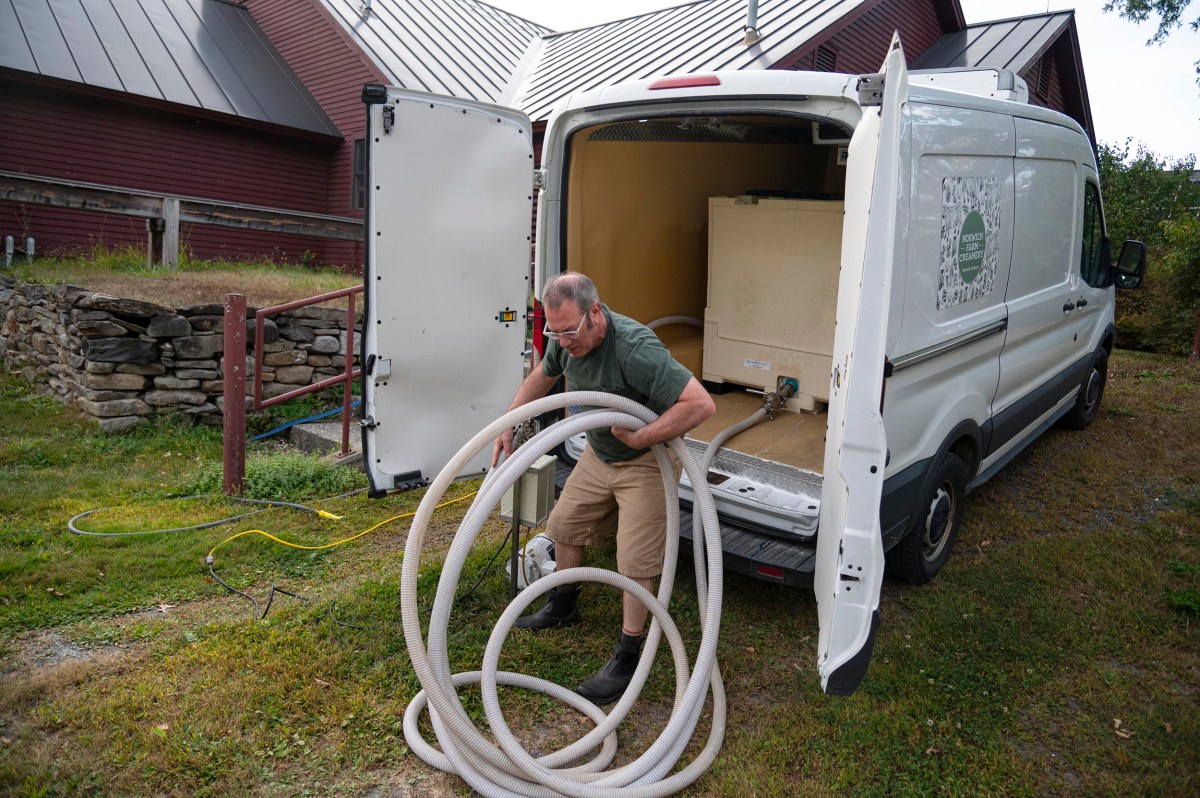
The Grays continue to place most of the blame on UVLT for subdividing the working farm – hewing the working land from the working infrastructure. They’d fundraised to buy the property on the presumption that the money they were spending would support the state college, the Grays said, and according to the Senate agricultural committee meeting, go to student scholarships. They blamed the realization that the money had instead gone to the land trust on sidelining much of their fundraising efforts.
“All the money we raised, and all the money we continued to raise, just went to servicing the debt and keeping the lights on, so zero money went back to growing the system and getting it to a sustainable level. It’s what happens to all farms. They just get in so much debt, then they can’t grow and be sustainable,” Gray said.
Brown now works a second job in retail at King Arthur Baking Company. The farm is currently processing about 175 gallons of milk a week purchased from Billings Farm and Museum in Woodstock, according to Gray. Their gross revenues are about $200,000 a year, according to their farm plan.
The foundation has stopped paying the mortgage and taxes on the property. Gray said the creamery is still in production but the finances are week to week while the family looks for a new backer for the business.
“The situation is so complicated,” Gray said from his kitchen, looking grim. “And the money has become so big that it’s hard to get anyone to pay attention. And you have no access to the land.”
When asked about UVLT not allowing the Grays to use the surrounding 350 acres for agriculture, McIntyre said the land was always intended for conservation purposes and had never been available to the Grays’ private business.
“The Grays have known for years that it won’t be available to their operation. They knew that before they got there. Before the foundation bought it for them,” McIntyre said. “UVLT was not going to subsidize a business or tie up our property in an unsustainable plan.”
The Grays’ daughter, Eugenia, five years old at the start of this saga, is now 15 and in high school near Norwich. The couple said they want to stay in the community for her education and because the farm is important to their family.
“We don’t have any other options,” Brown said. “We don’t have any place to go.”
So the creamery is making a last ditch effort to bring in another partner: Dartmouth College.
The couple is asking for an investment of about $2.5 million for ownership of the property. They’ve shared a five-year growth plan that involves returning cows to the farm, hiring two herd managers, tripling production and becoming financially self-sustaining after five years.
They said they’ve received positive feedback, but the college’s real estate office isn’t yet interested in buying the property. Dartmouth College declined to comment.
But they’re not giving up: They pitched rebranding the business as Dartmouth Farm Creamery.
Correction: A previous version of this story misnamed the Vermont Community Foundation and incorrectly stated who stopped paying the farm’s mortgage and tax payments.
