
A message from Dr. Tim Tanner, Northern Counties Health Care’s Medical Director and family physician for more than 30 years:
In my career as a primary care physician, I have witnessed a lot of pain. This includes, for example, the sharp physical pain of a nasty strep throat infection, the crushing pain of a heart attack, the burning pain of nerve damage caused by diabetes, and the deep pain of metastatic cancer. It also includes the emotional pain from traumatic life events, the death of a loved one, and the self-blame for past actions or inactions. Even with over three decades of observation, I still cannot explain why we seem to pay more attention to physical pain than emotional pain.
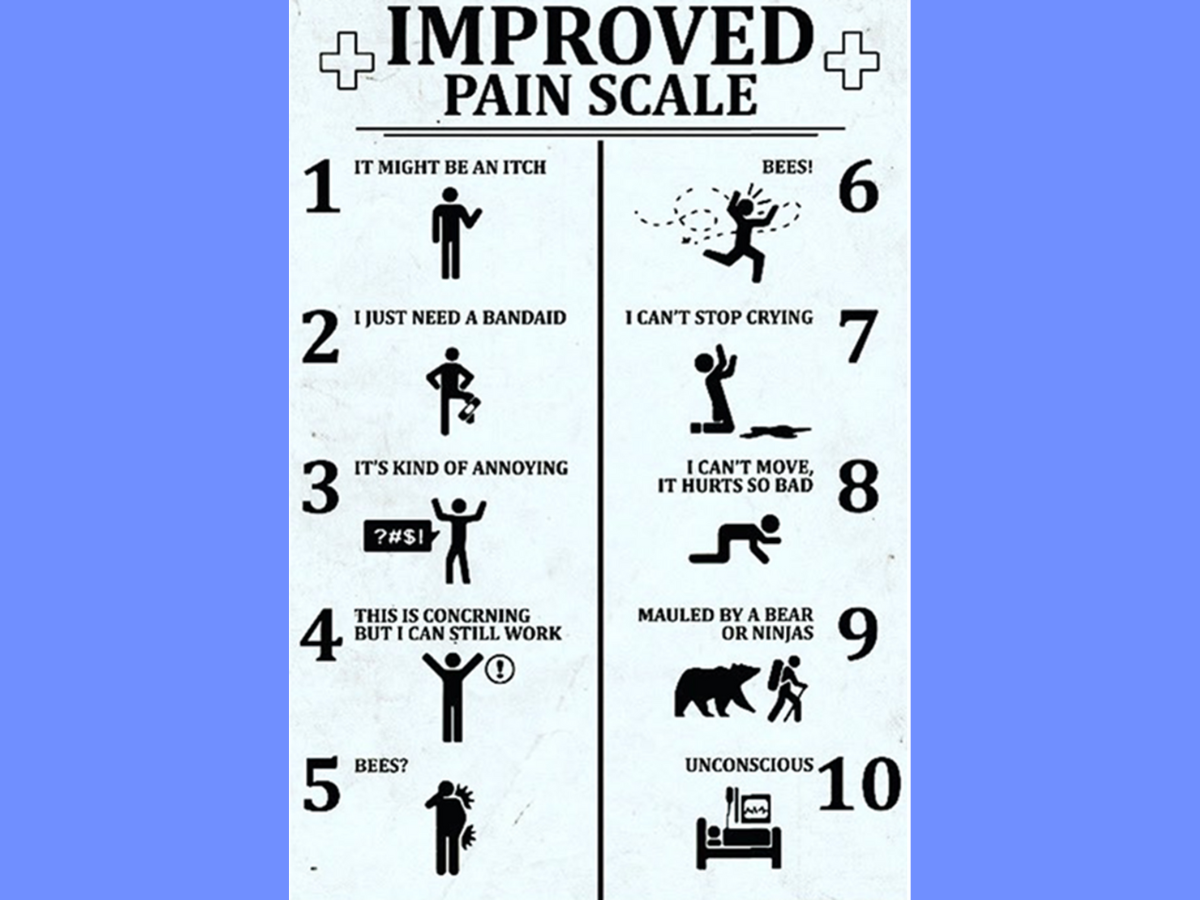
There are various scales to rate the severity of physical pain. (I particularly like the 1-10 scale in which pain level 5 is “Bees?” and level 6 is “BEES!”.)
There is medical jargon used to describe the source of pain such as neuropathic, visceral, or inflammatory. There is not the same level of specificity or quantification when speaking of emotional pain, and maybe that is as it should be. The terms used for emotional pain such as depression, anxiety and post-traumatic stress disorder are both broad and nuanced. Although there may not be much benefit in assigning a 1-10 scale to emotional pain, I think it deserves the same level of attention as physical pain. Physical pain and emotional pain can interfere with our daily functions and nightly sleep. Both can consume our attention, force joy from our lives and turn an ordinary day into another 24 hours of survival.
I have often heard, “I can take a lot of pain,” or “I have a high pain threshold.” These statements always are in reference to physical pain. I have never heard anyone say the same about emotional pain. I am sure individuals have different thresholds for tolerating emotional and physical pain. Things have to get bad enough before someone suffering with pain reaches out for help. I have been simultaneously impressed and distressed by how long some people live with their pain before seeking help. There are often several reasons: hope that things will get better with time, cost, fear of what might be discovered, embarrassment that they cannot fix things on their own.
All pain is treatable, although it may not be curable. I break down the treatment of any problem, including pain, into three categories, self-management, pharmacological (medications) and non-pharmacological. Choosing among these categories depends on what is known to be effective and safe, what is available and affordable, and what fits best with the person’s values and priorities. Sometimes treatment may involve self-care such as exercise. It may involve pills. It may involve “talk therapy” or peer support. It’s great when there are good options in all three categories. This is the case for treating emotional pain.
I am very fortunate to work in a setting where I can call on behavioral health colleagues to help manage a person’s pain, be it emotional, physical or both. Our team covers all three categories above. Their expertise adds to the relief of pain that can be relieved, and coping with the pain that remains. Behavioral health professionals work side by side with medical providers in our offices. They are an integral part of our primary care teams, assuring that we fulfill our goal of treating the whole, complicated, physical and emotional person. Maybe its self-flattery, but I like to think we are mind-body shops, not just body shops.
Ready When You Are
You don’t have to struggle with your pain alone. At Northern Counties Health Care, our award-winning team includes counselors, Peer Support Workers and psychiatric providers — working together with you and your Primary Care provider to create a plan that works for you. No judgement. No pressure. No stigma. Just a commitment to help you find relief and rediscover your joy. We’re ready when you are.
Take that courageous first step and talk to your Primary Care provider in Concord, Danville, Hardwick, Island Pond, or St. Johnsbury.
Learn more at www.nchcvt.org.
About Northern Counties Health Care
Northern Counties Health Care (NCHC), Vermont’s first Federally Qualified Health Center, was established in 1976. NCHC’s Mission is to provide high-quality, accessible, patient-centered health care to the medically underserved, 2,000+ square mile rural region of VT known as the Northeast Kingdom (NEK). Annually, NCHC provides quality care to over 20,000 individuals; nearly one-third of the residents of the NEK. Over 64,000 encounters are made each year through a rural network of seven community health centers – including two walk-in primary care clinics, three dental centers, and a home health care and hospice division. All NCHC Health Centers are Patient Centered Medical Homes, recognized by the National Committee for Quality Assurance (NCQA). From preventative care, gynecological care, chronic disease management, and behavioral health services to dental care, physical therapy, home care and hospice, we provide complete, compassionate care for the whole family, in our home or yours.
The Health Resources and Services Administration (HRSA), Department of Health and Human Services (HHS) provided financial support for this article as part of the FY 2024 Behavioral Health Service Expansion (BHSE) grant. The award provided 76% of total BHSE program costs
and totaled $600,000. The contents are those of the author. They may not reflect the policies of HRSA, HHS, or the U.S. Government.

