


With Vermont’s prisons reaching capacities they haven’t hit since the onset of Covid-19, Vermont Department of Corrections officials are grappling with how to handle the influx of people incarcerated.
The state now incarcerates more women than it has beds at its lone women’s prison. In some facilities, people are sleeping on temporary plastic “sled beds” on cell floors. The growing population means prison officials are now considering sending more people to a private prison in Mississippi.
In just two years, Vermont’s prison population has risen by almost 300, from 1,366 in September 2023 to more than 1,650 today. To be sure, the level is below the roughly 1,750 seen in 2019 and a peak of more than 2,200 in the late 2000s. State data shows the detainee population — people jailed while awaiting trial — is rising more rapidly than the sentenced population.

At the same time, Vermont’s prisons have experienced persistent staffing shortages. This week, WCAX reported on a lack of officers at Northern State Correctional Facility in Newport leading to continued mandatory overtime for staff. That facility’s vacancy rate for officers and shift supervisors is 28%, while the state’s five other facilities have vacancy rates between 10% and 20%, according to department data.
According to Joshua Rutherford, the department’s facilities division deputy director, the state always expected the prison population to rise.
“Starting this spring, that has accelerated, and we started to fill up faster than we had anticipated,” he said in an interview Thursday. “Nobody calls me to ask how many beds I have before they impose a sentence.”
Plans to reopen three units in three different prisons this month should help ease the problem, Rutherford said. Those units had been shuttered during Covid due to staffing shortages and a decreased population. But with some people forced to sleep on temporary floor beds, and the state’s only women’s prison now over capacity, the situation requires immediate action and creative thinking.
Why are more people in prison?
Corrections leaders, lawmakers and Vermont’s chief superior court judge have all suggested a combination of factors contributing to the spike. Pandemic-era policies meant fewer police interactions and some people released from prison — initiatives that have since ended. Some crimes, both violent and nonviolent, have increased.
Public and political demands for more accountability have increased, too, as concerns about crime in downtowns — particularly in Burlington — have grown.
The Vermont Legislature has also created new and stricter crimes. In July 2024, Vermont’s bail laws changed, allowing judges to increase the amount of bail for defendants who were accused of crimes while out on release in other cases.
Chief Superior Court Judge Thomas Zonay told lawmakers last week that that change may be increasing the number of detainees. He compared recent bail data to that from May 2024. Over that time, the number of people held on less than $10,000 bail increased by more than 60%, or about 50 people. A similar increase wasn’t seen in other bail amounts that were unlikely to be impacted by the recent legislation.
About 40 more people are held without bail now than were in May 2024, a number that reflects people held for serious felony charges.
The confluence of changes means that for the first time in years, Vermont’s prisons are overfull or close to it.
Data from this week showed all of Vermont’s six prisons had at least one general population unit at or over capacity.
At the women’s prison, Chittenden Regional Correctional Facility in South Burlington, 180 women were squeezed into a facility with only 118 general population beds and 164 currently operating beds.
The 183 women incarcerated across Vermont as of Thursday is also more than the 158-bed plan previously proposed for a replacement women’s prison and reentry facility.

A similar pattern appears across the system. Marble Valley Regional Correctional Facility in Rutland, Northeast Correctional Complex in St. Johnsbury, Northwest State Correctional Facility in St. Albans Town and Southern State Correctional Facility in Springfield all have general population units detaining more people than the number of available beds, according to Department of Corrections data.
Overcrowding leads to ‘ugly’ conditions
For Rutherford, the corrections official focused on population, the spike in people incarcerated is forcing him and colleagues to come up with less-than-ideal solutions.
In the past, the state utilized prisons’ gymnasium space for extra beds. The department is already utilizing temporary plastic beds on the floor of cells.
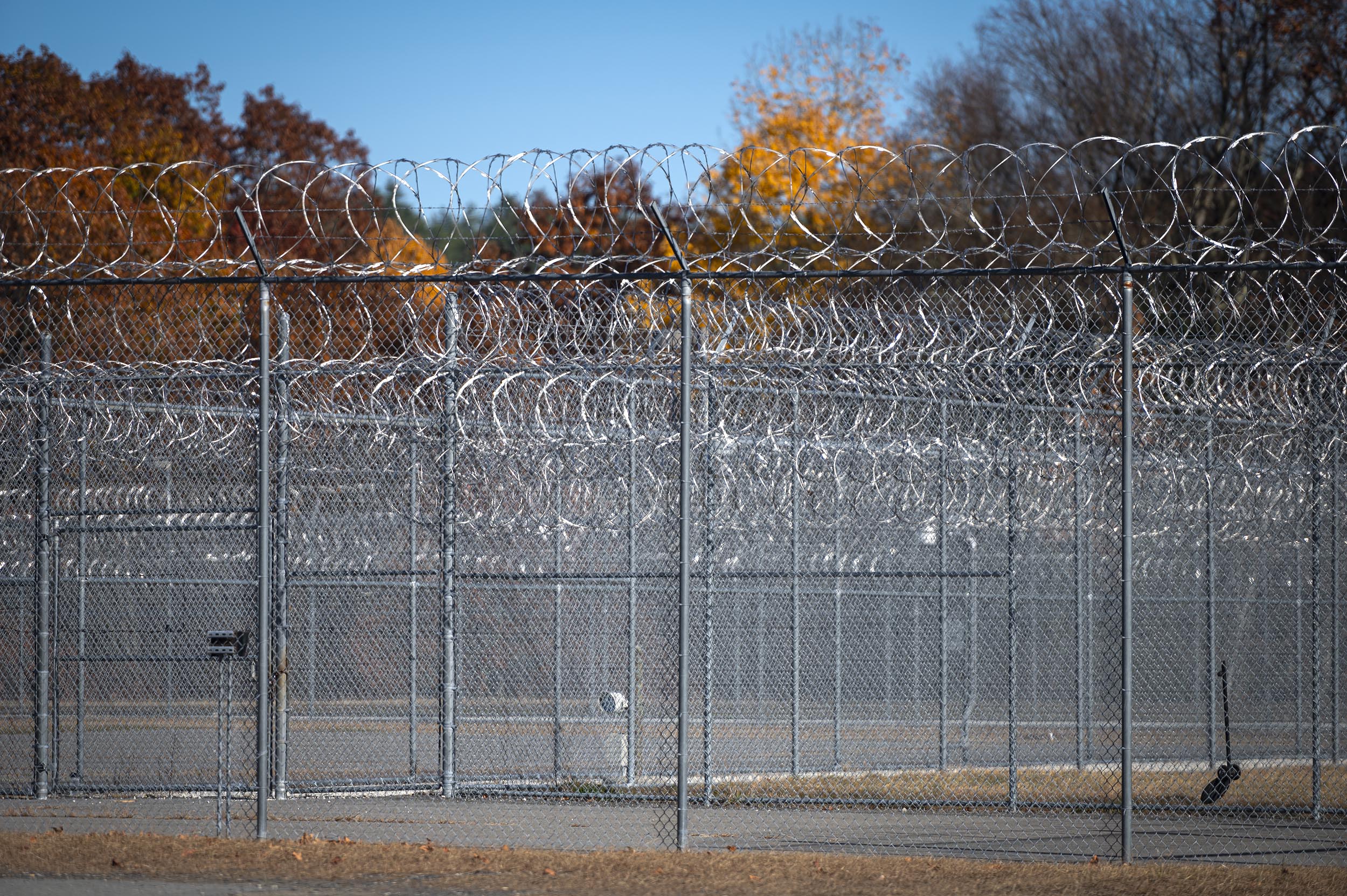
When the state’s prisons reach capacity, Vermont sends people out of state. Through the state’s contract with CoreCivic, one of the country’s largest private prison companies, Vermont sends just under 130 men to Tallahatchie County Correctional Facility in Mississippi — about half of 2019’s out-of-state population.
The CoreCivic contract currently allows Vermont to utilize up to 300 beds, but only for men — meaning overcrowding at the South Burlington women’s prison poses a trickier problem at the moment.
“Increased reliance on out-of-state (prisons) is absolutely a possibility,” Rutherford said, specifically referencing the male population.
Tim Burgess, an advocate for incarcerated people in Vermont, experienced overcrowding himself while in prison in the state in the 2000s. At the time, the Department of Corrections was utilizing sled beds.
“Picture a red sled like you use to go sledding. It’s a little longer, it looks a little like a narrow canoe. If you’re a larger person, it is about as comfortable as you’d think it would be,” he said.
In a tight two-man cell, furnished with a bunk bed, a desk and toilet, the person in the sled bed typically finds themself wedged somewhere near the toilet.
“It’s ugly,” Burgess said.
Matt Valerio, Vermont’s defender general, said sled beds are a sanitary issue. He said recent instances of the antibiotic-resistant bacteria MRSA at the Rutland prison, where the temporary beds have been utilized, has caused concern.
(A department spokesperson said there were a “small number” of MRSA cases system wide this summer, declining to provide specifics due to medical privacy concerns.)
After 25 years on the job, Valerio is familiar with the era when Vermont incarcerated far more people and sent hundreds more out of state.
“The biggest issue I see right now is we have a massive detention population,” he said. The more than 650 people currently detained while awaiting trial is two or three times higher than in the past, according to Valerio.
The overall upward trend in incarceration, Valerio argued, could be traced in part to political and public pressure in response to concerns about public safety. That pressure can swing the pendulum in instances where there’s discretion — judges issuing bail, the Department of Corrections releasing people on furlough and the parole board approving parole, he said.
To Valerio, it was a “no brainer” that the state’s prison population would rise from pandemic lows. “The real question is how high is it going to go. And what’s going to happen — where are we going to put them?”
