

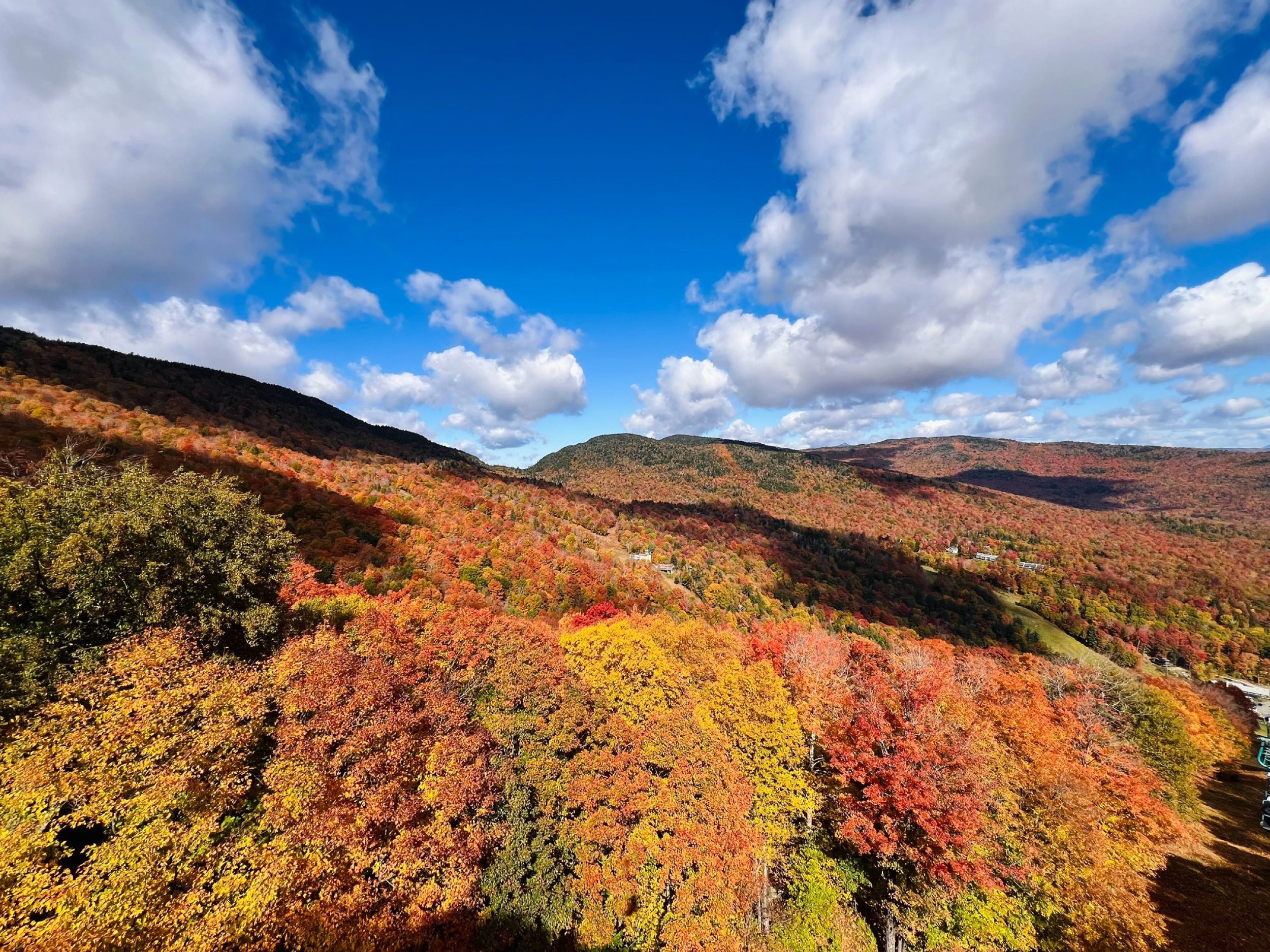
As days get shorter and nights get colder across Vermont, green valleys and hillsides will soon be flush with splotches of yellow, orange and red. Because of the state’s drought, scientists suspect that some trees may drop their leaves earlier — but not without providing humans a spectacle.
“Every year is different, and that’s the cool thing about fall foliage,” said Ali Kosiba, who studies the impacts of climate change on trees and forest ecology for the University of Vermont Extension. While we enjoy the beautiful colorscape, trees are responding to events from this summer and past years, she said.
During fall, trees gear up for winter by recycling nutrients from their leaves, pulling them into their trunks to store for the winter, she said. Canopies change color as they break down those nutrients — drawing onlookers who swarm the state in the annual ritual of leaf-peeping.

Trees in bogs usually produce a bright red color, Kosiba said. That’s because in very wet conditions it’s difficult for trees to access nitrogen in the soil. That makes it more important to retain nitrogen from their leaves, Kosiba said.
While the color in their leaves is a sight to behold, it really acts as a sunscreen for the tree, she said. The color helps prevent sunlight from hitting the leaf, giving the tree more time to recycle its nutrients, she said.
As of Sept. 15, the national drought monitor reports that more than half of Vermont is experiencing severe drought, spanning the northeast and central parts of the state, while southern and northwest Vermont are in moderate droughts, according to the monitor. The short-term drought has been going on for about the past month, Kosiba said.
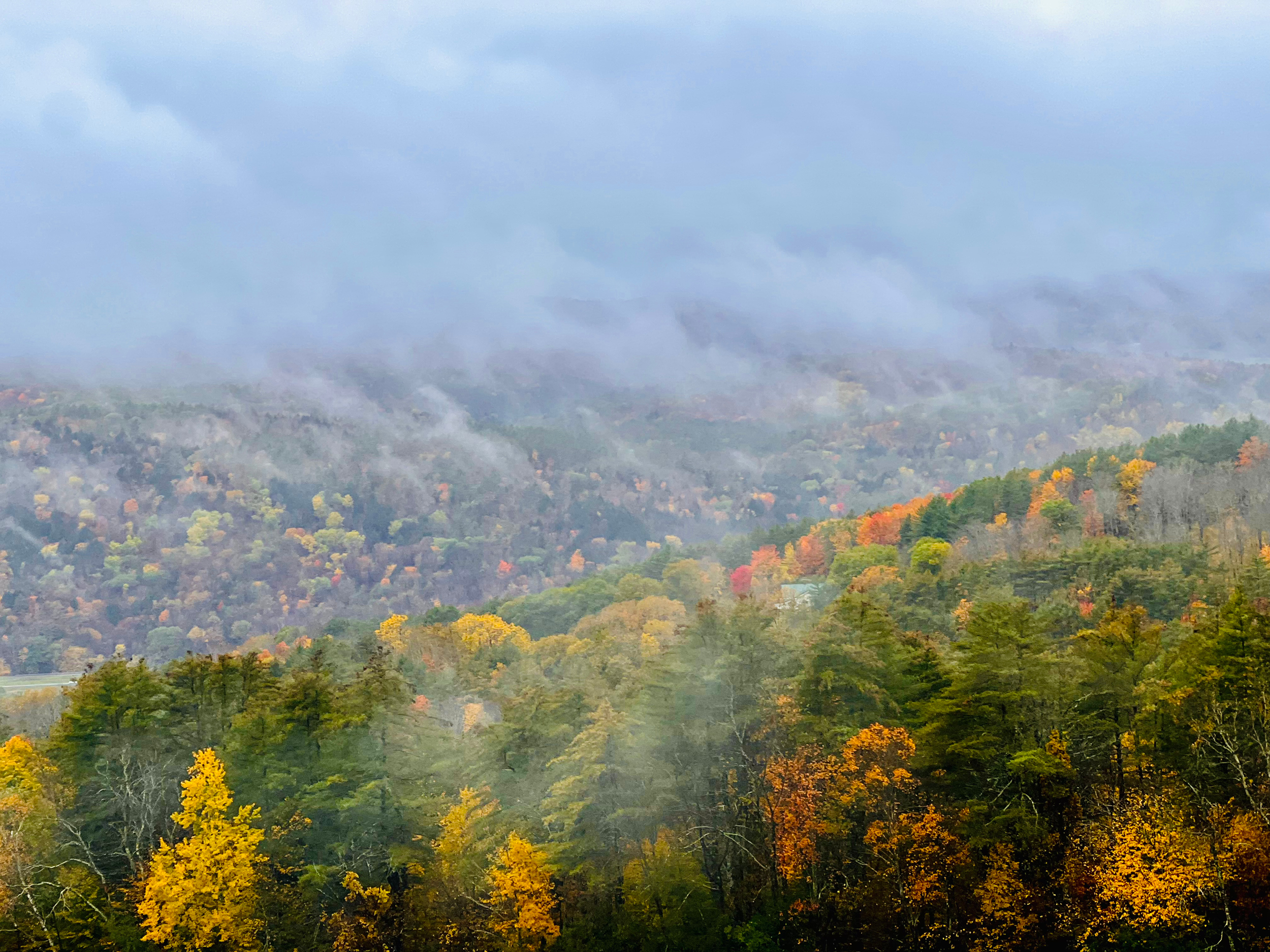
And while experts aren’t quite sure how dry conditions will affect foliage, they encourage leaf peepers to be flexible and explore different parts of the state.
In the Champlain Valley and the Connecticut River Valley, scientists are seeing some leaves either going through the fall color progression rapidly, or just turning from green to brown, said Josh Halman, Forest Health Program manager for the Department of Forests, Parks and Recreation.
At a site he monitors in Underhill, Halman usually sees peak foliage the first week of October. But that peak can happen a little earlier up north or at higher elevations, he said. The drought this year may mean that foliage peaks in mid-September, he said.

While trees in dry conditions may have muted colors, trees on another side of the mountain or a few miles away may be vibrant and bright. Halman’s already seen some impacts of drought on fall foliage, but “it’s not uniform at all across the state,” he said.
Some trees are suffering due to dry conditions coupled with hot temperatures — those two factors together tend to have “a really pronounced effect on plants,” Kosiba said.
That’s because hot air can hold more water, which means it’s evaporating from surfaces more quickly, Kosiba said. “(Leaves) have these little openings that allow them to bring in carbon dioxide, but water also evaporates from those little pores,” she said.

During a drought, leaves will close up those pores, called stomata, to protect themselves from any water loss, Kosiba said. But that prevents them from taking in carbon dioxide and photosynthesizing, she said. “They basically kind of shut down for a little bit,” she said.
If water in the soil is also evaporating, the edges of leaves will start to brown, which signals that their cells are dying. The leaves become a liability to the tree’s health, so rather than trying to store their energy, trees might drop them early, Kosiba said.
Trees tend to feel the most pronounced effects of drought in shallow soils or in rocky landscapes, according to Kosiba. South-facing slopes also tend to dry out faster because they face the sun, she said.
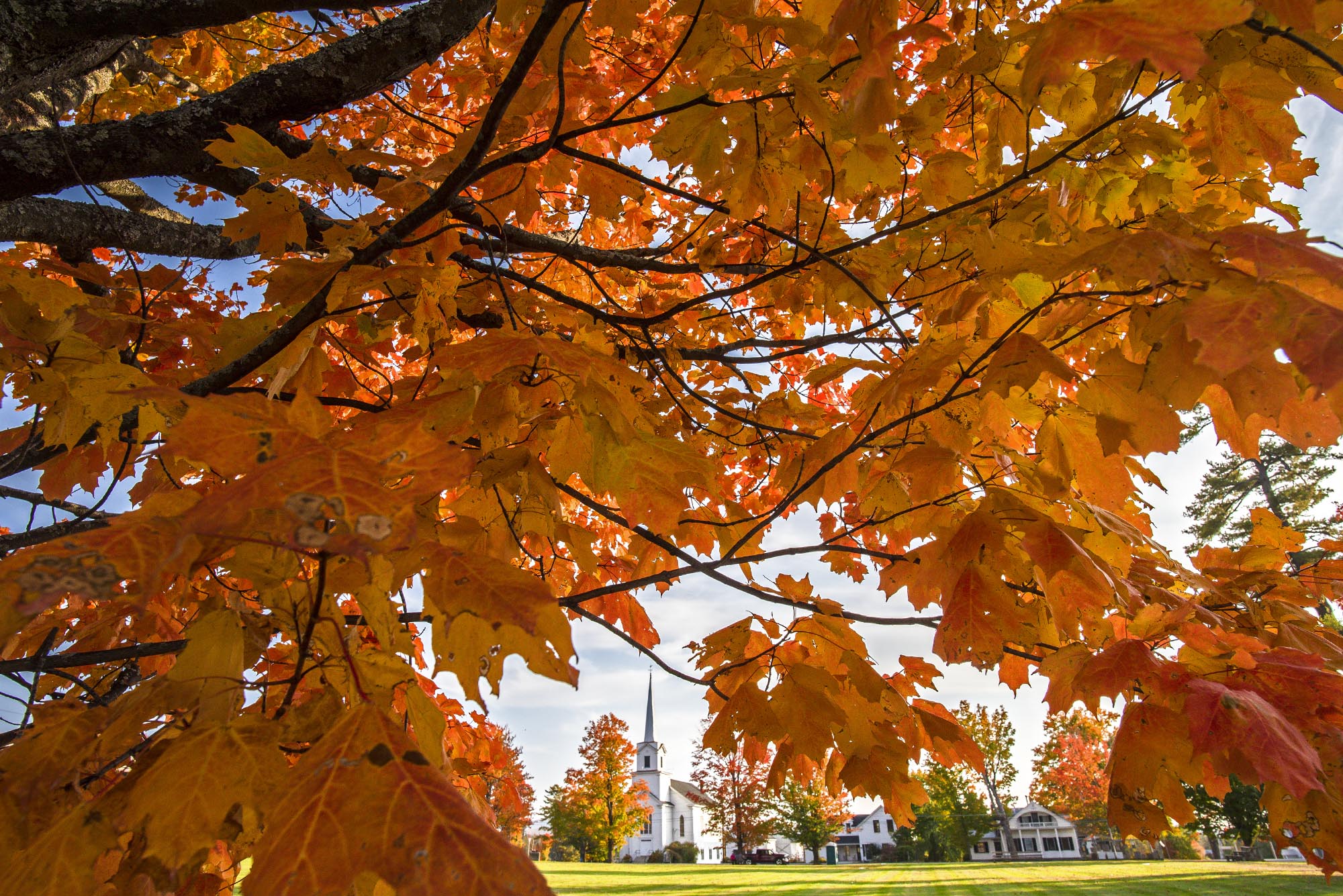
Vermont’s diverse landscape leaves lots of room for variation in color development. You might see tons of green, then turn a corner and see tons of fall colors, Halman said.
Kosiba encouraged leaf peepers to look not only at the crowns of trees, but also at the plants in the understory and in their backyard.
“The hayscented fern turns a beautiful golden color, which is really spectacular,” she said.
