

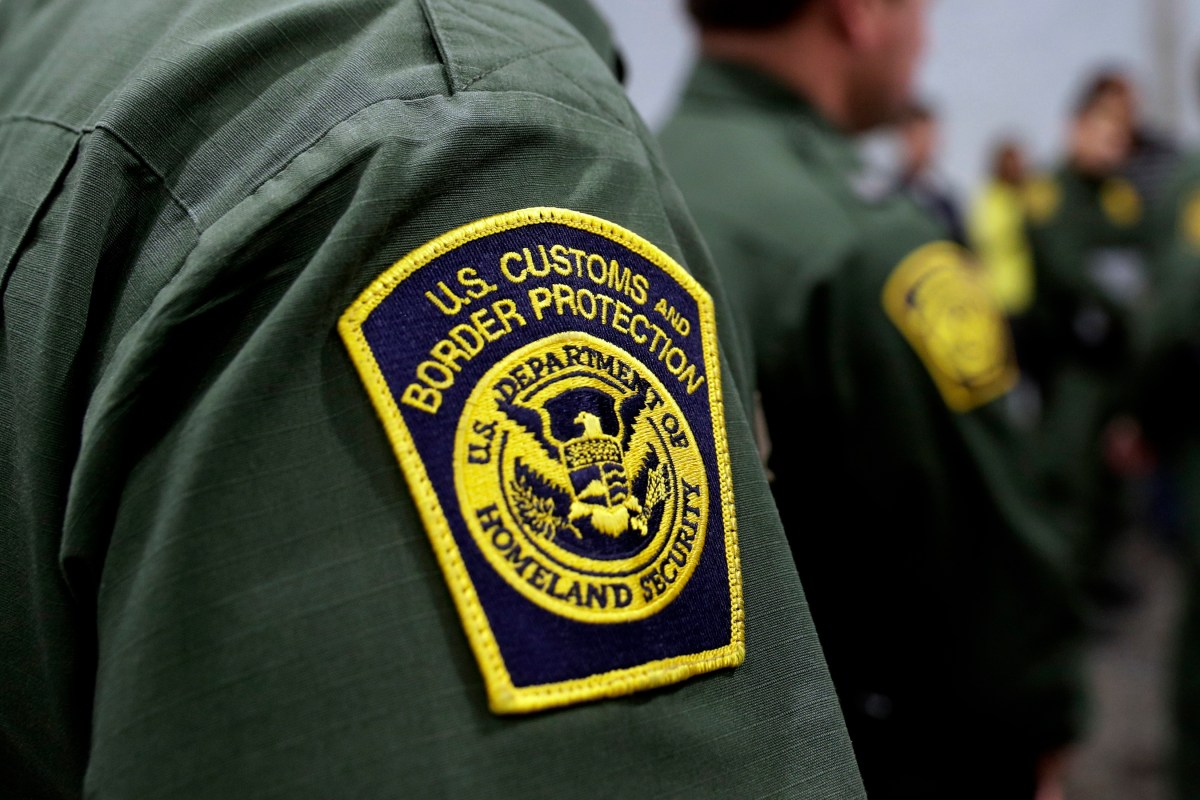
Vermont has inked a new agreement with U.S. immigration authorities, allowing them to continue using the state’s prisons for federal detentions.
The memorandum of understanding between the Vermont Department of Corrections, U.S. Customs and Border Protection and U.S. Border Patrol signed last week mirrors a previous agreement between the parties. But unlike the prior document, this agreement pays the state an increasing amount per person per day for holding federal immigration detainees and does not have an expiration date.
While Gov. Phil Scott’s renewal of the agreement is not a surprise, the state’s detention arrangement has attracted scrutiny from Democrats and advocates for noncitizens in Vermont, many of whom have been critical of recent increased federal immigration enforcement actions. Scott has said for months he believes people detained by federal authorities in Vermont are best served by being in the state’s prisons and courts rather than imprisoned elsewhere.
“I think that it’s important for us to do our part, but also protect those here in our state that are detained,” Scott said in August when asked about his support for renewing the arrangement.

The leader of a prominent Vermont immigration law clinic and the ACLU of Vermont have both said the state ideally would not partner with ICE, but ending the state’s detention agreement could do more harm than good for detainees.
Since President Donald Trump began his second term, the federal government has increased its reliance on Vermont’s prisons to detain people held on immigration offenses. In some cases, people are detained in Vermont and held for U.S. Immigration and Customs Enforcement in the state’s prisons. Other times, federal authorities bring detainees to Vermont prisons from out of state. In most instances, people detained by immigration enforcement agents remain in Vermont for only a few days, according to corrections officials, before being transported elsewhere.
A previous VTDigger investigation revealed frustrations within the Department of Corrections as prison leaders dealt with safety concerns and increasing demands from ICE agents.
Like the previous memorandum of understanding, the latest agreement requires Vermont to provide medical services to federal detainees and requires any party to give 120 days notice to terminate the deal. But rather than the $180 per person per day the feds previously paid, Vermont will now receive a rate that increases over time, beginning at $185 from Sept. 17, 2025, to July 31, 2026, and steadily rising each year to $208.22 from Aug. 1, 2029 to July 31, 2030.
The rate then increases by 3% each year, according to the memo.
Those rates appear far higher than many of those paid elsewhere in the country. According to reporting from The New York Times, ICE typically pays $70 to $110 per day per detainee.
Unlike the state’s previous agreement with federal immigration authorities, which expired after a year, the new deal remains in effect “unless terminated by the parties.”
A spokesperson for Scott said the payment rate and termination date are the only changes to the agreement.
Neither memo specifies a maximum number of people the state can detain for ICE, but the state maintains the ability to refuse detainees due to capacity limitations. In recent months, Vermont’s population of immigration detainees has fluctuated from the single digits into the 20s.
Vermont law gives the governor sole authority to enter into certain agreements with federal immigration authorities after consultation with the Vermont Attorney General. According to a spokesperson for Scott, the detention memo is not an agreement that requires such consultation. A spokesperson for Attorney General Charity Clark said the office did not have enough facts to provide a legal analysis.
