


MONTPELIER — Gov. Phil Scott said Wednesday he’s not sure it would help people detained in Vermont by immigration authorities if the state stopped allowing federal immigration agencies to use its prisons — a move top Senate Democrats called for this week.
“I get the frustration that people are feeling. People want to do something about what they see happening, not just in our state, but across the country,” Scott said at his weekly press conference. “But is that in the best interest of those who are being detained to just ship them off to somewhere else, Mississippi, Texas, wherever?”
Scott didn’t rule out changing or ending the state’s MOU with federal authorities when it expires in August, saying the decision would come down to “what’s in the best interests of those we’re trying to protect.”
The topic dominated the weekly briefing two days after Mohsen Mahdawi, a legal resident from the Upper Valley and a prominent Palestinian activist, was detained by federal immigration authorities in Colchester and held at Northwest State Correctional Facility in St. Albans. Mahdawi’s lawyers argue he was unlawfully detained “in direct retaliation for his advocacy on behalf of Palestinians and because of his identity as a Palestinian.”
In response to Mahdawi’s detainment, state Senate leaders on Tuesday called on Scott to end Vermont’s memorandum of understanding with U.S. Customs and Border Protection, an agreement that allows immigration detainees to be held in Vermont’s six prisons.
Federal authorities increasingly rely on Vermont’s prisons for immigration detention, with the average number of detainees held in state facilities rising since President Donald Trump took office in January. The median length of time immigration detainees stay in Vermont’s prisons has also increased, according to Vermont Department of Corrections data. For 2023 and most of 2024, the median stay was three days. That number crept up to five days in November 2024, dropped to 4 in February 2025 and climbed to 7 days last month.
On Wednesday, Scott suggested that ending the state’s relationship with federal immigration authorities might not benefit detainees like Mahdawi. He called Vermont U.S. District Court Judge William Sessions, who’s presiding over the case of detained Tufts student Rümeysa Öztürk, “compassionate (and) level-headed,” and said Vermont’s prisons “treat people well.”
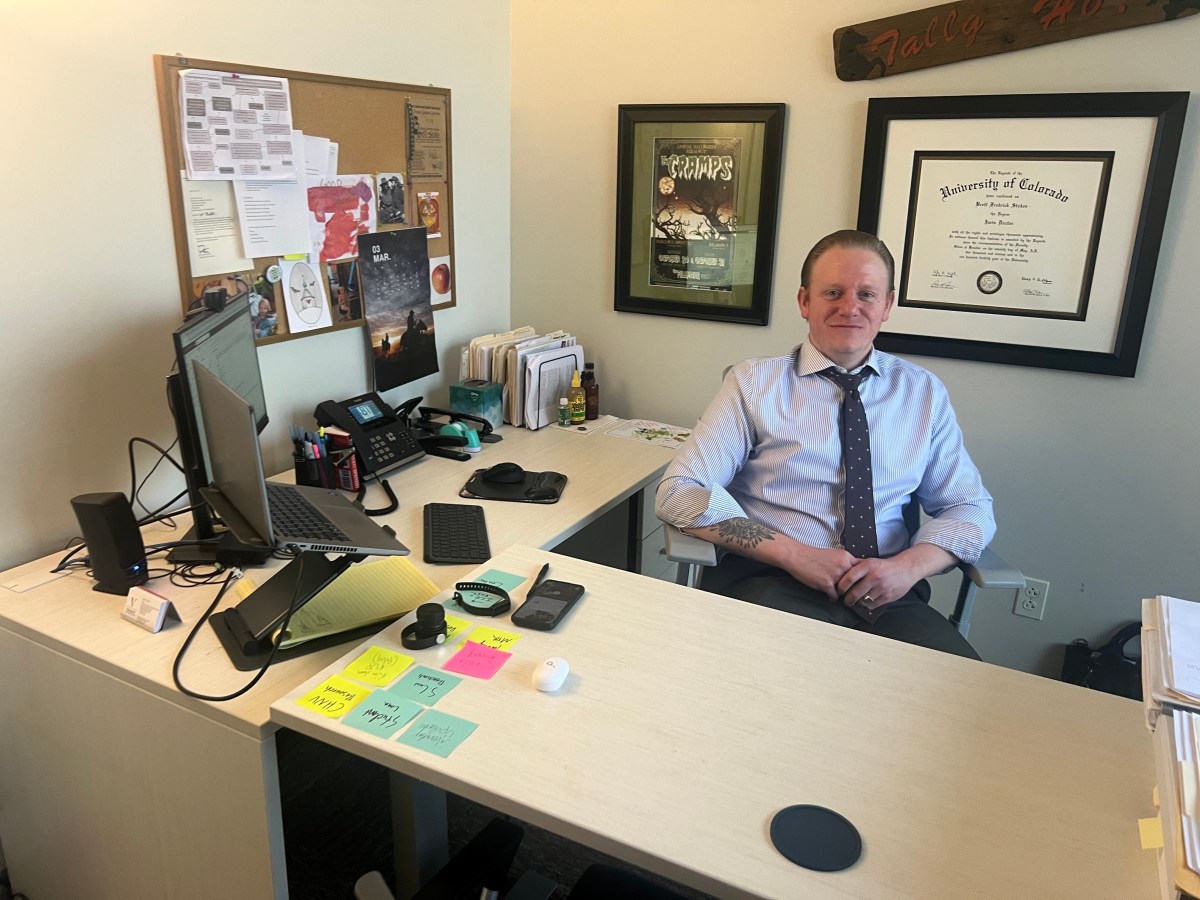
Brett Stokes, director of the Center for Justice Reform Clinic at the Vermont Law and Graduate School, works with many people detained by immigration authorities in Vermont. He said that “in a perfect world,” he would support limiting or ending the state’s prison agreement with federal immigration agencies, but that’s not the present moment.
“My focus right now is not on removing the bed space, because if I’m able to, I want to try to keep my clients as close as possible,” Stokes said in an interview Wednesday. “I think a lot of advocates are with me on this.”
The ACLU of Vermont took a similar position. In a statement, Falko Schilling, the organization’s advocacy director, said the ACLU supports “the intent” behind calling for an end to the MOU.
But while the state should “fully examine” how the contract might be supporting mass deportations, Schilling said, the state also needs to ensure that any actions taken “don’t negatively impact people who might be detained by putting them in a position where they are in worse conditions, or have less access to legal representation, their families, and their communities.”
Stokes, the immigration attorney, is seeing some of those impacts already.
In the past, Stokes said limited bed space led immigration authorities to find “alternatives to detention” and to “think more critically about who they detain.” But since President Trump began his second term, he described a “huge uptick” in immigration enforcement and an expansion of ICE’s footprint across New England.
Previously, federal authorities would often move Stokes’ clients from Vermont to Plymouth County Correctional Facility in Massachusetts. Now, he said, more people are being moved to Louisiana or as far away as Laredo, Texas, directly from Vermont.
“As soon as they leave the state, I have zero idea where they are because the ICE detainee locator is inaccurate at best and slow to update across the board,” Stokes said.
Even if Vermont were to end its agreement with federal immigration authorities, it wouldn’t have an immediate impact. The MOU requires the state to provide notice 120 days prior to its termination, which wouldn’t be until mid-August, days before the agreement would expire if it was not renewed.
