


This commentary is by Sen. Thomas Chittenden, D-Chittenden Southeast.

This session of the Legislature has been intensely focused on education reform. Our current education financing system, implemented in the ‘90s, drew inspiration from the Vermont Supreme Court decision often referred to as “Brigham.”
Brigham has loomed large in this current debate and is fundamentally grounded in Section 68 of our state constitution, which states that “a competent number of schools ought to be maintained in each town unless the general assembly permits other provisions for the convenient instruction of youth.”
Our constitution clearly recognizes the distinct roles of towns and the state in delivering public education. It does not lay the direct responsibility to educate our kids on the state; rather, it recognizes each town’s responsibility to maintain “a competent number of schools” and leaves it to those towns to determine what constitutes competency.
Simultaneously, it empowers the General Assembly to make “provisions for the convenient instruction of youth.” This recognizes a need for balance between local control (freedom) and centralized state oversight (unity).
As the Brigham decision concluded, “Equal opportunity does not necessarily require precisely equal per capita expenditures, nor does it necessarily prohibit cities and towns from spending more on education if they choose, but it does not allow a system in which educational opportunity is necessarily a function of district wealth.”
An education foundation formula is a common mechanism used in other states to ensure a baseline of educational quality while allowing districts to spend above that. However, the current education transformation bill passed by the House does not align with this principle. It establishes a “foundation” equal to or exceeding current spending levels, essentially becoming the “whole house” rather than a “foundation.”
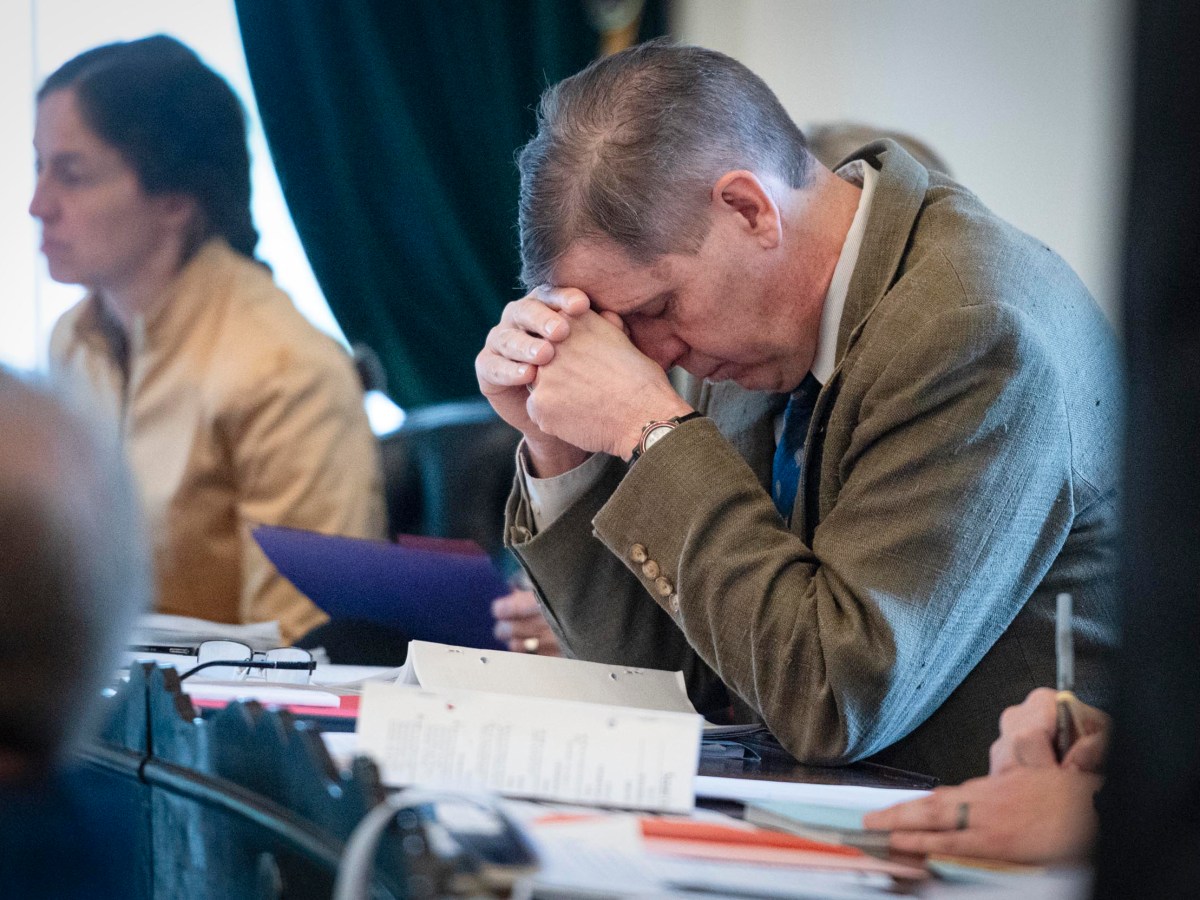
I am not convinced that what this bill contemplates is what Vermont wants. I am not convinced that Vermont wants Montpelier dictating education spending throughout Vermont with a uniform property tax rate for the whole state to fund a Montpelier-defined level of spending.
This would represent far too much unity and not enough freedom, concentrating power in Montpelier, and putting in place a system where future Legislatures, rather than local property owners and parents, would set spending and tax levels for our schools. I do not support this degree of power consolidation to the Statehouse — not this year nor in future years.
This proposed legislation drastically tips the balance from local control (freedom) towards state control (unity) in ways I do not support. As Ethan Allen noted, “The Gods of the Valley are Not the Gods of the Hills,” highlighting Vermont’s diverse values and priorities.
Our lived experiences in Canaan differ from those in Colchester, and these differences are naturally reflected in how we educate our kids (among other things). Our approaches and priorities will diverge, and our systems must respect this diversity to the greatest extent possible — which our state constitution clearly does.
What I do support is consolidating the number of our school districts (119) to reduce administrative overhead, achieve economies of scale, enhance curricular depth and increase consistency for our kids across Vermont. And I support the timeline for this work outlined in the House bill, with a clear understanding that elementary schools, vital community centers, should not be closed.
Kindergarten through fifth grade students need nearby schools with short bus rides. However, we can improve middle and high school delivery through more rational design and district consolidation, offering greater curricular depth with 21st-century facilities.
And what I do support is to reinstate strong spending controls using the currently dormant allowable growth spending caps on local districts starting with fiscal year 2027. Coupled with lowering our excess spending threshold penalty to be below the allowable cap, this would be a much less invasive mechanism than what is contemplated in H.454 to drive down education spending without silencing the community voice.
Our current system, despite its imperfections, maintains a balance between freedom and unity. We simply need to apply more unity using existing tools and more rational school district governance to reduce spending, achieve efficiencies and improve curricular depth and consistency.
We are paying too much in property taxes, and I believe we are overspending on education for a continually declining student population. To lower property taxes, we must calibrate our school offerings and reduce spending to match our shrinking student numbers. I do not believe the high foundation formula in H.454 will achieve this, either next year or in five years.
The net effect of this bill would disenfranchise Vermont property taxpayers, shifting their Town Meeting Day power at the ballot box to future Legislatures in Montpelier. These future legislatures would then determine education funding levels, rather than allowing each town to define what constitutes “competent” education. The gods of the hills are not the gods of the valley, so towns need to be deeming that — not Montpelier.
