

MONTPELIER — About 95% of people incarcerated in Vermont will one day leave prison. But getting out — and staying out — relies on a system that often appears rigged against those reentering society.
“The system as it’s built today forces individuals to jump through hoops that many of us in this room would struggle through, even in the best of circumstances,” Nick Deml, Vermont Department of Corrections commissioner, told participants at the state’s reentry simulation.
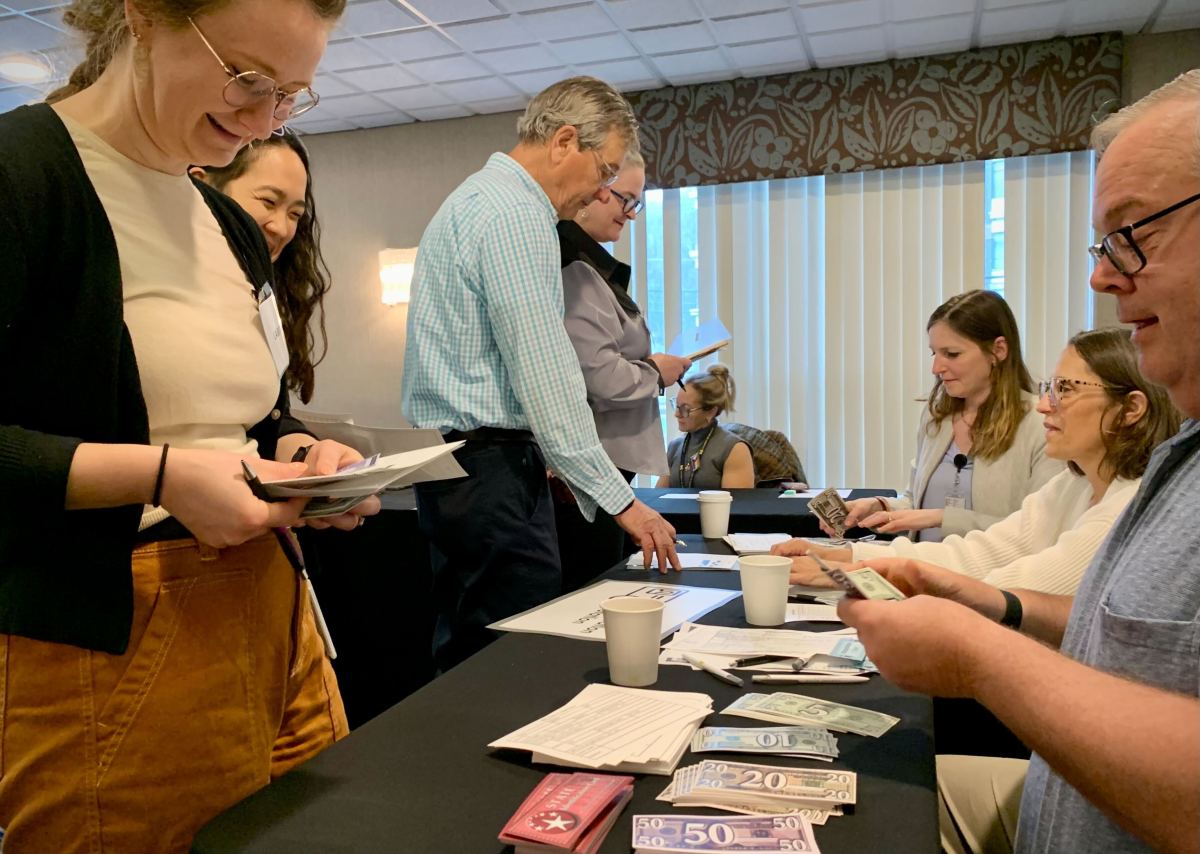
More than 50 people, including prison staff, state human services employees, lawmakers, judicial officials and community social services providers spent Friday morning reenacting the brutal bureaucracy people leaving prison face every day. Those exiting incarceration often start life from scratch — forced to acquire basic identification, obtain employment and find housing — all while battling food insecurity and lack of transportation.
The morning’s simulation, which led participants through the cascading steps of reentry, was the brainchild of Maurice Q. Jones, chair of the Philadelphia Reentry Coalition. Jones spent years of his life incarcerated and has devoted the years since helping improve reentry services.
“This is a way for folks to gain empathy to effectuate change,” he said in an interview, describing the event. “When I came home, there was almost zero hope. And I felt like there was a greater need to do this work than to do anything else.”
Inside the Capitol Plaza Hotel, attendees began the session by each adopting the identity of someone just leaving prison, outlined in a series of provided materials. Those documents described the person’s criminal history, housing (or lack thereof), financial situation, employment status, probation requirements, and existing forms of ID.
Across four 15-minute “weeks,” each participant needed to complete a variety of tasks, like passing drug screenings, attending Alcoholics Anonymous and counseling, and meeting with a probation officer, all while trying to find employment and stay out of trouble.
During “week one,” the line to acquire a birth certificate, Social Security card and state ID snaked across the hotel conference room. During every interaction, participants needed to turn over “transportation cards” representing their ride to the appointment, each of which cost money. And even small transactions like filling out forms came with fees.
Low on cash? Donate blood plasma up to twice per week, or pawn a guitar or laptop — just don’t expect much money in return. In almost every instance, an interaction required three forms of ID.
Between “weeks,” participants vented about the orchestrated chaos. They’d failed to pay rent, forcing them to report to a shelter. People skipped meals, missed probation appointments, stood next in line for an appointment only to hear the closing bell.
At times, the futility of every step appeared to baffle attendees. One participant voiced frustration that despite submitting to three drug tests, she was told she never submitted a test at all, barring her from employment. She thought the hiccup in the simulation was unrealistic.
“In real life, they wouldn’t be able to lie,” she said.
Katie Jones, a recovery coaching supervisor at Turning Point Center of Central Vermont, who was volunteering at the simulation, suggested otherwise.
“You might be surprised.”
By the fourth round, some attendees appeared too frustrated to continue. Large sheets of paper meant for participants to write down feelings and impressions started to fill with exasperation: “headache,” “overwhelmed,” “defeated,” “cheated,” “jail is easier.”
To Timothy Burgess, an advocate for incarcerated people in Vermont who is himself formerly incarcerated, the simulation’s hair-tearing nature rang true. On Friday, he found himself on the other side of the system, playing the part of probation officer. As he watched the red-faced participants fumble through the process, he couldn’t help but empathize with POs, and he hoped the event might inspire change.
“This is an amazing opportunity.”
Correction: A previous version of this story mischaracterized the originality of the reentry simulation.
